Dairy Technology Quiz: Milk, Cheese & Yogurt Practice Tests
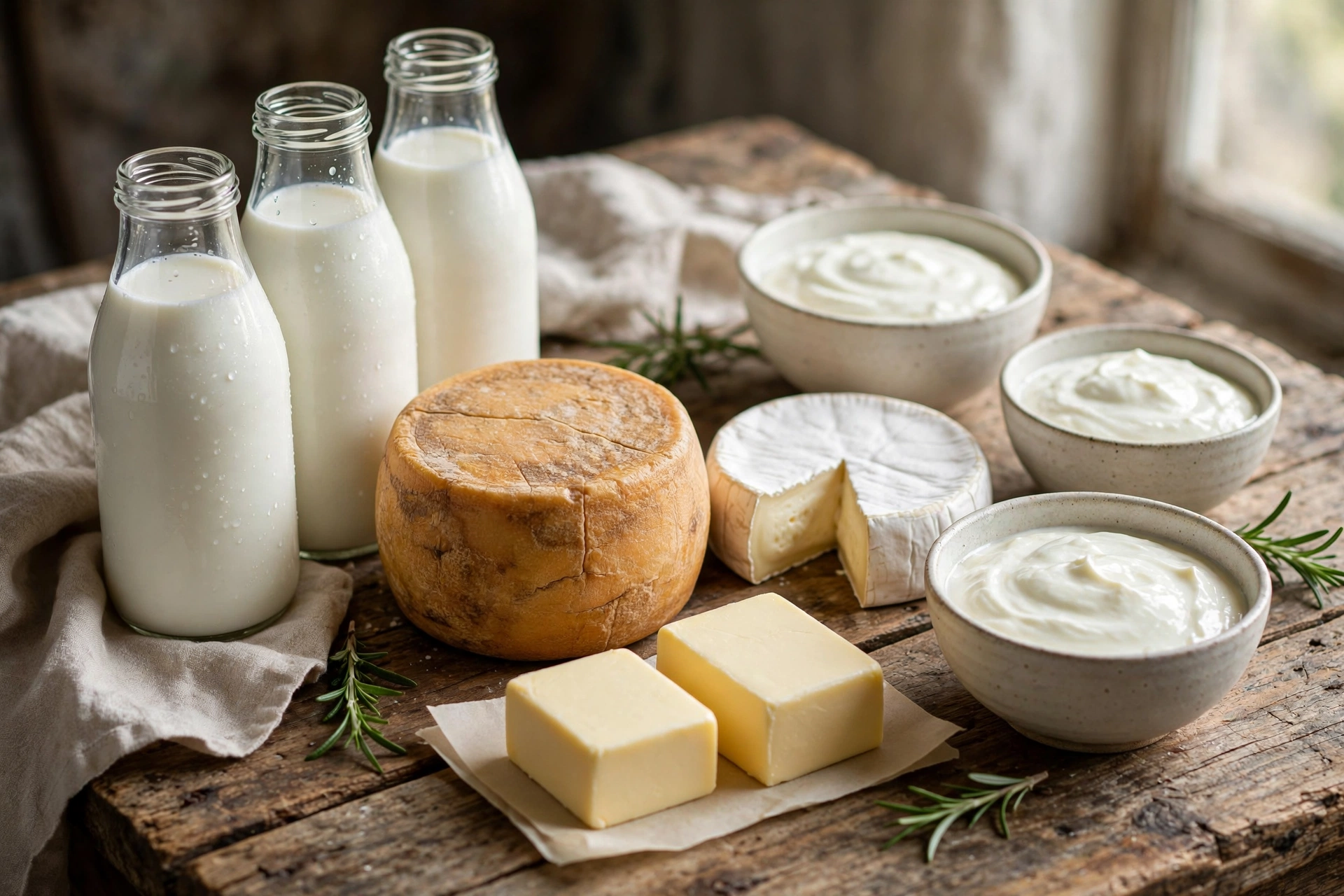
Milk arrives at the plant at 4°C and leaves as a dozen different products: pasteurized milk, yogurt with live cultures, cheddar aged for months, butter, ghee, and powder that ships across the world. Each transformation has its own science, its own equipment, and its own failure modes. This category organizes quizzes by product sector, starting with dairy and covering every major food technology from cereals to pet food.
A dairy technology quiz set here tests milk composition, heat treatment, fermentation, separation, and drying: the unit operations that define dairy processing. The same sector-by-sector approach covers bakery ovens, beverage carbonation, meat curing, oil refining, and confectionery crystallization. Questions stay close to the process line: what each step does, what can go wrong, and how quality is checked.
Work through your own sector first, then read across neighboring ones; food technologists who understand only one product hit a ceiling fast. Difficulty rises in four steps: Beginner quizzes test definitions and recognition; Intermediate quizzes test application to process situations; Advanced quizzes test calculations, analysis, and standards; Expert quizzes test case studies and multi-step reasoning. For the preservation science behind these processes, see the food-processing-preservation-quizzes hub; for the hazard control, the food-safety-haccp-quizzes hub; for the plant that houses them, the food-industry-operations-quizzes hub.
Dairy technology
Milk – Composition, collection, chilling, and reception testing: the raw material every dairy product starts from, and the tests that decide whether a tanker is accepted.
Cream – Separation, standardization, and pasteurization of cream: fat content control and the quality checks that keep cream stable.
Butter – Churning, working, and salting: how cream becomes butter, and the moisture and microbiology limits butter must meet.
Ghee – Clarification and the traditional plus industrial methods of ghee making: flavor development, granulation, and adulteration checks.
Cheese – Coagulation, curd handling, pressing, salting, and ripening: the variables that separate one cheese variety from another.
Yogurt – Starter cultures, fermentation control, and texture: how time, temperature, and culture choice build set, stirred, and Greek styles.
Ice Cream – Mix formulation, homogenization, aging, freezing, and overrun: the physics behind scoopable texture.
Milk Powder – Evaporation and spray drying: how liquid milk becomes powder, plus instantizing, solubility, and storage stability.
Condensed Milk – Sweetened condensed milk manufacture: sugar’s preservative role, viscosity control, and age-thickening defects.
Evaporated Milk – Unsweetened concentrated milk: forewarming, homogenization, sterilization, and preventing age gelation.
Dairy Quality & Safety – The testing regime across all dairy products: platform tests, phosphatase and peroxidase checks, antibiotic screening, and pathogen control.
Dry goods and cereals
Cereal & Grain Technology – Milling, parboiling, and grain handling: wheat, rice, and maize from harvest intake to flour and grits.
Pulse Technology – Dals, milling, and dehulling: processing lentils, chickpeas, and beans, with the anti-nutritional factors heat destroys.
Bakery Technology – Dough mixing, fermentation, proofing, and baking: how ingredients and ovens build bread, buns, and pastries.
Confectionery Technology – Sugar boiling, crystallization, and tempering: the craft behind chocolate, caramels, and hard candy.
Sugar Technology – Cane and beet sugar manufacture: extraction, clarification, crystallization, and refining to white sugar.
Snack Technology – Extrusion, frying, and seasoning: how chips, puffs, and extruded snacks get their texture and shelf life.
Animal products
Meat Technology – Slaughter, chilling, curing, smoking, and sausage making: rigor mortis, water activity, and the preservation hurdles that keep meat safe.
Fish Technology – Chilling, freezing, canning, and smoking of fish: freshness indices, histamine control, and cold chain discipline.
Poultry Technology – Processing broilers from slaughter to portioning: scalding, evisceration hygiene, chilling methods, and further processing.
Other sectors
Fruit & Vegetable Technology – Sorting, peeling, blanching, and canning: keeping color, texture, and nutrients through thermal processing.
Beverage Technology – Juices, carbonated drinks, tea, and coffee: extraction, carbonation, pasteurization, and the packaging that protects flavor.
Oil & Fat Technology – Extraction, degumming, refining, and hydrogenation alternatives: how crude oil becomes clear, stable cooking oil.
Spice Technology – Cleaning, grinding, sterilization, and blending: keeping volatile flavor in while grinding heat and microbes out.
Fermented Foods – Beyond dairy: soy sauce, kimchi, pickles, and sourdough, with the cultures and conditions each fermentation needs.
Pet Food Technology – Extruded kibble, wet food, and treats: formulation, palatability, and the safety standards pets’ food must meet.
Suggested learning path
- Start in your own sector: dairy readers begin with milk, then cream, then the products made from them.
- Learn the unit operations inside your sector before moving on: heat treatment, fermentation, drying, or extrusion.
- Study your sector’s quality and safety checks, then the dairy-quality pattern repeats across every other sector.
- Branch into a neighboring sector that shares your equipment, such as beverages for dairy or bakery for cereals.
- Work through the remaining sectors at Beginner level for breadth, then return to your specialty at Advanced and Expert levels.
- Pair sector knowledge with the food-processing-preservation-quizzes hub for the underlying preservation science.
Who should take these quizzes
Food technology and dairy science students preparing for exams and placements. QA and QC staff who test products they should understand deeply. Production supervisors and operators learning the why behind their process steps. R&D and product development teams moving into a new category. Dairy plant professionals from reception to powder tower. Anyone interviewing for a food industry role who wants to speak the sector’s language with confidence.
Product knowledge connects to the processes that make it. Review the food processing quizzes for thermal and preservation methods by sector, the food safety quizzes for hazard control in each product, and the food plant operations quizzes for the facilities that produce them.
When you finish a set here, browse all quizzes to continue into neighboring topics.
GIFSQ Food Safety Desk · Published: October 1, 2026
Quizzes in this category
Every quiz in this category, with answers. Pick one to start.
Dairy Technology
- Butter Quiz (20 questions)
- Butter Manufacture , Part 1 (20 questions)
- Butter Manufacture , Part 2 (20 questions)
- Cereal and Dairy Laboratory Instruments Quiz (20 questions)
- Cereals Technology & Dairy Technology Quiz (20 questions)
- Cheese Quiz (20 questions)
- Cheese Manufacture , Part 1 (20 questions)
- Cheese Manufacture , Part 2 (20 questions)
- Cheese Manufacture & Other Cheese Topics Quiz (20 questions)
- Cheese Types Quiz (20 questions)
- Coliforms in Dairy Quiz (20 questions)
- Condensed Milk Quiz (20 questions)
- Cream Quiz (20 questions)
- Cream Separation Quiz (20 questions)
- Creaming Quiz (20 questions)
- Dairy By-products Quiz (20 questions)
- Dairy Chemistry Quiz (20 questions)
- Dairy Fermentation Quiz (20 questions)
- Dairy Pathogens Quiz (20 questions)
- Dairy Plant Operations Quiz (20 questions)
- Dairy Processing Quiz (20 questions)
- Dairy Processing & Meat Processing Quiz (20 questions)
- Dairy Products Quiz (20 questions)
- Dairy Technology , Part 2 (20 questions)
- Dairy Technology , Part 3 (20 questions)
- Dairy Technology Quiz (20 questions)
- Dairy Technology Part 1 Quiz (20 questions)
- Dairy Technology Part 10 Quiz (20 questions)
- Dairy Technology Part 11 Quiz (20 questions)
- Dairy Technology Part 12 Quiz (20 questions)
- Dairy Technology Part 13 Quiz (20 questions)
- Dairy Technology Part 14 Quiz (20 questions)
- Dairy Technology Part 2 Quiz (20 questions)
- Dairy Technology Part 3 Quiz (20 questions)
- Dairy Technology Part 4 Quiz (20 questions)
- Dairy Technology Part 5 Quiz (20 questions)
- Dairy Technology Part 6 Quiz (20 questions)
- Dairy Technology Part 7 Quiz (20 questions)
- Dairy Technology Part 8 Quiz (20 questions)
- Dairy Technology Part 9 Quiz (20 questions)
- Dairy Waste Treatment Quiz 1 (20 questions)
- Fermented Milk Quiz (20 questions)
- Fermented Milks and Cultures Quiz (20 questions)
- General Dairy Knowledge Quiz (20 questions)
- Ghee Manufacture , Part 1 (20 questions)
- Ghee Manufacture , Part 2 (20 questions)
- Ghee Manufacture , Part 3 (20 questions)
- Ice Cream Quiz (20 questions)
- Ice Cream Manufacture , Part 1 (20 questions)
- Ice Cream Manufacture , Part 2 (20 questions)
- Ice Cream Properties Quiz (20 questions)
- Lactose Quiz (20 questions)
- Lactose & Other Dairy By-products Topics Quiz (20 questions)
- Microbiological Criteria for Dairy Quiz (20 questions)
- Milk Analysis Methods Quiz (20 questions)
- Milk Composition Quiz (20 questions)
- Milk Composition and Properties Quiz (20 questions)
- Milk Homogenization Quiz (20 questions)
- Milk Pasteurization Quiz (20 questions)
- Milk Powder Quiz (20 questions)
- Milk Powders , Part 1 (20 questions)
- Milk Powders , Part 2 (20 questions)
- Milk Reception Quiz (20 questions)
- Milk Spoilage , Part 2 (20 questions)
- Milk Spoilage , Part 3 (20 questions)
- Milk Spoilage , Part 4 (20 questions)
- Milk Spoilage , Part 5 (20 questions)
- Milk Spoilage Quiz (20 questions)
- Milk Spoilage Quiz (Set 2) (20 questions)
- Milk Standardization Quiz (20 questions)
- Milk Testing Quiz (20 questions)
- Other Biotechnology Topics & Other Cream Topics Quiz (20 questions)
- Other Condensed, Evaporated & Dried Milks Topics Quiz (20 questions)
- Other Cream Topics & Other Organic Acids Topics Quiz (20 questions)
- Other Dairy By-products Topics Quiz (20 questions)
- Other Dairy By-products Topics & Dairy Technology Quiz (20 questions)
- Other Fermented Milks & Cultures Topics Quiz (20 questions)
- Other Ice Cream Topics & Diet and Health Quiz (20 questions)
- Other Milk Processing Topics Quiz (20 questions)
- Other Traditional Indian Dairy Products Topics , Part 1 (20 questions)
- Other Traditional Indian Dairy Products Topics , Part 2 (20 questions)
- Other Traditional Indian Dairy Products Topics , Part 3 (20 questions)
- Other Traditional Indian Dairy Products Topics , Part 4 (20 questions)
- Proteins - Milk Proteins , Part 2 (20 questions)
- Proteins - Milk Proteins , Part 3 (20 questions)
- Proteins - Milk Proteins Quiz (20 questions)
- Proteins - Milk Proteins & Milk Spoilage Quiz (20 questions)
- Raw Milk Microbiology Quiz (20 questions)
- Traditional Indian Dairy Products Quiz (20 questions)
- Whey Processing Quiz (20 questions)
- Yoghurt Manufacture Quiz (20 questions)
- Yoghurt Manufacture & Glass Packaging Quiz (20 questions)
- Yogurt Quiz (20 questions)
Meat, Poultry & Egg Technology
- Ante-Mortem Quiz (20 questions)
- Carcass Hygiene Quiz (20 questions)
- Curing, Smoking & Meat Color Quiz (20 questions)
- Egg Preservation Quiz (20 questions)
- Egg Products Quiz (20 questions)
- Egg Quality Quiz (20 questions)
- Egg Structure Quiz (20 questions)
- Eggs: Preservation & Cooking Quiz (20 questions)
- Eggs: Quality, Testing & Spoilage Quiz (20 questions)
- Eggs: Structure & Composition , Part 1 Quiz (20 questions)
- Eggs: Structure & Composition , Part 2 Quiz (20 questions)
- Eggs: Structure & Composition , Part 3 Quiz (20 questions)
- Eggs: Structure & Composition , Part 4 Quiz (20 questions)
- Evisceration Quiz (20 questions)
- Hygienic Slaughter Quiz (20 questions)
- Meat and Fish Technology Quiz (20 questions)
- Meat Composition Quiz (20 questions)
- Meat Composition & Nutritive Value , Part 1 Quiz (20 questions)
- Meat Composition & Nutritive Value , Part 2 Quiz (20 questions)
- Meat Flavour and Quality Analysis Quiz (20 questions)
- Meat Microbiology , Part 1 (20 questions)
- Meat Microbiology , Part 2 (20 questions)
- Meat Microbiology , Part 3 (20 questions)
- Meat Packaging Quiz (20 questions)
- Meat Processing , Part 2 (20 questions)
- Meat Processing , Part 3 (20 questions)
- Meat Processing , Part 5 (20 questions)
- Meat Processing Quiz (20 questions)
- Meat Processing and Preservation Quiz (20 questions)
- Meat Quality Quiz (20 questions)
- Meat Science , Part 2 (20 questions)
- Meat Science Quiz (20 questions)
- Meat Smoking Quiz (20 questions)
- Meat Spoilage Quiz (20 questions)
- Meat Spoilage Quiz (Fruits & Vegetables Technology, Part 27) (20 questions)
- Meat Terminology & By-products Quiz (20 questions)
- Muscle Structure Quiz (20 questions)
- Muscle Structure & Proteins , Part 1 Quiz (20 questions)
- Muscle Structure & Proteins , Part 2 Quiz (20 questions)
- Muscle Structure and Meat Science Quiz (20 questions)
- Other General Science Topics & Meat Science Quiz (20 questions)
- Other Meat, Fish & Poultry Technology Topics , Part 1 (20 questions)
- Other Meat, Fish & Poultry Technology Topics , Part 2 (20 questions)
- Post-Mortem Quiz (20 questions)
- Post-Slaughter Meat Science Quiz (20 questions)
- Postmortem Biochemistry Quiz (20 questions)
- Postmortem Changes Quiz (20 questions)
- Poultry Chilling Quiz (20 questions)
- Poultry Meat Quality Quiz (20 questions)
- Poultry Processing Quiz (20 questions)
- Poultry Slaughter Quiz (20 questions)
- Poultry: Meat Quality & Cookery Quiz (20 questions)
- Poultry: Slaughter & Processing Quiz (20 questions)
- Processed Poultry Quiz (20 questions)
- Rigor Mortis Quiz (20 questions)
- Rigor Mortis, Ageing & Tenderization Quiz (20 questions)
- Sausages Quiz (20 questions)
- Slaughter Quiz (20 questions)
- Tenderization Quiz (20 questions)
Fish & Seafood Technology
- Fish Canning Quiz (20 questions)
- Fish Chilling Quiz (20 questions)
- Fish Composition Quiz (20 questions)
- Fish Drying Quiz (20 questions)
- Fish Freezing Quiz (20 questions)
- Fish Products Quiz (20 questions)
- Fish Smoking Quiz (20 questions)
- Fish Spoilage Quiz (20 questions)
- Fish: Composition & Nutritive Value Quiz (20 questions)
- Fish: Spoilage & Preservation Quiz (20 questions)
- IQF of Fish Quiz (20 questions)
- Seafood Packaging Quiz (20 questions)
- Seafood Safety Quiz (20 questions)
Fruit & Vegetable Technology
- Blanching of Fruits and Vegetables Quiz (20 questions)
- Controlled Atmosphere Quiz (20 questions)
- Fruit and Juice Quality Testing Quiz (20 questions)
- Fruit and Vegetable Canning Quiz (20 questions)
- Fruit and Vegetable Drying Quiz (20 questions)
- Fruit and Vegetable Grading Quiz (20 questions)
- Fruit and Vegetable Quality Quiz (20 questions)
- Fruit and Vegetable Storage Quiz (20 questions)
- Fruit Beverages Quiz (20 questions)
- Fruit Composition Quiz (20 questions)
- Fruit Juice Processing Quiz (20 questions)
- Fruit Preservation Quiz (20 questions)
- Fruit Types & Botany , Part 1 Quiz (20 questions)
- Fruit Types & Botany , Part 2 Quiz (20 questions)
- Fruits and Vegetables Quiz (20 questions)
- Harvesting Quiz (20 questions)
- Jam Quiz (20 questions)
- Jam, Jelly & Marmalade Quiz (20 questions)
- Jelly Quiz (20 questions)
- Juices Quiz (20 questions)
- Juices & Beverages Quiz (20 questions)
- Marmalade Quiz (20 questions)
- Other Fruits & Vegetables Technology Topics , Part 1 (20 questions)
- Other Fruits & Vegetables Technology Topics , Part 2 (20 questions)
- Other Fruits & Vegetables Technology Topics , Part 3 (20 questions)
- Other Fruits & Vegetables Technology Topics , Part 4 (20 questions)
- Pickles Quiz (20 questions)
- Postharvest Biochemistry Quiz (20 questions)
- Postharvest Handling Quiz (20 questions)
- Postharvest Handling Quiz (Biotechnology & Fermentation, Part 4) (20 questions)
- Postharvest Physiology Quiz (20 questions)
- Pulps Quiz (20 questions)
- Purees Quiz (20 questions)
- Storage & Respiration , Part 1 Quiz (20 questions)
- Storage & Respiration , Part 2 Quiz (20 questions)
- Storage & Respiration , Part 3 (20 questions)
- Texturized Vegetable Proteins Quiz (20 questions)
- Vegetables & Greens Quiz (20 questions)
Cereal, Grain & Bakery Technology
- Bakery Defects Quiz (20 questions)
- Bakery Dough Rheology Quiz (20 questions)
- Bakery Ingredients Quiz (20 questions)
- Bakery Ingredients and Leavening , Part 1 Quiz (20 questions)
- Bakery Ingredients and Leavening , Part 2 Quiz (20 questions)
- Bakery Ingredients and Leavening , Part 3 Quiz (20 questions)
- Bakery Ingredients and Leavening & Rice Processing Quiz (20 questions)
- Bakery Packaging Quiz (20 questions)
- Bakery Shelf Life Quiz (20 questions)
- Baking Quiz (20 questions)
- Barley Quiz (20 questions)
- Barley, Oats and Rye , Part 1 Quiz (20 questions)
- Barley, Oats and Rye , Part 2 Quiz (20 questions)
- Biscuit Manufacturing Quiz (20 questions)
- Biscuits and Cookies Quiz (20 questions)
- Bread (Cereal Technology) Quiz (20 questions)
- Bread Making , Part 1 Quiz (20 questions)
- Bread Making , Part 2 Quiz (20 questions)
- Bread Production Quiz (20 questions)
- Breakfast Cereals and Snacks Quiz (20 questions)
- Cakes Quiz (20 questions)
- Cereal Grain Structure and Composition Quiz (20 questions)
- Cereal Processing Quiz (20 questions)
- Cereal Science and Technology Quiz (20 questions)
- Cereal Technology Quiz (20 questions)
- Cereals Technology , Part 1 Quiz (20 questions)
- Cereals Technology , Part 2 Quiz (20 questions)
- Dough Development Quiz (20 questions)
- Dough Fermentation Quiz (20 questions)
- Dough Mixing Quiz (20 questions)
- Dough Rheology Quiz (20 questions)
- Dough Rheology Quiz (Set 2) (20 questions)
- Extrusion Quiz (20 questions)
- Extrusion Fundamentals Quiz (20 questions)
- Flour Quiz (20 questions)
- Flour Quality Quiz (20 questions)
- Flour Quality and Testing , Part 1 Quiz (20 questions)
- Flour Quality and Testing , Part 2 Quiz (20 questions)
- Flour Quality and Testing , Part 3 (20 questions)
- Gluten Quiz (20 questions)
- Gluten Proteins , Part 1 Quiz (20 questions)
- Gluten Proteins , Part 2 Quiz (20 questions)
- Gluten Proteins , Part 3 Quiz (20 questions)
- Gluten Proteins , Part 4 Quiz (20 questions)
- Grain Analysis Quiz (20 questions)
- Grain Analysis & Nutrient Composition of Cereals Quiz (20 questions)
- Grain Milling Quiz (20 questions)
- Grain Storage Quiz (20 questions)
- Legume Processing Quiz (20 questions)
- Maize Quiz (20 questions)
- Maize Processing Quiz (20 questions)
- Millet Quiz (20 questions)
- Milling Quiz (20 questions)
- Noodles Quiz (20 questions)
- Nutrient Composition of Cereals Quiz (20 questions)
- Nutrient Composition of Cereals & Other Cereals Technology Topics Quiz (20 questions)
- Oats Quiz (20 questions)
- Oils, Tea and Pulses Quiz (20 questions)
- Other Cereals Technology Topics , Part 1 (20 questions)
- Other Cereals Technology Topics , Part 2 (20 questions)
- Other Food Microbiology and Safety Topics & Pulse Composition and Nutrition Quiz (20 questions)
- Pasta Quiz (20 questions)
- Pastry Quiz (20 questions)
- Pet Food Extrusion Quiz (20 questions)
- Proofing Quiz (20 questions)
- Proteins - Cereal Proteins Quiz (20 questions)
- Pulse Composition and Nutrition , Part 1 Quiz (20 questions)
- Pulse Composition and Nutrition , Part 2 Quiz (20 questions)
- Pulsed Electric Field , Part 2 (20 questions)
- Pulsed Electric Field Quiz (20 questions)
- Pulsed Electric Fields Quiz (20 questions)
- Rice Quiz (20 questions)
- Rice Processing , Part 1 Quiz (20 questions)
- Rice Processing , Part 2 Quiz (20 questions)
- Sorghum Quiz (20 questions)
- Sorghum and Millets , Part 1 Quiz (20 questions)
- Sorghum and Millets , Part 2 Quiz (20 questions)
- Spice Milling Quiz (20 questions)
- Starch & Polysaccharides , Part 1 Quiz (20 questions)
- Starch & Polysaccharides , Part 2 Quiz (20 questions)
- Starch & Polysaccharides , Part 3 Quiz (20 questions)
- Starch & Polysaccharides , Part 4 Quiz (20 questions)
- Starch & Polysaccharides , Part 5 (20 questions)
- Starch and Protein Chemistry , Part 2 (20 questions)
- Starch and Protein Chemistry Quiz (20 questions)
- Wheat Quiz (20 questions)
- Wheat Milling , Part 1 Quiz (20 questions)
- Wheat Milling , Part 2 Quiz (20 questions)
- Wheat Milling , Part 3 Quiz (20 questions)
- Wheat Milling , Part 4 Quiz (20 questions)
- Wheat Milling , Part 5 (20 questions)
- Wheat: Grain and Gluten , Part 1 Quiz (20 questions)
- Wheat: Grain and Gluten , Part 2 Quiz (20 questions)
- Wheat: Grain and Gluten , Part 3 Quiz (20 questions)
- Wheat: Grain and Gluten , Part 4 Quiz (20 questions)
Oil & Fat Technology
- Bleaching Quiz (20 questions)
- Degumming Quiz (20 questions)
- Deodorization Quiz (20 questions)
- Edible Oil Quality Quiz (20 questions)
- Edible Oils and Fats Quiz (20 questions)
- Fat Quiz (20 questions)
- Hydrogenation Quiz (20 questions)
- Interesterification Quiz (20 questions)
- Lipids , Part 1 Quiz (20 questions)
- Lipids , Part 2 Quiz (20 questions)
- Lipids , Part 4 (20 questions)
- Lipids , Part 5 (20 questions)
- Lipids , Part 6 (20 questions)
- Lipids , Part 7 (20 questions)
- Lipids Quiz (20 questions)
- Lipids & Fats , Part 1 Quiz (20 questions)
- Lipids & Fats , Part 2 Quiz (20 questions)
- Lipids & Fats , Part 3 (20 questions)
- Lipids & Lipids - Fatty Acids Quiz (20 questions)
- Lipids - Analysis Quiz (20 questions)
- Lipids - Composition , Part 1 Quiz (20 questions)
- Lipids - Composition , Part 2 Quiz (20 questions)
- Lipids - Composition , Part 3 Quiz (20 questions)
- Lipids - Fatty Acids , Part 1 Quiz (20 questions)
- Lipids - Fatty Acids , Part 2 Quiz (20 questions)
- Lipids - Fatty Acids , Part 3 (20 questions)
- Lipids - Fatty Acids & Minerals - Composition Quiz (20 questions)
- Lipids Quiz (Set 2) (20 questions)
- Neutralization Quiz (20 questions)
- Nuts & Oilseeds , Part 1 Quiz (20 questions)
- Nuts & Oilseeds , Part 2 Quiz (20 questions)
- Oilseeds Quiz (20 questions)
- Oxidative Stability Quiz (20 questions)
- Refining Quiz (20 questions)
- Winterization Quiz (20 questions)
Beverage Technology
- Beer Quiz (20 questions)
- Beverage Technology , Part 2 (20 questions)
- Beverage Technology , Part 3 (20 questions)
- Beverage Technology Quiz (20 questions)
- Beverage Water Quiz (20 questions)
- Beverages Quiz (20 questions)
- Brewing and Winemaking Fermentation Quiz (20 questions)
- Carbonated Beverages Quiz (20 questions)
- Coffee, Tea & Cocoa , Part 1 Quiz (20 questions)
- Coffee, Tea & Cocoa , Part 2 Quiz (20 questions)
- Coffee, Tea & Cocoa , Part 3 Quiz (20 questions)
- Coffee: Dry/Wet Processing, Roasting, Grinding, Chemistry, Defects, Quality Quiz (20 questions)
- Energy Drinks Quiz (20 questions)
- Fermentation & Beverages , Part 1 Quiz (20 questions)
- Fermentation & Beverages , Part 2 Quiz (20 questions)
- Fermentation & Beverages , Part 3 Quiz (20 questions)
- Fermentation & Beverages , Part 4 Quiz (20 questions)
- Fermentation & Beverages , Part 5 Quiz (20 questions)
- Fermented Beverages Quiz (20 questions)
- Functional Beverages Quiz (20 questions)
- Malting Quiz (20 questions)
- Soft Drinks Quiz (20 questions)
- Spirits Quiz (20 questions)
- Tea: Withering, Rolling, Oxidation, Drying, Tea Chemistry, Quality Quiz (20 questions)
- Wine Quiz (20 questions)
Confectionery & Sugar Technology
- Candies Quiz (20 questions)
- Caramel Quiz (20 questions)
- Caramelization Quiz (20 questions)
- Chocolate Quiz (20 questions)
- Chocolate Defects Quiz (20 questions)
- Cocoa Butter Quiz (20 questions)
- Cocoa: Fermentation, Drying, Roasting, Cocoa Chemistry, Chocolate Processing Quiz (20 questions)
- Confectionery Packaging Quiz (20 questions)
- Enrobing Quiz (20 questions)
- Fondants Quiz (20 questions)
- Gummies Quiz (20 questions)
- Sugar Chemistry Quiz (20 questions)
- Tempering Quiz (20 questions)
- Toffee Quiz (20 questions)
Spice & Condiment Technology
- Essential Oils Quiz (20 questions)
- Mycotoxins in Spices Quiz (20 questions)
- Oleoresins Quiz (20 questions)
- Sauces Quiz (20 questions)
- Spice Adulteration Quiz (20 questions)
- Spice Classification Quiz (20 questions)
- Spice Cleaning Quiz (20 questions)
- Spice Drying Quiz (20 questions)
- Spice Grading Quiz (20 questions)
- Spice Grinding Quiz (20 questions)
- Spice Packaging Quiz (20 questions)
- Spice Storage Quiz (20 questions)
- Spices , Part 1 Quiz (20 questions)
- Spices , Part 2 Quiz (20 questions)
- Spices , Part 3 Quiz (20 questions)
- Spices , Part 5 (20 questions)
- Spices Quiz (20 questions)
Food Technology
- Food Technology Part 1 Quiz (20 questions)
- Food Technology Part 10 Quiz (20 questions)
- Food Technology Part 11 Quiz (20 questions)
- Food Technology Part 12 Quiz (20 questions)
- Food Technology Part 13 Quiz (20 questions)
- Food Technology Part 14 Quiz (20 questions)
- Food Technology Part 15 Quiz (20 questions)
- Food Technology Part 16 Quiz (20 questions)
- Food Technology Part 17 Quiz (20 questions)
- Food Technology Part 18 Quiz (20 questions)
- Food Technology Part 19 Quiz (20 questions)
- Food Technology Part 2 Quiz (20 questions)
- Food Technology Part 20 Quiz (20 questions)
- Food Technology Part 21 Quiz (20 questions)
- Food Technology Part 22 Quiz (20 questions)
- Food Technology Part 23 Quiz (20 questions)
- Food Technology Part 24 Quiz (20 questions)
- Food Technology Part 25 Quiz (20 questions)
- Food Technology Part 26 Quiz (20 questions)
- Food Technology Part 3 Quiz (20 questions)
- Food Technology Part 4 Quiz (20 questions)
- Food Technology Part 5 Quiz (20 questions)
- Food Technology Part 6 Quiz (20 questions)
- Food Technology Part 7 Quiz (20 questions)
- Food Technology Part 8 Quiz (20 questions)
- Food Technology Part 9 Quiz (20 questions)
- Other Bioprocess Basics Topics & Other Food Technology Topics Quiz (20 questions)
- Other Food Technology Topics , Part 1 (20 questions)
- Other Food Technology Topics , Part 2 (20 questions)
- Other Food Technology Topics , Part 3 (20 questions)
