Food Plant Operations Quiz: Utilities & Maintenance Tests
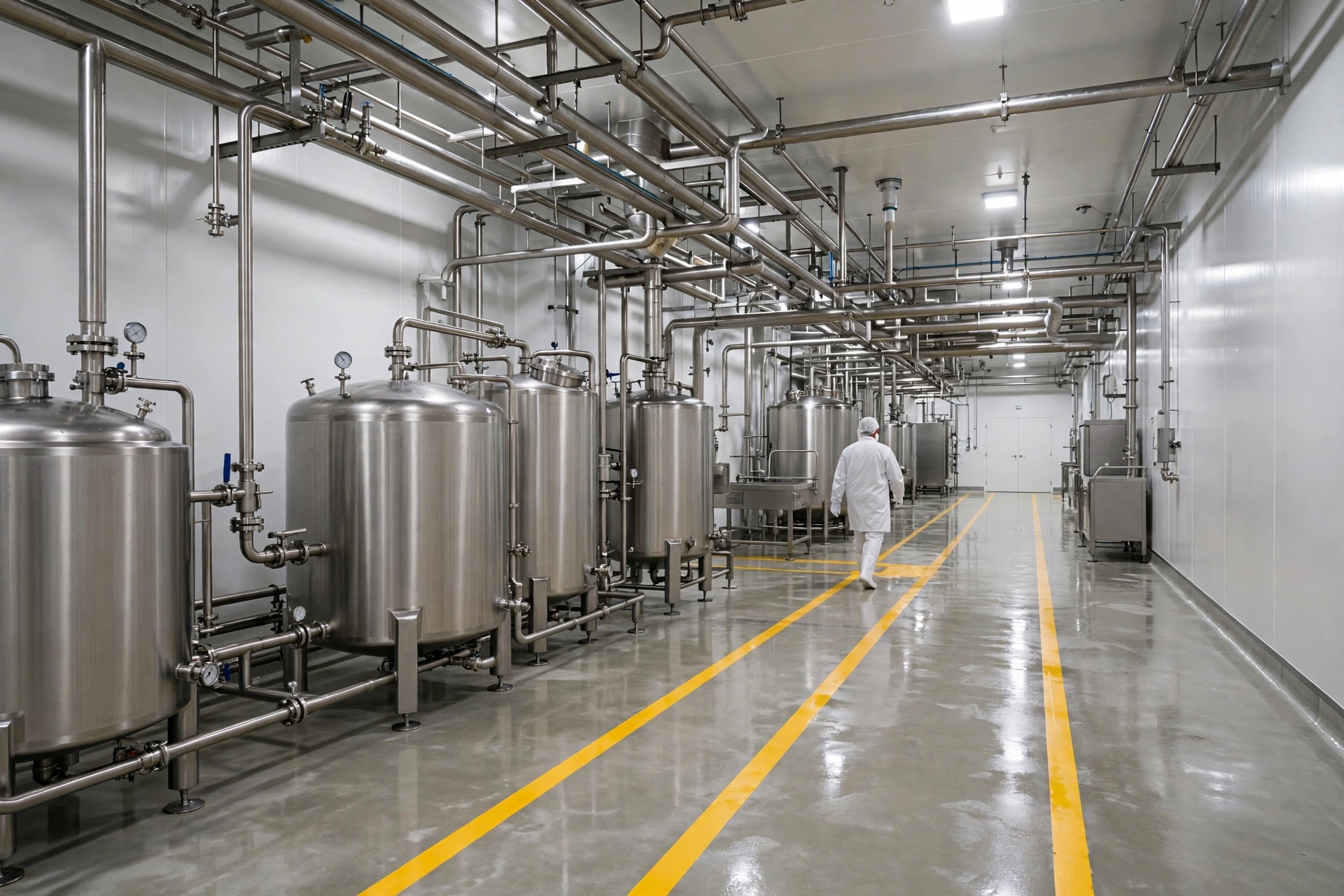
The filler goes down at 6 a.m. and the maintenance lead is already on the floor, but QA wants the line held, the warehouse wants the cold chain log, and the shift supervisor wants a restart time. A food plant operations quiz cannot fix that morning, yet it decides who makes the right call during it. This category covers the physical reality of running a food factory: the building, the utilities, the machines, and the supply chain around them.
These quizzes test how plants are designed, maintained, and supplied. Questions target hygienic design rules, utility systems, maintenance strategies, calibration, warehousing, cold chain, traceability, and recall logic. Answers come from plant-floor practice, not textbooks: what drains where, which pressure zones keep contaminants out, and how a recall team traces a lot in hours instead of days.
Use these sets to prepare for operations, maintenance, and supply chain roles, or to sharpen a QA background with plant-floor knowledge. Difficulty rises in four steps: Beginner quizzes test definitions and recognition; Intermediate quizzes test application to plant situations; Advanced quizzes test calculations, analysis, and standards; Expert quizzes test case studies and multi-step reasoning. For the engineering theory behind the equipment, see the food-engineering-quizzes hub; for hazard control on these same lines, the food-safety-haccp-quizzes hub; for what the lines produce, the food-product-technology-quizzes hub.
Facility and utilities
Plant Design – How food factories are conceived: site selection, building materials, and the sanitary principles that keep a plant cleanable from day one.
Hygienic Design – Equipment and surface design that prevents harborage: smooth welds, drainability, cleanability, and materials approved for food contact.
Plant Layout – Arranging departments, lines, and services so production flows forward without backtracking or cross-traffic.
Hygienic Zoning – Dividing the plant into risk zones, from basic GMP areas to high-care rooms, with the barriers and controls each zone needs.
Personnel Flow – How people move through a plant: changing rooms, handwash stations, gowning, and routes that keep street dirt away from open product.
Material Flow – Raw materials in, waste out, packaging staged: routing that prevents raw and finished product from ever meeting.
HVAC – Heating, ventilation, and air conditioning in food plants: filtration grades, air-change rates, and pressure cascades that push air from clean to dirty areas.
Ventilation – Managing air movement, humidity, and condensation so moisture never drips onto exposed product or harbors microbes.
Drainage – Slopes, trench drains, and traps that carry water away fast, plus why drains sit high on every auditor’s checklist.
Utilities – The support systems production depends on: mapping, monitoring, and keeping every utility food-safe.
Water Systems – Potable water supply, treatment, storage, and distribution, with the testing that proves water stays safe at every outlet.
Steam Systems – Culinary versus plant steam, boiler water treatment, and keeping condensate and boiler chemicals out of product contact.
Compressed Air – Oil-free air for food contact, filtration and drying, point-of-use testing, and why auditors ask for air quality records.
Maintenance
Maintenance – The maintenance function in a food plant: work orders, spare parts, contractor control, and keeping repairs from contaminating product.
Preventive Maintenance – Scheduled inspections and part replacements that stop breakdowns before they happen, and how PM frequencies get set.
Predictive Maintenance – Vibration, thermography, and oil analysis: reading early warning signs so equipment gets fixed during planned downtime.
Corrective Maintenance – Responding to breakdowns fast and safely: containment, temporary fixes, and the food safety checks before a line restarts.
TPM – Total productive maintenance: operator-led care, the eight pillars in plain terms, and how TPM cuts both downtime and quality losses.
Reliability – Measuring and improving equipment reliability: MTBF, MTTR, failure analysis, and what reliable equipment means for food safety.
Calibration – Keeping thermometers, scales, pressure gauges, and metal detectors accurate: schedules, tolerances, traceability, and out-of-calibration response.
Supply chain
Procurement – Buying raw materials and packaging for a food plant: specifications, approved supplier lists, and purchasing controls that protect quality.
Supplier Management – Qualifying, monitoring, and scoring suppliers: audits, certificates of analysis, and what happens when a supplier keeps failing.
Warehousing – Storing raw materials, packaging, and finished goods: FIFO and FEFO rotation, pest control, and warehouse hygiene.
Inventory – Stock accuracy, cycle counts, safety stock, and the inventory controls that keep production fed without tying up cash.
Logistics – Moving product between sites and to customers: carrier selection, loading checks, and transport hygiene.
Cold Chain – Keeping temperature-sensitive product cold from receiving to delivery: monitoring, alarms, and proving the chain never broke.
Traceability – One step back, one step forward: lot coding, mass balance, and tracing any ingredient to every finished case within hours.
Recall Management – Running a product recall: decision triggers, the recall team, regulator notification, effectiveness checks, and learning from mock recalls.
Supply Chain Management – The full picture: planning, sourcing, making, and delivering, with the risk management that keeps food moving in a disruption.
Suggested learning path
- Begin with plant design, hygienic design, and hygienic zoning: the building rules every other topic assumes.
- Study utilities next: water systems, steam systems, compressed air, HVAC, ventilation, and drainage.
- Learn maintenance strategy in order: preventive, predictive, corrective, TPM, reliability, then calibration.
- Move to the supply chain: procurement, supplier management, warehousing, inventory, and logistics.
- Finish with cold chain, traceability, and recall management, the topics regulators test hardest.
- Revisit weak areas at the next difficulty level.
Who should take these quizzes
Plant managers and shift supervisors who own daily operations. Maintenance technicians and reliability engineers moving into food plants. QA and QC staff who audit utilities, calibration, and supplier records. Supply chain, procurement, and logistics professionals in food companies. Students in food technology and operations management programs. Certification candidates who need the operations context behind audit questions, and anyone preparing for a role where the line, the building, and the trucks are their responsibility.
Operations sits between disciplines. Test the theory behind the equipment in the food engineering quizzes, the hygiene rules that govern the plant in the food safety quizzes, and the product knowledge that justifies every specification in the dairy and product technology quizzes.
When you finish a set here, browse all quizzes to continue into neighboring topics.
GIFSQ Food Safety Desk · Published: October 1, 2026
Quizzes in this category
Every quiz in this category, with answers. Pick one to start.
Food Business & Entrepreneurship
- Business Continuity Quiz (20 questions)
- Competency Management Quiz (20 questions)
- Consumer Behavior in Food Business Quiz (20 questions)
- Distribution Quiz (20 questions)
- Entrepreneurship Quiz (20 questions)
- Expansion Planning Quiz (20 questions)
- FEFO Quiz (20 questions)
- FIFO Quiz (20 questions)
- Food Business Quiz (20 questions)
- Food Business Costing Quiz (20 questions)
- Food Economics Quiz (20 questions)
- Food Export Business Quiz (20 questions)
- Food Import Business Quiz (20 questions)
- Food Supply Resilience Quiz (20 questions)
- Incident Management Quiz (20 questions)
- International Trade Quiz (20 questions)
- International Trade Quiz (Set 2) (20 questions)
- Inventory Control in Supply Chain Quiz (20 questions)
- Inventory Management Quiz (20 questions)
- Management Review Quiz (20 questions)
- Marketing Quiz (20 questions)
- Marketing Quiz (Set 2) (20 questions)
- Other Food Business Management Topics Quiz (20 questions)
- Other Food Business Management Topics & Other Food Science and Technology Topics Quiz (20 questions)
- Procurement Quiz (20 questions)
- Product Costing Quiz (20 questions)
- Recovery Planning Quiz (20 questions)
- Supply Chain Quiz (20 questions)
- Supply Chain Procurement Quiz (20 questions)
- Supply Disruption Quiz (20 questions)
- Team Management Quiz (20 questions)
- Temperature-Controlled Logistics Quiz (20 questions)
- Transportation Quiz (20 questions)
- Warehouse Management Quiz (20 questions)
- Warehousing Quiz (20 questions)
- Waste Management Quiz (20 questions)
