Food Biotechnology Quiz: Emerging Tech Practice Quizzes
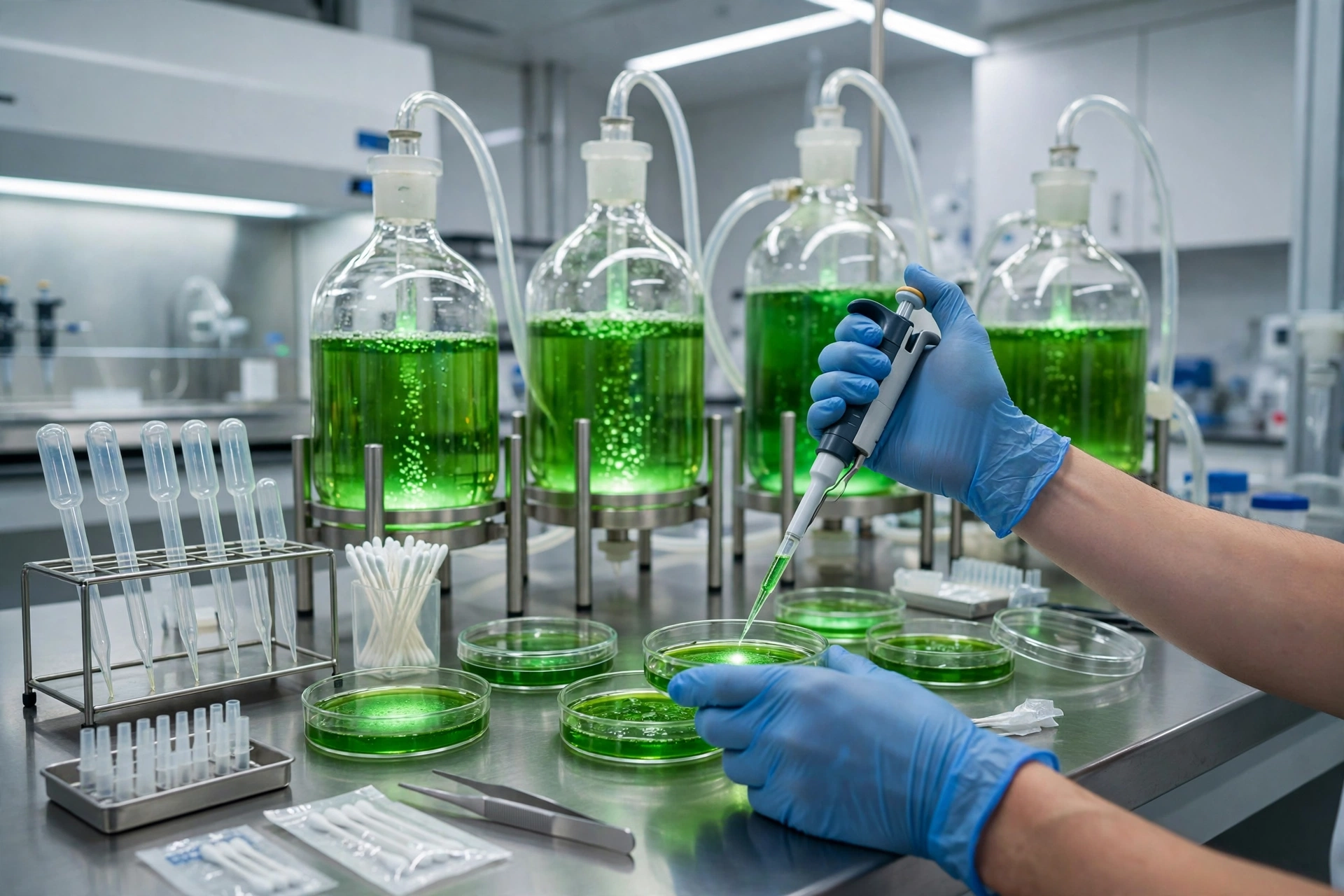
Picture a production meeting where the agenda jumps from enzyme dosing in a cheese vat to the label rules for a cultivated chicken nugget. Someone asks what precision fermentation changes on the factory floor, and nobody wants to guess. That is the gap this food biotechnology quiz hub is built to close: food careers increasingly sit at the intersection of old craft and new science, and these quizzes keep your knowledge sharp across both.
This hub gathers GIFSQ’s quizzes for category 09, Specialized & Emerging Food Technologies: established specialties like food extrusion and industrial microbiology, bio-based tools like enzyme technology and probiotics, and future-facing topics like precision fermentation and cultivated foods. The quizzes move from definitions and recognition through application to analysis, standards, and multi-step reasoning at the higher levels.
Most professionals arrive here with depth in one corner and thin spots elsewhere: a dairy technologist may know cultures inside out but feel shaky on novel food regulation. Use these quizzes like a calibration check, find the thin spots early, and retest until the answers come easily.
Established specialties
Food Extrusion. Covers screw design, barrel temperature profiles, moisture and pressure control, die geometry, and the textural properties of puffed snacks, cereals, and meat analogues.
Pet Food. Explores formulation for different life stages, extrusion and kibble production, palatability testing, and the safety and labeling basics of pet food manufacturing.
Industrial Microbiology. Reviews starter cultures, fermentation kinetics, contamination control, and large-scale microbial production of organic acids, amino acids, and other food ingredients.
Enzyme Technology. Looks at enzymes in food processing, from amylases in baking to proteases in brewing and dairy, covering reaction conditions, inactivation, and immobilized enzyme systems.
Bio-based ingredients and health
Nutraceuticals. Examines the science behind bioactive compounds in foods: what the ingredient does, what evidence supports the claim, and where the line sits between food and supplement in different markets.
Functional Foods. Builds on the same idea at product level: formulation of foods with added health benefits, dose levels of functional ingredients, and stability of actives through shelf life.
Probiotics. Tests strain selection, viability through processing and storage, colony-forming-unit labeling logic, and the handling conditions that keep live cultures alive to the end of shelf life.
Prebiotics. Focuses on fibers and oligosaccharides that feed beneficial gut bacteria: sources, fermentation behavior in the colon, and how prebiotic claims differ from probiotic ones.
Future foods and novel processes
Food Biotechnology. The umbrella topic: genetic and molecular tools applied to food crops, ingredients, and microorganisms, including the distinction between traditional breeding, mutagenesis, and modern recombinant techniques.
Novel Foods. Covers the concept of foods without a history of safe use and the safety assessment process regulators expect before market approval.
Alternative Proteins. Surveys protein sources beyond conventional meat: legumes, insects, algae, and microbial protein, comparing amino acid profiles, digestibility, and processing routes.
Plant-Based Foods. Zooms in on the formulation challenge: matching texture, flavor, and nutrition of animal products with plant ingredients.
Precision Fermentation. Explains how engineered microbes produce specific proteins and ingredients, from whey to egg-white proteins, without the animal.
Cultivated Foods. Covers cell-based meat and seafood: cell lines, growth media, scaffolding, scale-up hurdles, plus the regulatory and labeling questions around them.
Emerging Processing Technologies. Reviews non-thermal and advanced methods, high-pressure processing, pulsed electric fields, ultrasound, and cold plasma, with questions on mechanisms, equipment basics, and effects on quality and safety.
Future Food Technologies. A forward-looking set tying the themes together: how 3D food printing, smart bioreactors, and AI-assisted formulation could reshape production.
Suggested learning path
- Start with Industrial Microbiology. It underpins fermentation, enzymes, probiotics, and precision fermentation, so get comfortable with microbial growth and contamination control first.
- Add Enzyme Technology. Enzymes appear everywhere in this hub; learn reaction conditions and inactivation before moving on.
- Work through Food Extrusion. Many future-food products, including meat analogues and plant-based proteins, are extruded, so the hardware knowledge pays off repeatedly.
- Take Pet Food next: a compact applied topic that reinforces formulation, extrusion, and safety thinking in a different commercial context.
- Cover Probiotics and Prebiotics together. Live organisms on one side, the fibers that feed them on the other: the two reinforce each other.
- Study Nutraceuticals and Functional Foods: with the basics in place, tackle the evidence and formulation questions behind health claims.
- Learn Food Biotechnology as the umbrella. By now the vocabulary of genetic and molecular tools slots into real context rather than floating as abstract definitions.
- Move to Alternative Proteins and Plant-Based Foods. Apply protein chemistry and extrusion knowledge to the fastest-growing formulation challenge in the industry.
- Finish with Precision Fermentation, Cultivated Foods, Novel Foods, Emerging Processing Technologies, and Future Food Technologies. These build on everything before them and reward the accumulated foundation.
Who should take these quizzes
R&D staff and product developers use this hub to stay current as briefs shift toward plant-based lines and novel ingredients. QA and QC teams use it to understand what is arriving on the line, with new ingredients, test methods, and label checks. Food science students preparing for interviews or exams get structured revision across topics that textbooks often treat in isolation, and regulatory staff benefit from the novel foods and biotechnology sets, where terminology matters and precision avoids costly mistakes.
Difficulty runs from beginner through expert. Beginner questions test definitions and recognition, intermediate questions ask you to apply the knowledge, advanced questions involve calculations and process-parameter analysis, and expert questions present case studies with multi-step reasoning. Start one level below your comfort zone; move up once you score reliably.
If you finish this food biotechnology quiz collection and want adjacent material, the food science and technology hub deepens the core science, the product development hub covers formulation and shelf life, and the processing and preservation hub extends into conventional unit operations. For the full library, browse all quizzes.
GIFSQ Food Safety Desk · Published: October 1, 2026
Quizzes in this category
Every quiz in this category, with answers. Pick one to start.
Industrial Microbiology & Biotechnology
- Bioreactors Quiz (20 questions)
- Biotechnology Applications in Food Quiz (20 questions)
- CRISPR Quiz (20 questions)
- GMOs Quiz (20 questions)
- Gene Expression Quiz (20 questions)
- Genome Editing Quiz (20 questions)
- Industrial Media Quiz (20 questions)
- Industrial Microorganisms Quiz (20 questions)
- Molecular Biology Quiz (20 questions)
- Molecular Biology & Vitamins Quiz (20 questions)
- Other Bioreactors Topics & Other Biotechnology Topics Quiz (20 questions)
- Plant Biotechnology Quiz (20 questions)
- Recombinant DNA Quiz (20 questions)
- Single Cell Protein Quiz (20 questions)
- Strain Improvement Quiz (20 questions)
- Strain Selection Quiz (20 questions)
