SOP: Determination of Total Solids in Bread
GIFSQ — Global Institute for Food Safety & Quality
1. Principle
The part of bread other than water and included gas is called total solid. The total solid of bread is obtained from the method of drying.
2. Procedure
a. All types of bread not containing fruit
Accurately weigh about 5 g of bread immediately upon receipt (X)
↓
Cut the bread into slices 2–3 mm thick
↓
Spread the slices on paper and let dry in a warm room for 15–20 hours; when apparently dry, the bread breaks into fragments
↓
Grind the test sample finely and mix well
↓
Quantitatively transfer the air-dried bread to a balance pan and weigh accurately (Y)
↓
Proceed as in the moisture and total solids method for flour to determine the percentage total solids (Z) of the ground test sample
↓
Calculate the total solids of the bread as below
b. Raisin bread and bread containing fruit
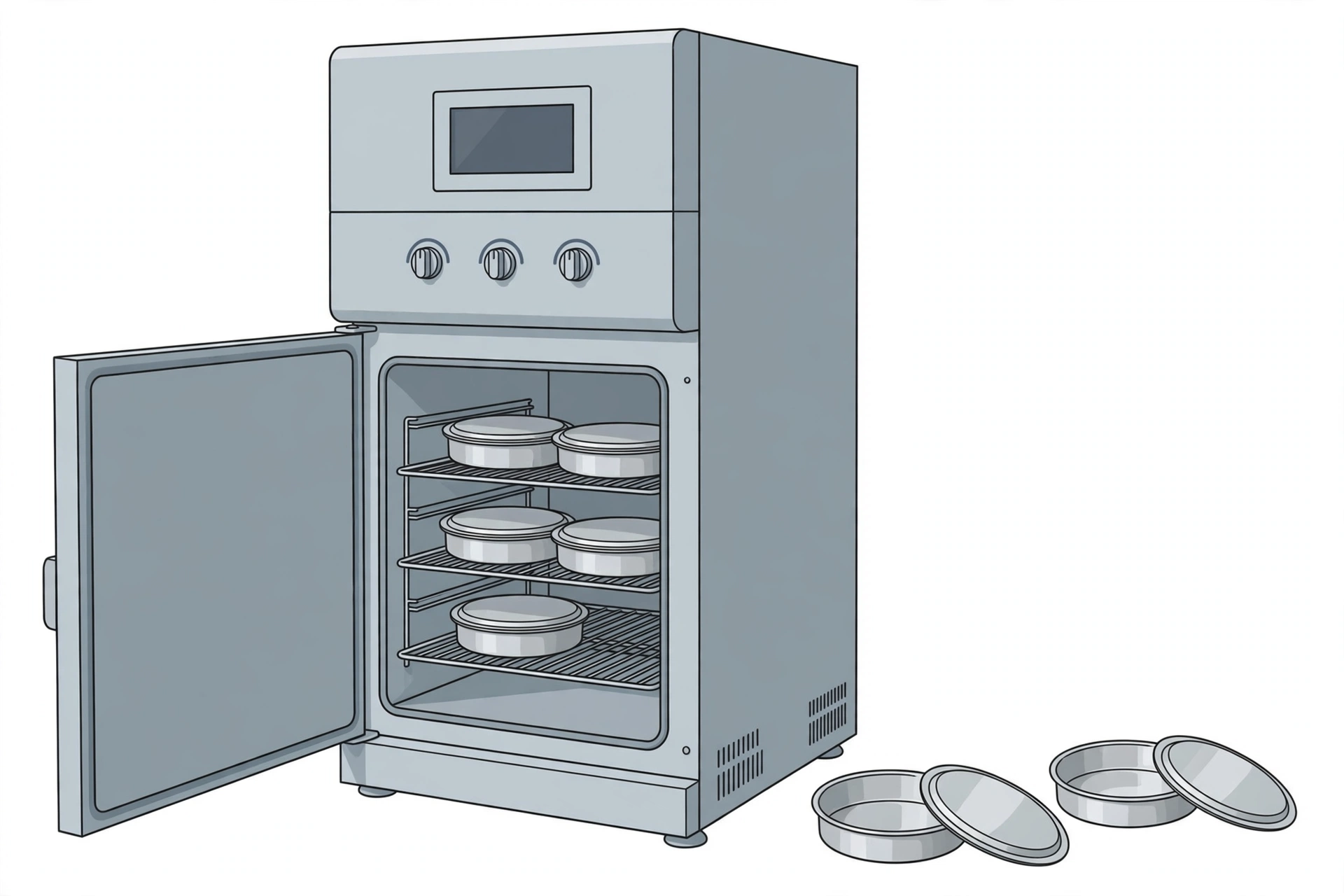
Proceed as in (a), except comminute by passing twice through a food chopper instead of a grinder, and dry the air-dried test sample in an uncovered dish for about 16 hours at 70°C under pressure ≤ 50 mm Hg.
3. Calculation
Total solids = [100 × Y × (Z/100)] ÷ X = (Y × Z) ÷ X
Where,
– X = weight of bread at time of receipt
– Y = weight of air-dried sliced bread
– Z = percentage total solids in the prepared ground test sample
4. Related determinations on bread (from the same section)
- Alcoholic acidity: proceed as in the alcoholic acidity method.
- Total ash: use 3–5 g of air-dried sample and proceed as in the total ash method.
- Acid insoluble ash: proceed as in the acid insoluble ash method.
- Protein in bread: determine total nitrogen as in the crude protein method using 2 g of prepared air-dried ground test sample; multiply percent N by factor 5.7 to obtain percent protein.