SOP: Determination of Titrable Acidity
GIFSQ — Global Institute for Food Safety & Quality
Principle
The acidity of the prepared sample solution is determined by titrating an aliquot with standard sodium hydroxide solution, using phenolphthalein as indicator. The result is calculated as per cent anhydrous citric acid (or as per cent of the other acid reported).
Apparatus required
- Blender or mortar
- Volumetric flasks
- Muslin cloth (previously washed and dried)
- Steam bath
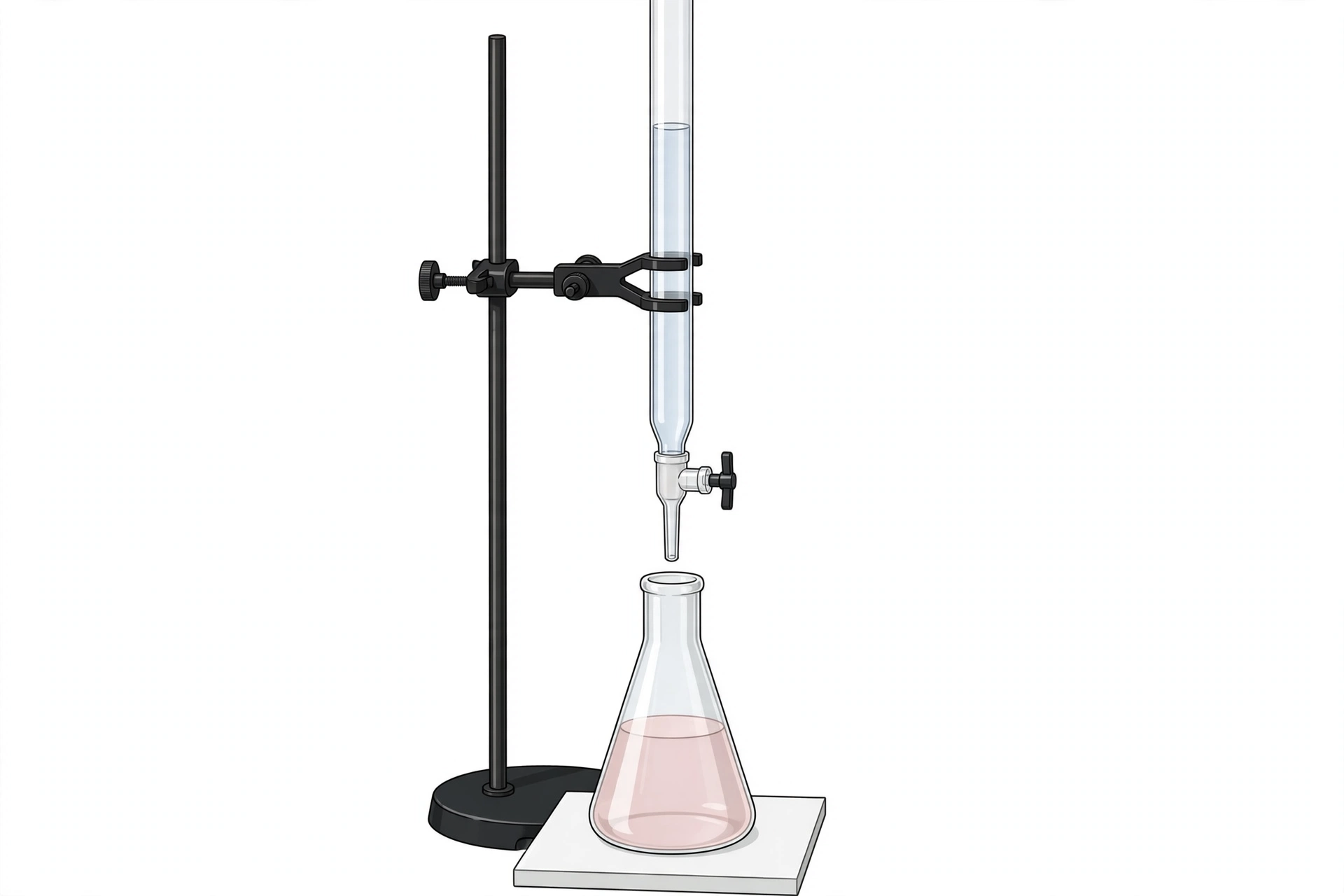
- Burette
- Small beaker
Reagents
a. 0.1 N sodium hydroxide (NaOH).
b. 1% phenolphthalein indicator solution (a few drops per titration).
c. Recently boiled distilled water.
d. Neutral water.
Sample preparation
Bring the sample into a suitable liquid form as follows:
- Juices: mix thoroughly by shaking and filter through previously washed and dried muslin cloth.
- Jellies and syrups: mix thoroughly; dissolve a known weight of the sample in water; heat on a steam bath to dissolve, if necessary; cool and make up to a known volume; take aliquots for the determination; if insoluble material is present, filter before taking the aliquots.
- Fresh fruits, dried fruits, preserves, jams and marmalades: pulp the sample in a blender or in a mortar and mix thoroughly; weigh the pulped material, add water and boil for 1 hr, replacing the water lost by evaporation; cool, transfer to a volumetric flask and make up to volume; filter, if necessary.
Procedure
Colourless or slightly coloured solutions
Dilute an aliquot of the prepared sample with recently boiled distilled water
↓
Titrate with 0.1 N NaOH, using a few drops of 1% phenolphthalein solution as indicator
↓
Note the titre value
Highly coloured solutions
Dilute the sample with distilled water and titrate just below the end point with 0.1 N NaOH, using phenolphthalein as indicator
↓
Transfer 2 or 3 ml of this solution into approximately 20 ml of neutral water in a small beaker — in this extra solution the fruit juice colour becomes so pale that the phenolphthalein colour is easily seen
↓
If the test shows that the end point has not been reached, pour the extra diluted portions back into the original solution, add more alkali and continue the titration to the end point
Alternative for highly coloured solutions
Dilute a small volume of sample (for example, 5 ml of purple grape juice) with a large volume of distilled water (300–400 ml) — the colour becomes so pale that the indicator colour change during titration is easily observed — and titrate with 0.1 N NaOH.
Calculation
% Total acid = [Normality of alkali × Volume of alkali × Volume made up × Equivalent wt. of acid × 100] ÷ [Volume of sample taken for estimation × Wt. or volume of sample taken × 1000]
Where,
- Normality of alkali = normality of the NaOH solution (0.1 N)
- Volume of alkali = titre value (ml)
- Volume made up = total volume to which the sample was made up (ml) — this term does not apply when the sample is taken directly for estimation, as with juices
- Equivalent wt. of acid = equivalent weight of anhydrous citric acid (or of the acid reported)
- Volume of sample taken for estimation = volume of the aliquot titrated (ml)
- Wt. or volume of sample taken = weight or volume of the original sample (g or ml)
Precautions
- Dilute the aliquot with recently boiled distilled water.
- For highly coloured solutions, use the small-beaker comparison — differences produced by a few drops of 0.1 N alkali are easily observed in the diluted extra solution.
- Titrate to the phenolphthalein end point and record the titre value without delay.
References
Ranganna, S., Handbook of Analysis and Quality Control for Fruit and Vegetable Products, 2nd edition.