SOP: Determination of Sugars by the Shaffer-Somogyi Micro Method
GIFSQ — Global Institute for Food Safety & Quality
Principle
Reducing sugars in pure solutions — or in plant materials after suitable pre-treatment to remove interfering substances — are estimated with a copper reagent of the type that uses iodometric titration of the cuprous oxide formed. This method can be used to determine the sugar content in vegetables.
Apparatus required
- 25 × 200 mm test tubes
- Funnels (for capping the tubes)
- Boiling water bath
- Cold water bath (running water)
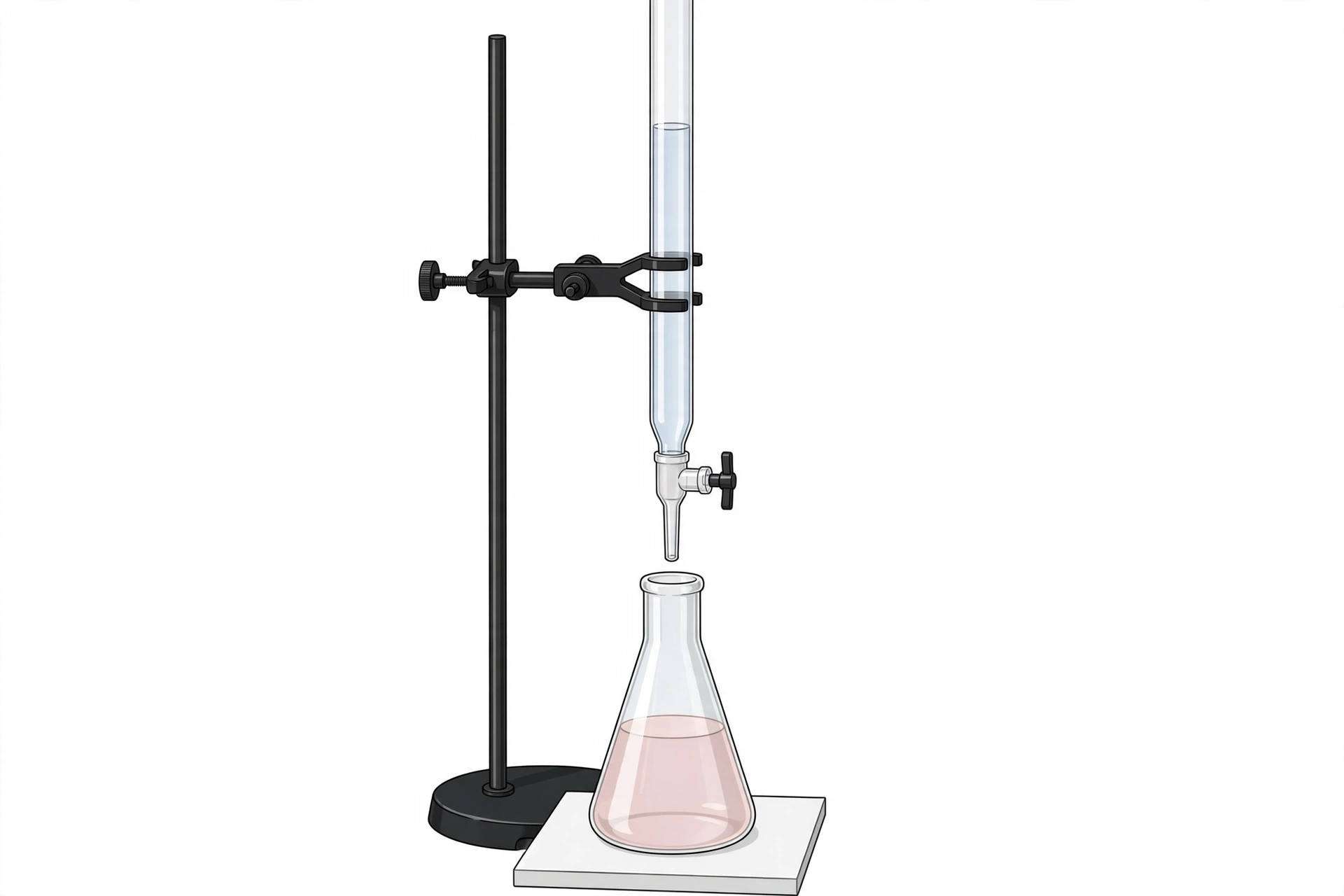
- Burette
Reagents
a. Copper sulphate solution: dissolve 100 g of copper sulphate (CuSO₄·5H₂O) in water and make up to 1,000 ml.
b. 0.1 N potassium iodate solution: make up 3.567 g of potassium iodate (KIO₃) to 1 litre with water.
c. Shaffer-Somogyi carbonate reagent: dissolve 25 g each of anhydrous sodium carbonate (Na₂CO₃) and Rochelle salt (potassium sodium tartrate, KNaC₄H₄O₆·4H₂O) in approximately 500 ml of water in a beaker; add with stirring 75 ml of the copper sulphate solution and 20 g of sodium bicarbonate (NaHCO₃); after dissolving, add 5 g of potassium iodide (KI); transfer the solution to a 1-litre volumetric flask, add 250 ml of the 0.1 N KIO₃ solution; make up to volume and filter; store overnight before use.
d. Iodide-oxalate solution: dissolve 2.5 g of potassium iodide (KI) and 2.5 g of potassium oxalate (K₂C₂O₄) in water and dilute to 100 ml; prepare fresh weekly.
e. 0.005 N thiosulphate standard solution: prepare by dilution from the stock 0.1 N solution.
f. 2 N sulphuric acid (H₂SO₄) solution.
g. Starch indicator.
Sample preparation
Weigh 2.5–5.0 g of sample and transfer to a 250-ml beaker; add about 50 ml of water, heat to boiling, cool and transfer to a 250-ml volumetric flask
↓
Add lead acetate solution, shake and let stand for 10 min
↓
Precipitate the excess lead with the necessary amount of potassium oxalate solution (22% in water)
↓
Make up to volume with water and filter
Procedure — Reducing sugars
Pipette 5 ml of the solution (containing 0.5–2.5 mg of dextrose) into a 25 × 200 mm test tube
↓
Add 5 ml of the Shaffer-Somogyi reagent and mix well by swirling
↓
Prepare the blank using 5 ml of water and 5 ml of the Shaffer-Somogyi reagent
↓
Cap the tubes with funnels and place in a boiling water bath for 15 min
↓
Remove the tubes carefully without disturbing and cool in running water for 4 min
↓
Remove the funnels; add down the side of each tube 2 ml of the iodide-oxalate solution and then 3 ml of 2 N H₂SO₄, without agitating the solutions
↓
Mix thoroughly to ensure that all the cuprous oxide is dissolved, and let stand in a cold water bath for 5 min, mixing twice during that time
↓
Titrate with 0.005 N thiosulphate solution, using starch as indicator
↓
Subtract the titre value of the test solution from that of the blank, and determine the mg of dextrose in 5 ml of solution from the dextrose–thiosulphate equivalents given below
↓
Make control determinations with known amounts of dextrose and apply corrections for any deviations from the tabulated values
Procedure — Total sugars
To 25 ml of the filtrate in a 50-ml volumetric flask add 5.0 ml of HCl (1+1)
↓
Allow to stand for 24 hr at room temperature
↓
Neutralize exactly with sodium hydroxide and make up to volume with water
↓
Take an aliquot and determine the total invert sugars as in the reducing-sugars procedure
Calculation
Reducing sugars % = (mg of dextrose × Volume made up × 100) ÷ (5 × Wt. of sample taken × 1000)
Total and non-reducing sugars are calculated as in the Lane and Eynon method for sugars.
mg of dextrose in 5 ml of solution = 0.1099 × (ml of 0.005 N Na₂S₂O₃) + 0.048
Where,
- mg of dextrose = read from the table below for the value (blank titre − test titre)
- Volume made up = volume to which the sample solution was made up (ml)
- Wt. of sample taken = weight of the sample (g)
- 5 = volume of the aliquot taken for the determination (ml)
Shaffer-Somogyi dextrose–thiosulphate equivalents
mg of dextrose in 5 ml of solution (each 0.1 ml of thiosulphate adds 0.011 mg):
| ml of 0.005 N thiosulphate | mg dextrose in 5 ml |
|---|---|
| 3 | 0.378 |
| 4 | 0.488 |
| 5 | 0.598 |
| 6 | 0.707 |
| 7 | 0.817 |
| 8 | 0.927 |
| 9 | 1.037 |
| 10 | 1.147 |
| 11 | 1.257 |
| 12 | 1.367 |
| 13 | 1.477 |
| 14 | 1.587 |
| 15 | 1.697 |
| 16 | 1.806 |
| 17 | 1.916 |
| 18 | 2.026 |
| 19 | 2.136 |
| 20 | 2.246 |
| 21 | 2.356 |
| 22 | 2.466 |
Adapted from the AOAC Official Methods of Analysis, 11th edition, p. 536, Table 31.056 (1970) — cited in the book.
Precautions
- Do not agitate the solutions when adding the iodide-oxalate solution and the sulphuric acid down the side of the tube; mix only afterwards.
- Cool the tubes undisturbed in running water for the full 4 min.
- Prepare the iodide-oxalate solution fresh weekly, and store the carbonate reagent overnight before use.
- Run control determinations with known amounts of dextrose and apply corrections for any deviations from the tabulated values.
References
Ranganna, S., Handbook of Analysis and Quality Control for Fruit and Vegetable Products, 2nd edition.
McDonald, E.J. & Foley, B.Y., J. Assoc. Offic. Agric. Chem., 52, 645 (1969) — cited in the book.
Somogyi, M., J. Biol. Chem., 160, 61 (1945) — cited in the book.
White, J.W. Jr., J. Assoc. Offic. Agric. Chem., 42, 341 (1959) — cited in the book.