SOP: Sampling and Preparation of Samples for Fruit and Vegetable Products
GIFSQ — Global Institute for Food Safety & Quality
Principle
Foods and food products vary in composition, and plant foods vary more than flesh foods; processing adds further variation. Individuals of the same variety and maturity differ from one another, and the parts of a single fruit or vegetable differ as well. Carbohydrate, fat and protein contents of foods of vegetable origin are more constant than the contents of the mineral elements. A sample taken for analysis must therefore be representative and must reflect all the homogeneous parts of the heterogeneous population, with enough material taken to compensate for variability.
Apparatus required
- Blender
- Food chopper (with coarse cutting blade and nut butter blade)
- High-speed blender
- Mortar
- Spatula
- Large sheet (for quartering)
- Muslin cloth, previously washed and dried (for juice samples)
- Damp cloth (for wiping fresh produce)
- Sieve (for draining canned products)
- Sample jars with tight stoppers
- Hermetically sealed inert containers: glass jars, wide-mouthed bottles with screw caps, friction-top tin containers
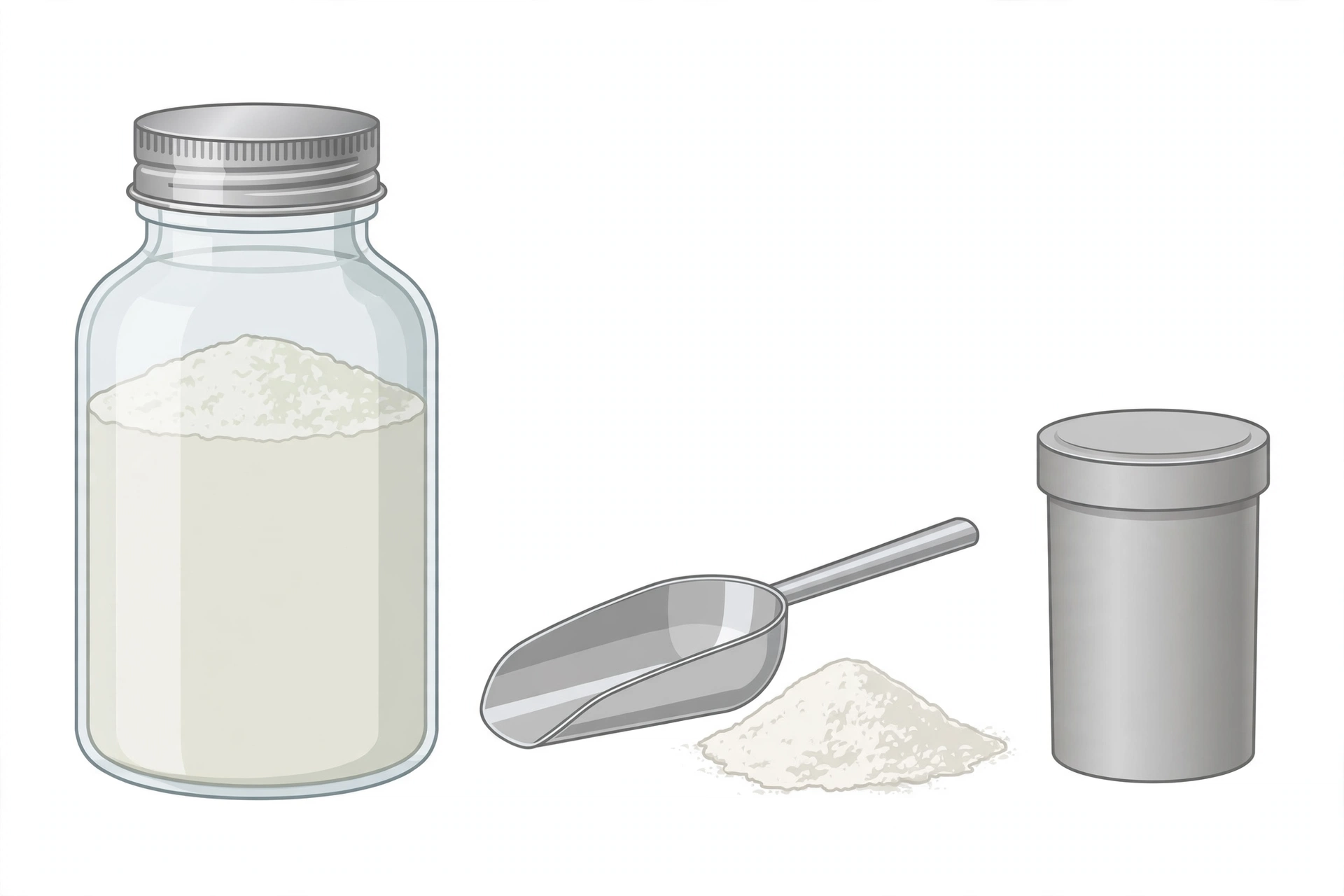
Reagents
a. Boiling alcohol: use enough to give a strength of 80% alcohol in the mix, to inactivate enzymes.
b. Calcium carbonate: add sufficient to neutralize the acidity of the material when it is intended for the estimation of sugars.
c. Neutral lead acetate: add an excess to a weighed sample; fruits and fruit products for sugar analysis keep for several days with this preservative.
d. Acetic acid or sodium benzoate: preservative for products likely to undergo microbial spoilage; freezing or drying may be used instead.
e. Toluene or thymol: preservative for liquid products (not efficient; ensure distribution throughout the mass).
f. Merthiolate solution (0.1%): preservative used in the estimation of enzyme activity (superior to toluene for this purpose).
Procedure
↓
Take enough material to compensate for variability; where the variability of the individuals is known from repeated analyses, estimate the number of individuals statistically from n = C√N
↓
Where,
- n = number of individuals to be selected
- C = a factor representing the degree of accuracy desired in the sample
- N = lot size
↓
Where the extent of variability is not known, select at least ten times the amount to be taken as a sample for analysis
↓
Avoid the sampling errors: (a) failure to select the individuals at random; (b) change in composition during sampling, such as loss or absorption of moisture, loss of volatile constituents, or deterioration of fresh fruits and vegetables through respiration, enzyme activity or mechanical injury; (c) difficulty in obtaining a uniform sample
↓
Analyse replicate samples, considering the variability and the requirements of the analytical technique
↓
Prepare the sample by product type:
Fresh fruits and vegetables: remove adhering soil or sand by washing or wiping the surfaces with a damp cloth; avoid excessive washing to prevent leaching of soluble solids; separate the fresh tissue into core, outer and inner tissue according to the objectives of the analysis; separate the shells from nut kernels; remove the pits from the flesh of stone fruits; comminute the prepared material in a blender
↓
Enzymes naturally present may cause undesirable changes: inactivate them with steam or boiling alcohol, using enough alcohol to give 80% strength in the mix; cut the material into small pieces and drop directly into the boiling alcohol; when the material is intended for the estimation of sugars, add sufficient calcium carbonate to neutralize the acidity and heat preferably under reflux for 30 min
↓
Alternatively, prepare plant tissues by drying in a vacuum oven at 60°C; drying at atmospheric pressure, even at a lower temperature, causes undesirable changes; dry only enough to keep the dried matter stable during storage; when the moisture content is 6% or above, nonenzymatic browning occurs at room temperature, but at lower moisture contents, at which browning is inhibited, lipids may become rancid; powder the dried matter to pass through a 60 mesh sieve
↓
Canned fruits and vegetables: for a composite sample, mix and comminute the entire contents; for solid and liquid portions separately, drain the contents on a sieve and comminute the solid matter
↓
Dried fruits: pass the sample through a food chopper three times, mixing thoroughly after each grinding; if needed, grind first with a coarse cutting blade and finish with a nut butter blade
↓
Pureed products (tomato puree, ketchup, fruit pulps, strained fruits and vegetables): shake thoroughly before sampling
↓
Frozen products: comminute by grinding while frozen, in a cold room
↓
Fruit juice beverages containing insoluble matter: blend in a high-speed blender until thoroughly uniform
↓
Powdery or granular materials (quartering): spread the material from the container on a large sheet and mix with a spatula; draw a cross over the heaped material; remove two diagonally opposite segments and return them to the original container; remix the remaining segments and draw a cross over the heap again; remove the two opposite segments and transfer to the original container; repeat until about 250 g remains; grind the granular material at this stage if needed; transfer to a sample jar and stopper tightly
↓
Store and preserve the prepared samples:
Store prepared samples in hermetically sealed inert containers such as glass jars or wide-mouthed bottles with screw caps, or friction-top tin containers; store dried fruits and fruit peels containing 20–30% moisture in glass or plastic containers
↓
Analyse components likely to change (for example ascorbic acid) immediately after preparation
↓
Prevent hydrolytic changes caused by enzymes by dropping the sample into boiling alcohol; store alcoholic extracts below 0°C to prevent changes in composition
↓
Preserve products likely to undergo microbial spoilage with acetic acid or sodium benzoate, by freezing, or by drying
↓
Freeze samples in air- and moisture-proof containers by rapid freezing and store below −6.7°C (20°F); this prevents microbial activity but not enzyme activity, which continues, though more slowly, at temperatures down to −40°C (−40°F)
↓
Store dried products at 0°C to 10°C to minimize deterioration
↓
Before analysis of samples stored at low temperature, warm the entire sealed container to room temperature, or transfer a portion quickly to a clean, dry, stoppered container, to avoid changes in moisture content
Calculation
Not applicable — no numerical determination is made in this procedure.
Precautions
- Avoid excessive washing of fresh produce so that soluble solids are not leached out.
- Weigh and handle samples quickly to avoid loss or absorption of moisture.
- Toluene used as a preservative in liquid products is not efficient — ensure it is distributed throughout the mass.
- Keep dried samples away from moisture during storage; brown or rancid material is no longer representative.
- Do not let prepared samples stand unpreserved when microbial spoilage or enzyme action is possible.
References
Ranganna, S., Handbook of Analysis and Quality Control for Fruit and Vegetable Products, 2nd edition.