SOP: Determination of Suitability of Milk for Pasteurization by Clot-on-Boiling (COB) Test
GIFSQ — Global Institute for Food Safety & Quality
Scope
This method is applicable for raw milk.
1. Principle
This is a quick test to determine developed acidity and the suitability of milk for processing. A milk sample that clots or precipitates when heated to boiling temperature is not suitable for further processing. The average acidity at which milk clots on boiling is 0.23% (as lactic acid), but milk varies widely in this respect.
2. Apparatus
- Test tube (20 mL capacity)
- Water bath
3. Procedure
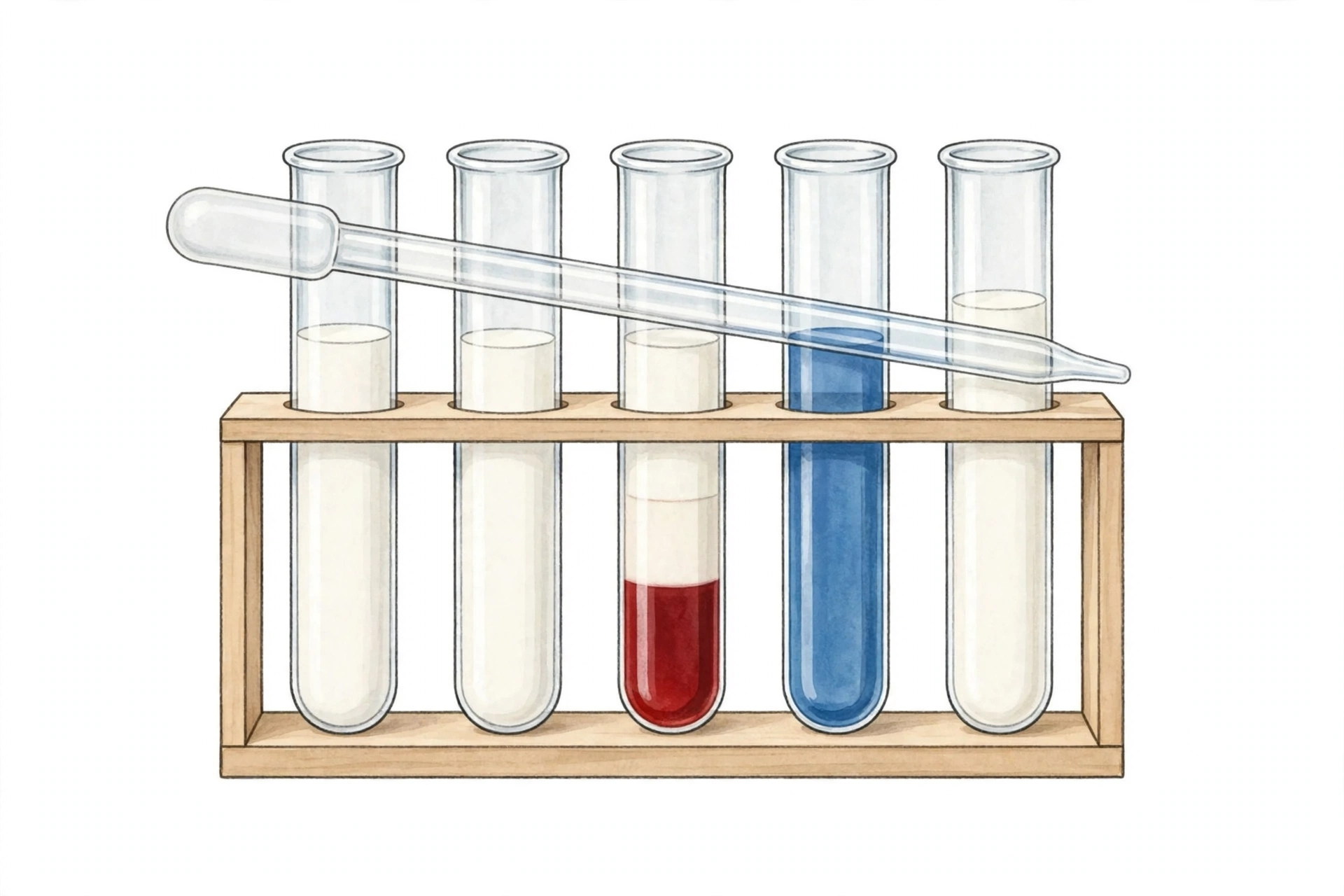
Transfer 5 mL of the sample to the test tube
↓
Boil over a flame for a few seconds
↓
Remove the tube and rotate it in an almost horizontal position and examine the film of milk on the side of the test tube for any precipitated particles
↓
The formation of a clot is indicative of a positive test. The COB test is positive also when milk on heat treatment coagulates, thickens, lumps, flakes, grains or precipitates
Milk that gives a positive COB is not suitable for distribution as liquid milk or for processing.
References
NDDB (2001), Laboratory Handbook for Dairy Industry, Method 5.4, page 49.