SOP: Peroxide Value of Extracted Fat (Noodles and Fried Snacks)
GIFSQ — Global Institute for Food Safety & Quality
Definition
Peroxide value is the measure of the reactive oxygen content of a fat, expressed in terms of milliequivalents of oxygen per 1000 gram of fat, or as millimols of peroxide per kilogram of fat (1 millimol = 2 milliequivalents). The peroxide value provides an estimate of the overall oxidation status for lipids and lipid containing foods in the primary phase of oxidation, generally known as the induction period.
1. Principle
The estimation of peroxide is based primarily on the ability of peroxides to liberate iodine from potassium iodide:
ROOH + KI ⟶ ROH + KOH + I₂
The amount of peroxide (ROOH) is then determined by measuring the amount of iodine formed, which is done by titration with sodium thiosulphate using a starch indicator:
I₂ + starch + 2Na₂S₂O₃ (blue) ⟶ 2NaI + starch + Na₂S₄O₆ (colorless)
2. Reagents
a. Acetic acid–chloroform solution — mix 3 volumes of glacial acetic acid with 2 volumes of chloroform.
b. Starch solution (1%) — mix about 1 g soluble starch with enough cold water to make a thin paste, add 100 mL boiling water, and boil about 1 minute while stirring.
c. Potassium dichromate (K₂Cr₂O₇) — finely grind and dry to constant weight (at 110°C) before using.
d. Hydrochloric acid — concentrated, sp. gravity 1.19.
e. Potassium iodide solution, saturated — dissolve excess KI in freshly boiled water; excess solid must remain. Store in the dark. Test daily by adding 0.5 mL to 30 mL of acetic acid–chloroform solution, then add 2 drops of 1% starch solution. If the solution turns blue, requiring more than 1 drop of 0.1 N Na₂S₂O₃ to discharge the color, prepare a fresh solution.
f. Sodium thiosulfate standard solution (0.1 N) — dissolve 24.81 g of sodium thiosulphate in freshly boiled and cooled distilled water and dilute to 1 litre in a volumetric flask. Standardize with potassium dichromate (K₂Cr₂O₇) as described below, and store in an amber colored bottle.
3. Standardization of sodium thiosulfate
Accurately weigh 0.16–0.22 g of dried, finely ground K₂Cr₂O₇, to the nearest 0.0001 g, into a 500 mL flask. Dissolve in 25 mL water, add 5 mL concentrated HCl and 20 mL saturated KI solution, and rotate to mix. Let it stand for 5 minutes. Add 100 mL water. Titrate with the sodium thiosulfate solution to be standardized, shaking continuously until the yellow color has almost disappeared. Add 1–2 mL starch indicator solution and continue adding thiosulfate solution slowly until the blue color just disappears.
Normality of Na₂S₂O₃ = (Weight of K₂Cr₂O₇ × 1000) ÷ (mL of sodium thiosulphate × 49.03)
4. Procedure
Take 8–10 g (1 thimble full) of ground sample
↓
Proceed as in the crude fat method to extract the fat with petroleum ether for 3–4 hours
↓
To the extracted fat add 30 mL of acetic acid–chloroform solvent mixture and swirl to dissolve, then transfer quantitatively to a 250 mL stoppered conical flask
↓
Add 0.5 mL of freshly prepared saturated KI solution
↓
Keep in the dark for one minute with occasional shaking
↓
Take out from the dark and wash the sides of the flask and stopper with about 30 mL of distilled water
↓
Add 1 mL of starch solution as indicator
↓
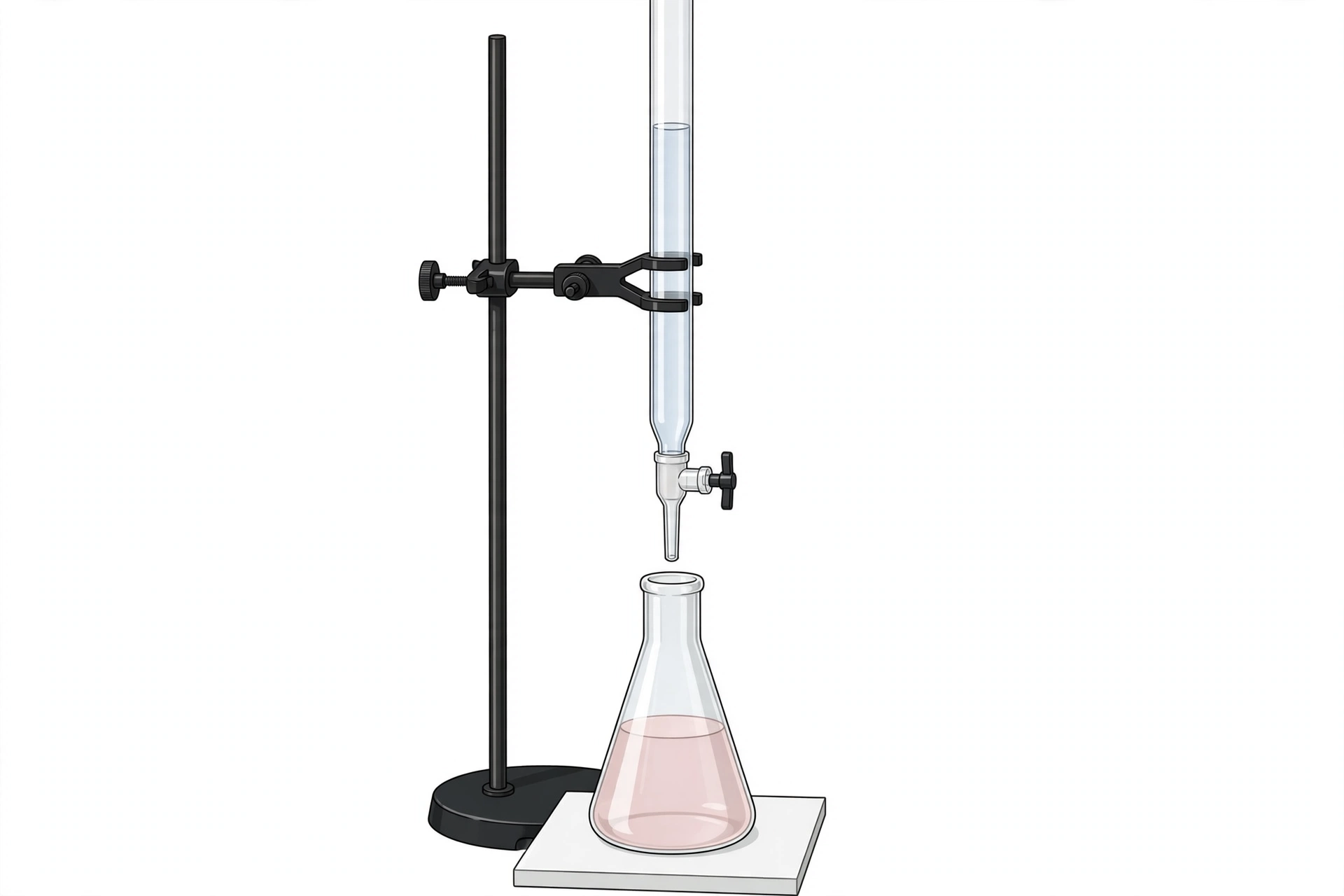
Titrate the liberated iodine with 0.01 N sodium thiosulphate solution
↓
The blue color disappears at the end point
5. Calculation
Peroxide value (millimol per kg fat) = [(S1 − S2) × N × 1000] ÷ Weight of extracted fat
Where,
– S1 = mL Na₂S₂O₃ consumed by sample
– S2 = mL Na₂S₂O₃ consumed by blank
– N = normality of sodium thiosulphate solution
References
AOAC, 21st Edition, 2019, Official Method 965.33, Peroxide value of oils and fats.