SOP: Determination of MSG in Foods by HPLC-UV
GIFSQ — Global Institute for Food Safety & Quality
(The manual numbers both the salt method and this method 2.3.17.)
1. Scope
The method is applied to all types of noodles and MSG containing foods including seasonings.
2. Definition
This method determines the concentration of Monosodium Glutamate (MSG). The result is usually expressed in percentage.
3. Principle
MSG is determined in noodle samples after derivatized glutamic acid with DNFB at pH 7.5 to 8.0, using reverse phase HPLC equipped with UV detector at 254 nm wavelength. The area of peak is compared with those from the standard of known concentrations.
4. Apparatus/Instruments
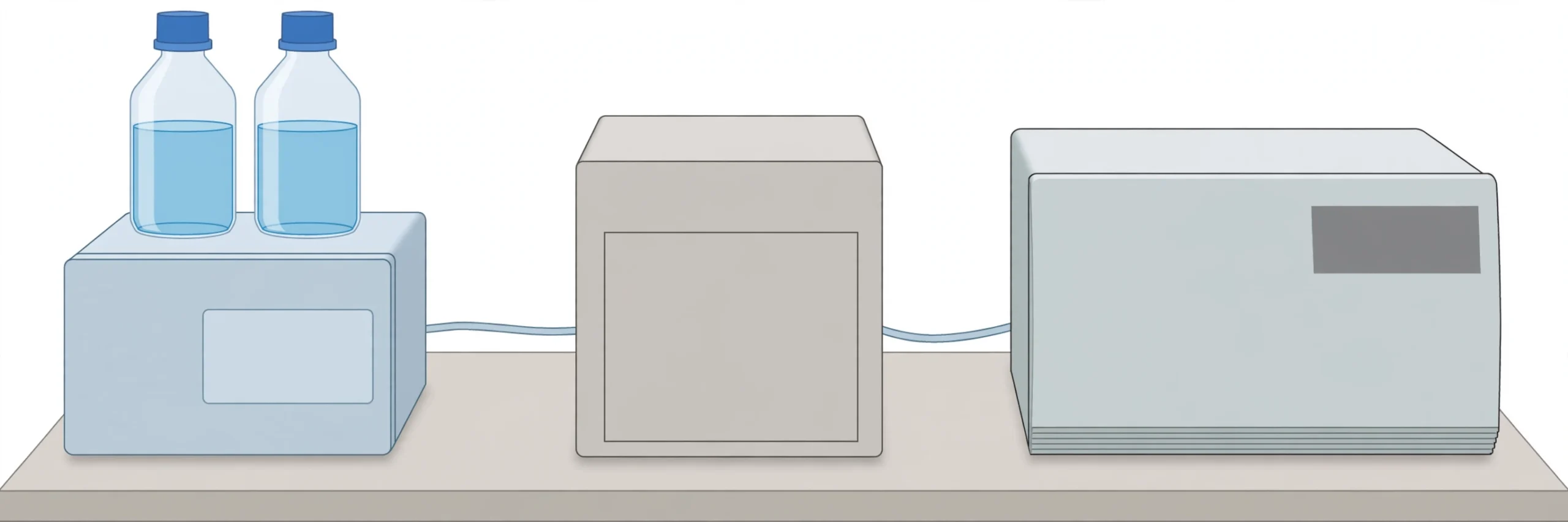
- HPLC – UV detector
- pH meter
- Sample homogenizer
- Vortex mixer
- Shaker
- Electronic balance (d = 0.0001 g)
- Sonicator
- Micropipette
- Syringe
- Volumetric flask
- Membrane filter (0.20 µm)
- Vials and caps
- Beakers
- Tarson tubes (15 mL)
- Droppers
- Test tubes
- Centrifuge
5. Reagents
- L-Glutamic acid Standard (HPLC Grade, Sigma standard)
- Diethyl ether (HPLC grade)
- Trichloroethylene (AR grade)
- Hydrochloric acid (Analytical grade)
- Methanol (HPLC grade)
- Water (HPLC grade)
- Glacial acetic acid (HPLC grade)
- Acetonitrile (HPLC grade)
- Sodium bicarbonate (Analytical grade)
6. Preparation of standard
Weigh 100 mg glutamic acid standard and make solution in 100 mL volumetric flask with HPLC water. This yields 1000 ppm solution. From the above stock solution make the following standards by diluting with HPLC water in 10 mL volumetric flasks:
- 750 ppm
- 500 ppm
- 200 ppm
- 100 ppm
- 10 ppm
7. Preparation of sample for injection
a. Isolation of MSG from noodle
Weigh 10–20 g of homogenized sample in a beaker, then add 20–30 mL distilled water, then homogenize in homogenizer. Make final volume to 100 mL in volumetric flask with distilled water. Shake well and filter through a Buchner filter. Alternatively centrifuge, then filter through No. 1 Whatman filter paper. Collect the filtrate, then take 10 mL aliquot in 15 mL Tarson tube, add 2 mL trichloroethylene. Centrifuge at 300 rpm for 15 min. Discard the organic phase and use the aqueous phase for chromatographic analysis.
b. Pre-column derivatization
Adjust the pH of supernatant phase to pH 7.5 to 8.0 by adding appropriate amount of sodium bicarbonate (5%). Transfer 0.5 mL pH adjusted sample to a test tube (or Tarson tube) and add 10 µL of 2,4-DNFB, then shake the mixture in the dark at 40°C for 3 hrs. Remove the excess DNFB by extracting it with diethyl ether. Acidify the remaining aqueous fraction with 50 µL 6 N HCl and shake, and extract the DNP-glutamic acid with diethyl ether until the ether no longer becomes colored. Evaporate the ether and take up the residue in 0.50 mL of methanol and inject 10 µL in HPLC.
8. Preparation of HPLC solvents
a. 1% (v/v) acetic acid: 5 mL glacial acetic acid is added in 500 mL volumetric flask, then make up volume with HPLC water and then filter through 0.45 µm filter using vacuum pumps. The filtrate is sonicated.
b. Acetonitrile: Acetonitrile is used directly after sonication.
9. HPLC conditions for analysis
- Mobile phase A: 1% (v/v) glacial acetic acid
- Mobile phase B: Acetonitrile
- Pump: Binary gradient (25% pump B)
- Run time: 15 min
- Flow rate: 1.2 mL/min
- Oven temp: 40°C
- Detector wavelength: UV-254 nm
- Column: C₁₈
- Injection volume: 10 µL
10. Calculation and expression of results
MSG content of the sample is calculated by comparing the corresponding peak areas of the sample and those of the standard solution, taking into account the weight taken and dilution factor. The result is expressed in % of glutamic acid, then multiplied by factor 1.15 in order to express result in % monosodium glutamate.
% MSG = % glutamic acid × 1.15
Note: The coefficient of determination (r²) value should be at least 0.998 for 5-point calibration curve.
References
FSSAI (2012). 7.2 Determination of Monosodium Glutamate in foods, HPLC Method II, Lab Manual 8, Manual of Method of Analysis of Foods (Food Additives).