SOP: Determination of Moisture Content in Tea and Coffee
GIFSQ — Global Institute for Food Safety & Quality
1. Principle
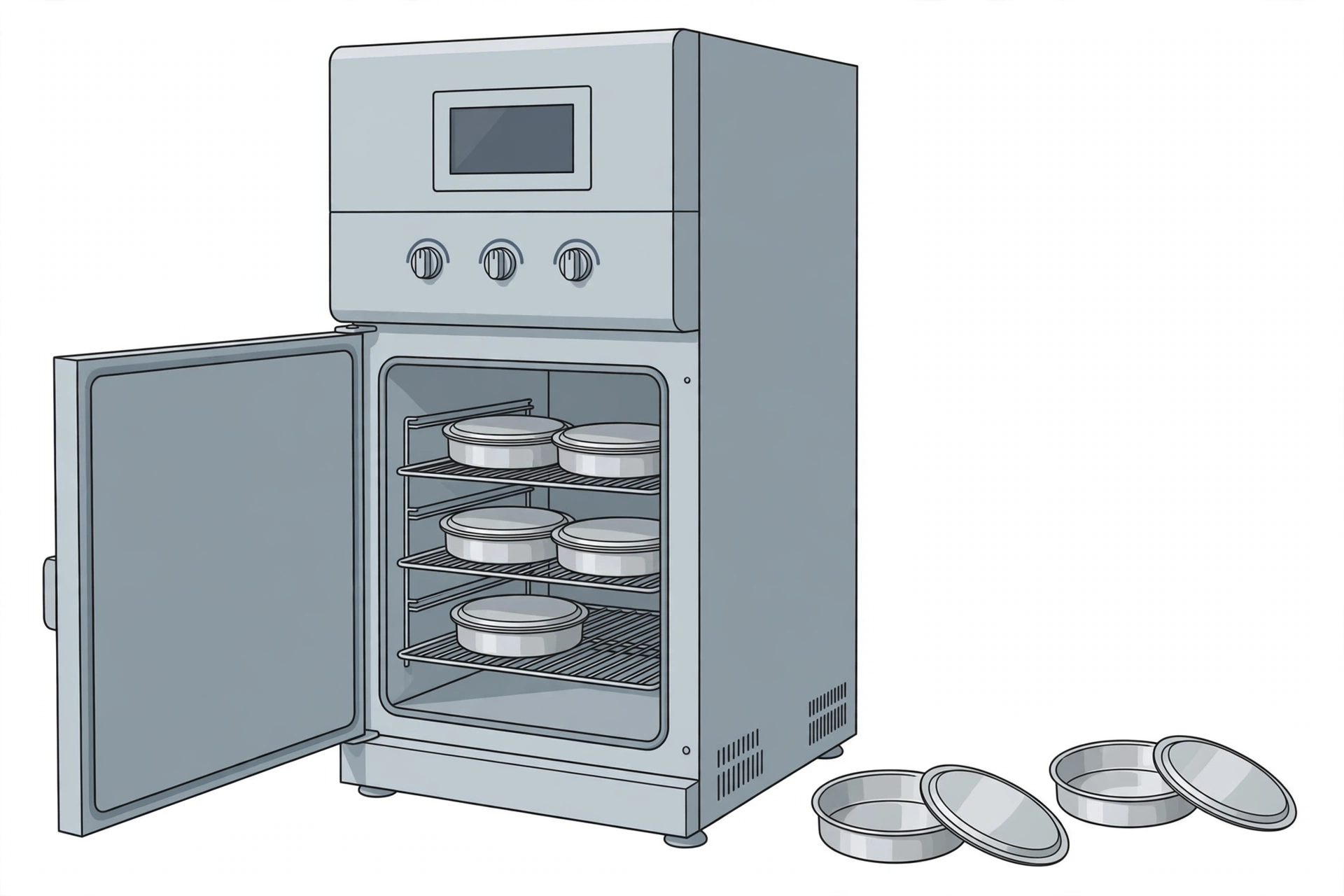
Moisture in tea is determined by the Hot Air Oven method. The sample is heated under carefully specified conditions and the loss of weight is taken as a measure of the moisture content of the sample.
2. Application
This method is applicable for determining moisture content in all types of tea and coffee samples.
3. Apparatus
- Electronic Balance (± 0.001 g readability)
- Temperature Control oven
- Aluminum dish (7.5 cm diameter and 2.5 cm deep)
- Metal Tong
- Desiccators
4. Procedure
Dry Aluminum dish at 125°C for ½ an hour in an oven
↓
Cool in desiccators for ½ an hour
↓
Weigh dry Aluminum dish (A)
↓
Weigh 5 g of sample in Aluminum dish (B)
↓
Dry sample in hot air oven having temp. 100±2°C for 5–6 hours
↓
Remove sample and cool into desiccators for ½ an hour
↓
Weigh Aluminum dish with dried sample
↓
Dry again for ½ an hour, cool in desiccators and weigh
↓
Repeat the process of heating and cooling in desiccators until the difference in two successive weighings is less than 1 mg. Record the lowest weight of Aluminum dish with dried sample (C)
5. Calculation
Moisture (% by weight) = [(B − C) ÷ (B − A)] × 100
Where,
– A = weight of Aluminum dish
– B = weight of Aluminum dish with sample
– C = weight of Aluminum dish with dried sample
6. Precautions
- Spread the sample over a large surface.
- The cooling desiccator must contain effective desiccant (self-indicating silica gel being convenient).
7. Limit of detection
In an ideal drying procedure for the determination of moisture, weight losses should result from quantitative and rapid volatilization of water. In practice, heating of an organic substance also causes volatilization of other absorbed materials; oxidation phenomena occur at all temperatures at widely varying rates, and will cause fluctuation in results.
References
FSSAI 2015, 1.2; Determination of Moisture.