SOP: Enumeration of Escherichia coli in a Variety of Foods using the TEMPO EC (E. coli Count) method
GIFSQ — Global Institute for Food Safety & Quality
Principle
This method enumerates Escherichia coli in foods to determine compliance with Sections 4 and 7 of the Food and Drugs Act and other relevant federal regulations. It is validated for all foods except strongly coloured foods (the primary dilution may need a higher dilution for strongly coloured foods).
The TEMPO EC (E. coli Count) test is intended for use exclusively with the TEMPO system, for the enumeration of E. coli in 22- 27 hours. The test consists of a vial of culture medium and a card, which are specific to this method.
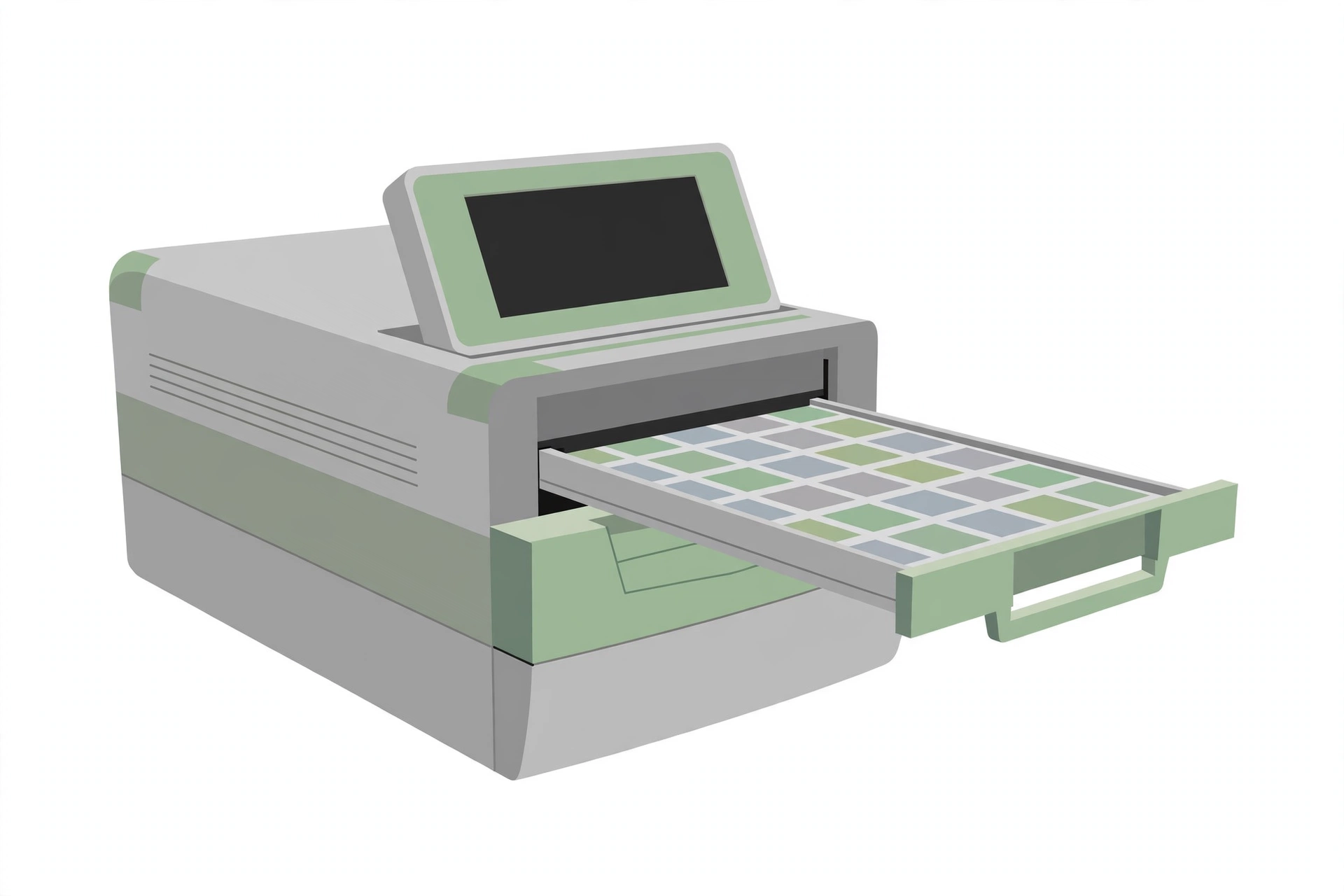
The culture medium is inoculated with the sample to be tested. The inoculated medium is transferred by the TEMPO Filler instrument into the card containing 48 wells of three different volumes. The card contains 3 sets of 16 wells (small, medium and large wells) with a one log difference in volume for each set of wells. The card is designed to simulate the Most Probable Number (MPN) method. The card is then hermetically sealed in order to avoid any risk of contamination during subsequent handling.
Based on the β-glucuronidase enzymatic activity, E. coli present in the card reduce the substrate in the culture medium during incubation and cause a fluorescent signal to appear, which is detected by the TEMPO Reader instrument. Depending on the number and type of the positive wells, the TEMPO system calculates the number of E. coli present in the original sample according to a calculation based on the MPN method.
Apparatus
The following are used as named:
- TEMPO system, which includes a TEMPO Filler, a TEMPO Reader and all necessary components for its intended use
- TEMPO EC (reference 80004) Assay kit, containing the necessary reagents including cards and culture medium in vials for the analysis of 48 test samples
- TEMPO Filter Bags (reference 80015)
- Pipette to dispense 0.10mL or 1.0mL and disposable tips
- Vortex type mixer
- Stomacher, blender or equivalent
- Incubator capable of maintaining 35°C
- TEMPO Control Kit (reference 80000)
Note: It is the responsibility of each laboratory to ensure that the temperatures of the incubators or water baths are maintained at the recommended temperatures. The following applies to steps of the method which apply to growth only. Where a temperature of ≤ 37°C is recommended in the text of the method, the temperature may be ± 1.0°C, e.g., 35 ± 1.0°C. However, where higher temperatures are recommended, it is imperative that the incubators or water baths be maintained within 0.5°C due to potential lethality of the higher temperatures on the microorganism(s) being isolated.
Reagents
The method formulates no reagents itself; the following are used as named:
- 0.1% Peptone water
- To prepare: suspend 1.0 g of peptone in 1.0 L of distilled water; mix thoroughly and dispense; autoclave at 121 °C for 15 min. Final pH 7.0 ± 0.2.
- Sterile deionized or distilled water
- Secondary diluent, as required by the TEMPO EC assay kit
It is the responsibility of the laboratory to ensure equivalency if any variations of the media formulations listed here are used (either product that is commercially available or made from scratch).
Sample preparation
Handling of sample units
- In the laboratory prior to analysis, except for shelf-stable foods, keep sample units refrigerated or frozen, depending on the nature of the product. Thaw frozen samples in a refrigerator, or under time and temperature conditions which prevent microbial growth or death.
- Analyze sample units as soon as possible after their receipt in the laboratory.
Preparation for analysis
- Have primary and secondary sterile diluent prepared, pre-warmed to room temperature before use.
- Clean the surface of the working area with a suitable disinfectant.
Preparation of sample
- To ensure a representative analytical unit, agitate liquids or free flowing materials until the contents are homogeneous. If the sample unit is a solid, obtain the analytical unit by taking a portion from several locations within the sample unit.
- Prepare a 1 in 10 primary dilution of the food in a TEMPO Bag by adding aseptically 25 g or mL (the analytical unit) to 225 mL of 0.1% Peptone Water. Shake, stomach or blend according to the type of food. If a smaller sample size other than 25 g or mL is used, maintain the 1 in 10 dilution (e.g., 11 g in 99 mL or 10 g in 90 mL).
- Note: The fluorescent signal may be affected if the primary dilution is strongly coloured (e.g., fruit purées and cocoa): for the TEMPO EC test, a dilution of at least 1 in 400 is recommended.
- Blend/stomach for the minimum time required to produce a homogeneous suspension; to avoid overheating, blending time should not exceed 2 min. With foods that tend to foam, use blender at low speed and remove aliquot from below liquid/foam interface.
- Note: The interval between the homogenization of the primary dilution and its transfer into the TEMPO card must not exceed 45 minutes.
Procedure
TEMPO EC preparation — card set-up
↓
Set the dispenser(s) containing the secondary diluent to the appropriate volumes and prime the pump by eliminating the first two (2) volumes dispensed.
↓
Log on to the TEMPO preparation station.
↓
Reconstitute the culture medium (TEMPO vial) by dispensing the appropriate volume of the secondary diluent using the dispenser.
↓
Note: For aromatic herbs, spices, teas and herbal teas, which may have an inhibitory effect, a minimum dilution of 1 in 400 should be used.
↓
- a. 1 in 40 dilution will enable enumeration between 10 and 4.9 x 10⁴ CFU/g. Aseptically transfer 1 mL of the primary dilution into one TEMPO EC vial containing 3.0 mL of sterile deionized or distilled water to create a 1 in 40 dilution.
- b. 1 in 400 dilution will enable enumeration between 100 and 4.9 x 10⁵ CFU/g. Aseptically transfer 0.1 mL of the primary dilution into one TEMPO EC vial containing 3.9 mL of sterile deionized or distilled water to create a 1 in 400 dilution.
- c. If higher enumeration ranges are required, prepare serial dilutions of the original sample to achieve dilutions of 1 in 4 000, 1 in 40 000, 1 in 400 000, etc. according to the manufacturer’s instructions.
↓
Agitate each dilution to resuspend the material that may have settled during the preparation.
↓
Using a sterile pipette, transfer the appropriate volume from the TEMPO Bag containing the sample to its corresponding vial with the reconstituted medium. Vortex or agitate manually for approximately 5 seconds.
↓
Following the instructions of the preparation station user interface, identify the sample to be tested.
↓
Remove one TEMPO EC card and scan the card information into the TEMPO system by following the prompts.
↓
Scan the TEMPO EC vial containing the sample then insert the TEMPO EC fill tube into its corresponding TEMPO EC vial. Place the combination TEMPO EC card and vial into a filler rack.
↓
Repeat the card scan and vial scan steps for each vial prepared.
↓
Fill the TEMPO cards using the TEMPO Filler. After the cycle, visually inspect that the vials are empty. Dispose of the used vials in an appropriate receptacle.
↓
Remove the filled TEMPO EC cards from the filler rack and insert them into the TEMPO incubation rack.
Incubation
↓
Incubate the cards at 35 ± 1°C for 22-27 hours.
↓
Note: The incubation time for the test is managed by the TEMPO Read software which integrates a theoretical interval of 15 minutes between the reading of the card barcode and the start of incubation. If the real interval is greater than 15 minutes (without exceeding 2 hours), this extra time must be added to the remaining incubation time displayed by the TEMPO Read software. Reading must always be performed within the time limit authorized by the software.
Reading results
↓
Remove the TEMPO incubation rack from the incubator.
↓
Log on to the TEMPO reading station.
↓
Introduce the TEMPO incubation rack containing the cards to be read into the TEMPO Reader. The reader scans the barcode of each card and interprets the results of fluorescence in the wells. It automatically associates the sample identifier with the type of test, the dilution and the enumeration results as colony forming units (CFU) per gram or milliliter of initial sample.
↓
At the end of the analysis, remove the cards from the rack and dispose of them into an appropriate receptacle.
Precautions
- The laboratory supervisor must ensure that completion of the analysis described in this method is done in accordance with the International Standards reference “ISO/IEC 17025:2005 (or latest version): General Requirements for the Competence of Testing and Calibration Laboratories”.
References
- Health Canada. 2018. MFLP-107: Enumeration of Escherichia coli in a Variety of Foods using the TEMPO EC (E. coli Count) method. Volume 3. Compendium of Analytical Methods. No “replaces” line appears in this method. Health Products and Food Branch.
- Microbiological Methods Committee. 2012. MFHPB-27: Enumeration of Escherichia coli in Foods by a Direct Plating (DP) Method, Volume 2 of the Compendium of Analytical Methods.
- Cochran, W.G. (1950) Estimation of bacterial densities by means of the “Most Probable Number”, Biometrics 6, 105-116.
- International Standard EN ISO 6887-4 (2003) – Microbiology of food and animal feeding stuffs – Preparation of test samples, initial suspension and decimal dilutions for microbiological examination. Part 4: Specific rules for the preparation of products other than milk and milk products, meat and meat products, and fish and fishery products.
- Woodward R.L. (1957) How probable is the most probable number? J. Am. Water Works Assoc. 49, 1060, 1068.