SOP: Enumeration of Coliforms in Foods and Environmental Samples Using 3M Petrifilm High-Sensitivity Coliform Count (HSCC) Plates
GIFSQ — Global Institute for Food Safety & Quality
Principle
Application. This method enumerates coliform bacteria in foods and environmental samples. Tolerance guidelines are specific to the product tested. This revised method replaces MFLP-85, dated October 1996.
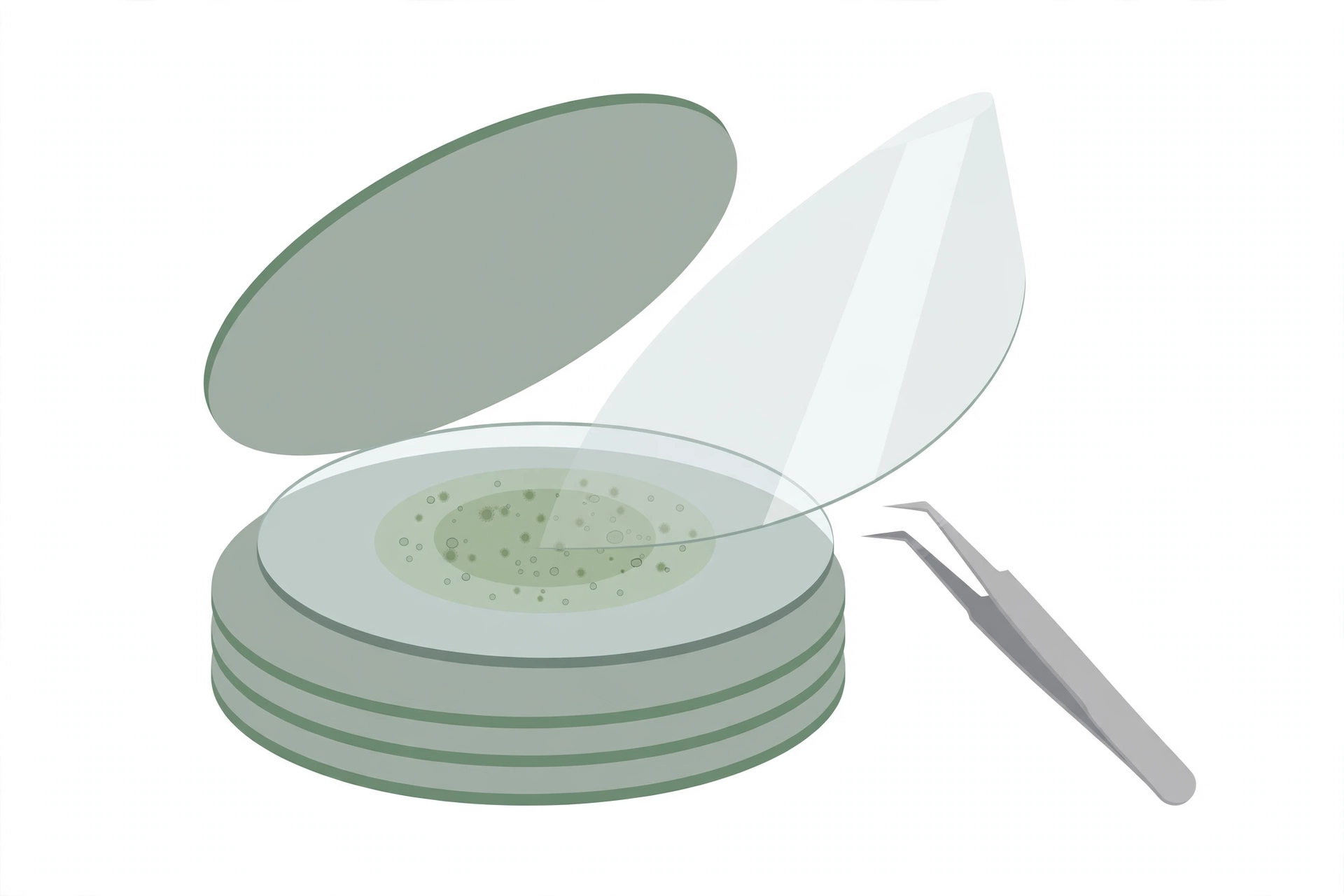
Petrifilm plates are a ready-to-use product of the 3M Company. Culture medium is coated onto films, so traditional medium preparation is unnecessary, and both labour and time are saved. Coliforms are enumerated on Petrifilm High-Sensitivity Coliform Count (HSCC) plates: the bacterial culture plates contain dry medium and a cold-water-soluble gelling agent. Undiluted or diluted samples are added directly to the plates at 5.0 mL per plate. Pressure applied to the plastic spreader placed on the overlay film spreads the sample over a 60 cm² growth area. After the gelling agent solidifies, the plates are incubated and then counted. Counted results yield a sensitivity of 1 coliform per gram if a 1:5 dilution of product is made; a 2 coliform per gram sensitivity is achieved if a 1:10 dilution of product is used.
Petrifilm HSCC plates contain Violet Red Bile (VRB) nutrients, a cold-water-soluble gelling agent, and 2, 3,5-triphenyltetrazolium chloride (TTC) indicator. The TTC indicator sits in a slow-release system that minimizes the toxicity of the TTC dye. The expiration date and lot number are noted on each package of Petrifilm plates, and the lot number is also noted on individual plates.
Coliforms produce gas from the fermentation of lactose in the medium. The gas is trapped by the films and appears as a small bubble (or bubbles) associated with a red colony on the Petrifilm HSCC plate.
The HSCC plastic spreader, provided with the plates, is designed to spread sample or sample inoculum over the plate growth area. The circular growth area of inoculated plates holds 60 one-cm squares outlined on the film base.
3M Microbiology is certified to ISO (International Standards Organization) 9001. Validation and collaborative studies found the Petrifilm HSCC method to be not significantly different from the traditional methods.
Based on data submitted to Health Canada’s Microbiological Methods Committee, the Application section was extended from dairy products only to include all foods and environmental samples.
Apparatus
- Petrifilm HSCC plates 6405/6415 (3M Canada, Inc.). Store at or below 8 °C.
- Plastic spreading device, Catalog #6481.
- Package insert, including instructions for use (“Interpretation Guide” available upon request).
- Stomacher, blender or equivalent.
- Incubator, capable of maintaining 32 °C or 35 °C.
- Note: Each laboratory is responsible for keeping its incubators or water baths at the recommended temperatures. “Where 35°C is recommended in the text of the method”, the incubator may be at 35 ± 1.0 °C. Similarly, lower temperatures of 30° or 25°C may be ± 1.0 °C. Where higher temperatures are recommended, such as 43° or 45.5°C, the incubators or water baths must be maintained within 0.5 °C, because higher temperatures may be lethal to the microorganism being isolated.
- pH meter or pH paper capable of distinguishing 0.3 to 0.5 pH units within a range of 6.0 to 8.0.
- 1N NaOH, if pH adjustment is necessary.
- Pipettes or automatic pipettes having a nominal capacity to 5.0 mL.
- Colony counter and/or magnified illuminator (as the source names it).
Reagents
- Appropriate sterile diluents: Butterfield’s phosphate buffer (7.5), 0.1% peptone water, peptone salt diluent, saline solution (0.85–0.90%), deionized water, and 1/4 strength ringers. If citrate is indicated in the standard, substitute with warmed (40–45 °C) Butterfield’s phosphate buffer.
- Note: Do not use citrate buffer or sodium thiosulfate with the Petrifilm method.
Sample preparation
- Handling: prior to analysis, except for shelf-stable foods, keep the sample refrigerated (2–8 °C) or frozen, depending on the nature of the product. Thaw frozen samples in a refrigerator, or under time and temperature conditions that prevent microbial growth or death.
- Analyse samples as soon as possible after their receipt in the laboratory.
- Have sterile diluent ready. Disinfect the surface of the work area.
- Place the Petrifilm plate on a flat surface. Mark identifying sample information on the film.
- To ensure a representative analytical unit, agitate liquids until the contents are homogenous.
- For milk samples, apply 5.0 mL direct and/or make decimal dilutions in an appropriate diluent. Mix the dilution preparation thoroughly.
- For chocolate milk, condensed milk, evaporated milk, heavy and light cream, ice cream, and ice mixes, a 1:5 minimum (24.75 g in 99 mL of dilution water) and/or decimal dilution in an appropriate diluent is required. Mix the dilution preparation thoroughly.
- For butter, buttermilk, cheese, cottage cheese, dip, sour cream, yogurt and frozen yogurt, a 1:10 minimum and/or decimal dilution in an appropriate diluent is required. Mix the dilution preparation thoroughly.
- If the food sample is a solid, take representative portions from several locations within the sample. Prepare a 1:10 minimum dilution in an appropriate diluent. Mix thoroughly.
- For acid products, adjust the pH of the diluted sample to 6.5–7.5 with 1N NaOH. Mix thoroughly.
Procedure
Carry out the test in accordance with the following instructions (the source’s Procedure instruction).
Inoculation and incubation
- Lift the top film and carefully inoculate 5.0 mL of sample or diluted sample onto the centre of the bottom film. Either a pipette or an automatic pipettor can be used for sample addition.
↓ - Replace the top film. Carefully roll the top film of the Petrifilm HSCC plate down to avoid entrapping air bubbles or pushing the sample off the bottom film.
↓ - Distribute the sample evenly using downward pressure on the centre of the plastic spreader. Do not slide the spreader across the film. Leave the plate undisturbed for 2–5 minutes to permit solidification of the gel.
↓ - Incubate the plates in a horizontal position with the clear side up, in stacks not exceeding 10 units, for 24 ± 2 hours. Follow current standards for incubation temperature, for example 32 °C or 35 °C.
- Note: Return unused plates to the foil pouch. Seal the pouch by folding and taping the open end. Store the resealed pouch in a cool, dry place. Use plates within one month after opening the pouch. Exposure of Petrifilm plates to temperatures above 25 °C and/or humidities above 50% RH can affect the performance of the plates. Do not use plates that show orange or brown discolouration. The expiration date and lot number are noted on each package of Petrifilm plates; the lot number is also noted on individual test films.
Reading results
- Count the plates promptly after the incubation period. If it is impossible to count at once, store the plates in the freezer; avoid this as a routine practice.
↓ - Use a standard colony counter for counting purposes. A magnifier-illuminator may also be used to facilitate counting.
↓ - The circular growth area is approximately 60 cm². Estimates can be made on plates containing more than 150 colonies by counting the number of colonies in one or more representative squares, determining the average number per square, and multiplying the average by 60 to determine the total count per plate.
↓ - Calculate the number of colonies per mL or g of sample from the number of colonies obtained in plates chosen at the dilution level that gives a statistically significant result.
↓ - When counting colonies on duplicate plates of consecutive dilutions, compute the mean number of colonies for each dilution before determining the average bacterial count.
↓ - To isolate colonies for further identification, lift the top film and pick the colony from the gel.
Interpretation of results
- Coliform colonies are red and closely associated — approximately one colony diameter — with entrapped gas at 24 hours. Colonies not associated with gas (bubble more than one colony diameter from the colony) are other gram-negative, non-coliform organisms.
↓ - Artifact bubbles may be present.
↓ - Some coliforms, when present in large numbers, cause excessive gas formation and form small, indistinct colonies. When this occurs, record the results as “too numerous to count” (TNTC). Occasionally, on overcrowded plates, colonies and gas will be indistinct. The acid produced by the coliform colonies on an overcrowded plate will change the color of the Petrifilm plate medium to a dark reddish color. TNTC counts may be confirmed by further dilution of the sample.
References
- Health Canada. 2003. Compendium of Analytical Methods, Volume 3 — Laboratory Procedure MFLP-85, March 2003 (this revised method replaces MFLP-85, dated October 1996).
- American Public Health Association. 2001. Compendium of Methods for the Microbiological Examination for Foods, 4th ed..
- AOAC. 2000. Official Method 996.02.
- Association Francaise de Normalisation (AFNOR): Certificate No.: 3M 01/7-03/99. 3M Petrifilm High Sensitivity test for enumeration of coliforms.
- Curiale, M.S., Gangar, V., D’Onorio, A., Gambrel-Lenarz, S., and McAllister, J.S. 1997. High-Sensitivity Dry Rehydratable Film Method for Enumeration of Coliforms in Dairy Products: Collaborative Study.
- Food and Drug Administration. 1998. Bacteriological Analytical Manual, 8th ed. Rev. A. Appendix 3.64 (R11).
- U.S. Department of Health and Human Services. Milk Evaluation Form. Standard Plate Count, Coliform, and Simplified Count Methods, FORM FDA 2400a (3/01).
- U.S. Department of Health and Human Services. 1999. Grade “A” Pasteurized Milk Ordinance: Recommendations of the Public Health Service. Publication No. 229. 1999 Revision.
- Silk, T.M., Ryser, E.T., and Donnelly, C.W. 1997. Comparison of Methods for Determining Coliform and Escherichia coli Levels in Apple Cider.