SOP: Detection of Listeria monocytogenes in a Variety of Foods and Environmental Surfaces Using the BAX System L. monocytogenes Assay
GIFSQ — Global Institute for Food Safety & Quality
Principle
This method detects Listeria monocytogenes to determine compliance with the requirements of Sections 4 and 7 of the Food and Drugs Act and other relevant federal regulations. It is validated for all foods and a variety of environmental surfaces on the BAX system Q7 or X5 instruments, and it replaces MFLP-28, dated November 2011.
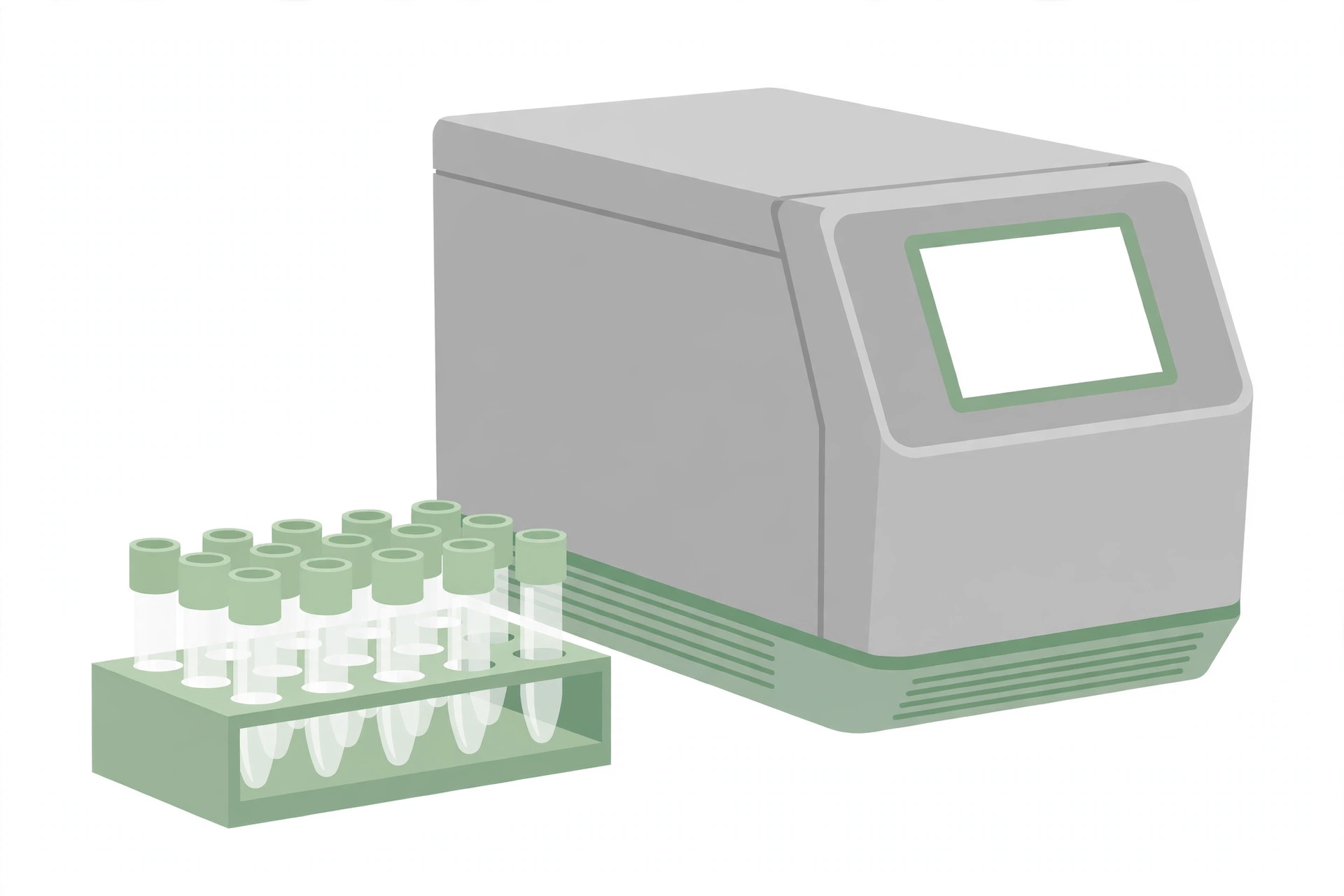
The BAX system is a screening tool that uses Polymerase Chain Reaction (PCR) to amplify a specific fragment of bacterial DNA that is unique to Listeria monocytogenes. Following 24–48 hours primary enrichment and 18–24 hours secondary enrichment, sample preparation takes about 1 hour of user time, and the automated procedure delivers results about 4 hours later. The automated Q7 and X5 systems analyze the PCR products by fluorescent detection, giving positive or negative results; because detection is through the closed tube, the potential for carry-over contamination with amplified DNA is minimized.
The assay can run on either the BAX Q7 or the BAX X5 platform. The reagents are the same in the X5 test kit as in the Q7 test kit, with two exceptions: the PCR tubes are optically transparent instead of opaque for the X5 instrument, since it uses a side-read instead of a top-read; and Lysing Agent 2 has been added to the X5 test kit version to improve the effectiveness of the method.
Positive results must be confirmed with a cultural method.
Apparatus
BAX system Q7 start-up package (cat. no. ASY2018)
- Cycler/detector with verification plates
- Computer workstation with Microsoft Windows operating system, BAX system amplification, and printer
- Automated Thermal Block (cat. no. DMCH2023) or dry block heaters with thermometer inserts for lysis tubes
- Capping/decapping tools
- Pipettes for reagent and sample transfers (5 µL, 10 µL, 10–50 µL 8 channel, repeat pipettor)
- Cooling block with inserts for lysis tubes and PCR tubes
- PCR tube holders
- Lysis tubes with caps and rack
- Barrier or filter tips for pipettes
- Powder-free nitrile gloves
- BAX system Q7 User Guide
BAX system X5 start-up package (cat. no. MCH2007)
- Cycler/detector
- Computer workstation with Microsoft Windows operating system, BAX system amplification, and printer
- Automated Thermal Block (cat. no. DMCH2023)
- Capping/decapping tools
- Pipettes for reagent and sample transfers (5 µL, 10 µL, 10–50 µL 8 channel, repeat pipettor)
- Cooling block with inserts for lysis tubes and PCR tubes
- PCR tube holders
- Lysis tubes with caps and rack
- Barrier or filter tips for pipettes
- Powder-free nitrile gloves
- BAX system X5 User Guide
Additional materials
- Incubators capable of maintaining a temperature of 30 ± 1 °C and 35 ± 1 °C
- Stomacher for homogenizing food samples
Reagents
- BAX system PCR assay for Listeria monocytogenes (cat. no. KIT2017; sufficient for 96 tests) — includes PCR tubes with tablets, flat optical caps, 2 lysis buffer bottles (12 mL/bottle) and protease solution (400 µL/vial), used to prepare working lysis reagent
- BAX system X5 PCR assay for Listeria monocytogenes (cat. no. KIT2023; sufficient for 64 tests) — includes PCR tubes with tablets, flat optical caps, 2 lysis buffer bottles (12 mL/bottle), lysis agent 2 (1.1 mL/bottle) and protease solution (400 µL/vial), used to prepare working lysis reagent
- Primary enrichment broths: Listeria Enrichment Broth (UVM1) or Demi-Fraser broth, depending on the food type (see the sample preparation table below)
- To prepare Listeria Enrichment Broth (UVM formulation): basal medium — 5.0 g proteose peptone, 5.0 g tryptone, 5.0 g beef extract, 5.0 g yeast extract, 20.0 g sodium chloride (NaCl), 1.35 g monopotassium phosphate (KH₂PO₄), 12.0 g dibasic sodium phosphate (Na₂HPO₄) and 1.0 g esculin per 1.0 L of distilled water; final pH 7.4 ± 0.2. Suspend the basal ingredients in 1.0 L of distilled water and autoclave at 121 °C for 15 min; cool to 50 °C, aseptically add the filter-sterilized UVM 1 or UVM 2 supplement to 500 mL of cooled basal medium (double the amount for 1.0 L), mix well and dispense. UVM 1 supplement (for 500 mL broth): 10.0 mg nalidixic acid and 6.0 mg acriflavine in 2.0 mL sterile distilled water. UVM 2 supplement (for 500 mL broth): 10.0 mg nalidixic acid and 12.5 mg acriflavine in 2.0 mL sterile distilled water. Store under refrigeration (2–7 °C) in the dark for up to 1 month — acriflavine can photo-oxidize to form compounds inhibitory to Listeria spp.
- Secondary enrichment: MOPS-buffered Listeria enrichment broth (MOPS-BLEB), prepared according to the recipe below
- Wetting agents: D/E Neutralizing broth or equivalent, for collection of environmental surface samples
MOPS-buffered Listeria enrichment broth (MOPS-BLEB)
Basal medium:
- Trypticase Soy Broth — 30.0 g
- MOPS free acid — 6.7 g
- MOPS sodium salt — 10.5 g
- Yeast extract — 6.0 g
- Distilled water — 1.0 L
Complete medium:
- Dissolve the basal-medium ingredients into 1.0 L of distilled water
- Autoclave for 15 min at 121 °C
- Prepare 0.5% (w/v) acriflavine and nalidixic acid stock solutions in distilled water
- Prepare cycloheximide as a 1% stock in 40% (v/v) ethanol/distilled water
- Filter-sterilize all stock solutions
- Add 3.0 mL acriflavine, 8.0 mL naladixic acid and 5.0 mL cycloheximide stock solutions to 1.0 L Listeria enrichment broth (the source prints “naladixic acid” here; it printed “nalidixic acid” in the line above)
Sample preparation
- Except for shelf-stable foods, keep sample units refrigerated or frozen in the laboratory before analysis, depending on the nature of the product; thaw frozen samples in a refrigerator, or under time and temperature conditions which prevent microbial growth or death
- Analyze sample units as soon as possible after their receipt in the laboratory
- For environmental surface samples, follow MFLP-41 for collection and transportation; moisten the environmental collection device with D/E Neutralizing broth or equivalent
- Pre-warm the enrichment media to 30 ± 1 °C
- Prepare samples according to the table below (the method’s flexibility note: stated incubation times of 24 h are ± 2 h; of 48 h are ± 4 h)
- For composite samples, analytical units may be combined up to 125 g or mL (for example, 125 g or mL in 1125 mL of enrichment broth); if alternate analytical units are required, maintain a ratio of 1 part sample material to 9 parts enrichment broth
- The enrichment broth may be incubated in the stomacher bag or other sterile container
Primary enrichment by sample type
- Raw meat and poultry products — weigh 25 g sample into a sterile container; homogenize with 225 mL Demi-Fraser broth; incubate 24 h at 30 °C
- Ready-to-eat meat and poultry; heat-processed and dried eggs and derivatives; heat-processed, frozen, smoked and other fish and seafood products; dairy products; bakery chocolate and bakery products; shelf-stable acid foods and spices; multi-ingredient composite foods; other foods — weigh 25 g sample into a sterile container; homogenize with 225 mL enrichment LEB (UVM1) broth; incubate 48 h at 30 °C
- Raw fish and crustaceans and molluscan shellfish; fruits and vegetables; unprocessed eggs and derivatives; low-moisture dry chocolate and bakery products; cereals/rice, animal feeds and other miscellaneous foods — weigh 25 g sample into a sterile container; homogenize with 225 mL enrichment LEB (UVM1) broth; incubate 24 h at 30 °C
- Environmental samples — add the environmental sponge or large swabs to 100 mL of LEB (UVM1), or composite up to 10 sponges with 100 mL of LEB per sponge (see MFLP-41); place smaller environmental swabs (for example, cotton tip) in 10 mL of LEB, or composite up to 10 swabs with 10 mL of LEB per swab; mix by hand and incubate for 48 h at 30 °C
- For foods not listed in this table, incubate the primary enrichment for 48 h
Secondary enrichment
- After the primary enrichment has incubated (24 h or 48 h as above), mix the primary enrichment well
- Transfer 0.1 mL of the enrichment to 9.9 mL MOPS-BLEB
- Incubate 18–24 h at 35 °C
Procedure
Prepare the equipment (refer to the BAX system User Guide for details):
- Make sure the cooling blocks have been refrigerated overnight
↓ - Warm up the heating blocks; check that the temperatures are set to 55 °C and 95 °C
↓ - Initialize the BAX system cycler/detector (perform verification, if prompted)
↓ - Create a rack file
↓ - Select RUN FULL PROCESS in the menu bar to warm up the cycler/detector before placing the samples into the system
Enrich:
- Enrich the sample as described under Sample preparation above: primary enrichment, then secondary enrichment in MOPS-BLEB
Optional step — ready-to-eat meat only (centrifugation and washing of the cells):
- Transfer 1 mL of MOPS-BLEB from the secondary enrichment to a sterile DNase-free 1.5 mL microfuge tube and centrifuge for 3 min at 9,000–13,000 × g
↓ - Discard the supernatant and resuspend the pellet in 1 mL of molecular-grade water; vortex on high for 10 sec
↓ - Centrifuge the tube again for 3 min at 9,000–13,000 × g; discard the supernatant and resuspend the pellet in 0.1 mL molecular-grade water to concentrate the cells 10-fold
↓ - Vortex the tube on high to completely resuspend the pellet and add 5 µL of this suspension to a BAX lysis tube containing 0.2 mL of lysis reagent; continue with the analysis from the sample lysis step below
Sample lysis:
- Arrange the required number of lysis tubes in the rack according to the rack file — one for each sample and one for the “blank”
↓ - For Q7 testing, prepare the lysis reagent by pipetting 150 µL of protease into one 12 mL bottle of lysis buffer; for X5 testing, prepare the lysis reagent by pipetting 150 µL of protease and 200 µL of Lysing Agent 2 into one 12 mL bottle of lysis buffer
↓ - Add 200 µL of the lysis reagent mixture to each lysis tube
↓ - Transfer 5 µL of enriched sample to the corresponding lysis tube
↓ - Secure the caps; when using a manual heating block, heat the tubes at 55 °C for 60 minutes, then at 95 °C for 10 minutes; when using the Automated Thermal Block, use the preset parameters, which include cooling of the samples
↓ - Place the lysis tubes in the cooling block for at least 5 minutes
Hydration of the PCR tablets with the lysates:
- Place the PCR tube holder onto the PCR cooling block
↓ - Arrange one PCR tube per sample in the holder
↓ - Remove and discard the lid from one strip of tubes at a time
↓ - Using a multi-channel pipette, transfer 50 µL of each lysed sample into a corresponding PCR tube
↓ - Cover the tubes with a new optical cap strip and secure tightly; repeat for all samples
↓ - Take the entire cooling block to the cycler/detector; keep the samples in the cooling block until the cycler/detector is ready for loading, but no more than 30 minutes after tablet hydration
Amplification and detection:
- Follow the screen prompts of the PCR Wizard to load the samples, run the program and unload the samples, as specified in the BAX system Q7 and X5 User Guides
Review of results:
- For indeterminate results, repeat the analysis beginning with the enriched-sample transfer step of sample lysis
Confirmation of presumptive positive results:
- Using the secondary enrichment broth, proceed with the plating and confirmation steps of a cultural method — MFHPB-07 or MFHPB-30
Interpretation:
- Report negative results as Listeria monocytogenes Not Detected
- Treat repeated indeterminate results (more than one) or error results as presumptive positive and proceed with confirmation as described above
Precautions
- The laboratory supervisor must ensure that the analysis described in this method is carried out in accordance with ISO/IEC 17025 (latest version), “General Requirements for the Competence of Testing and Calibration Laboratories”
- Ensure that the temperatures of the incubators or water baths are maintained at the recommended temperatures; the following applies to steps of the method which apply to growth only — where a temperature of 37 °C or below is recommended, the temperature may vary by ± 1.0 °C (for example, 35 ± 1.0 °C); where higher temperatures are recommended, the incubators or water baths must be maintained within 0.5 °C, because higher temperatures may be lethal to the microorganisms being isolated
References
- Health Canada. Detection of Listeria monocytogenes in a Variety of Foods and Environmental Surfaces Using the BAX System L. monocytogenes Assay. Compendium of Analytical Methods, Volume 3, Laboratory Procedure MFLP-28, April 2020. Bureau of Microbial Hazards, Food Directorate, Health Products and Food Branch, Health Canada.
- Pagotto, F., Hébert, K., and J. Farber. 2011. Isolation of Listeria monocytogenes and other Listeria spp. from foods and environmental samples (MFHPB-30). Volume 2. The Compendium of Analytical Methods.
- Warburton, D., Boville, A., Pagotto, F., Daley, E. and Chow, C. 2012. Isolation of Listeria monocytogenes and Other Listeria spp. from Foods and Environmental Samples using Palcam Broth (MFHPB-07). Volume 2. The Compendium of Analytical Methods.
- Microbiological Methods Committee. 2010. Environmental Sampling for the Detection of Microorganisms (MFLP-41). Volume 3: The Compendium of Analytical Methods.