SOP: Qualitative Method for Colour Additives in Butter
GIFSQ — Global Institute for Food Safety & Quality
1. Principle
Several dyes and colours like azo-dyes, annatto or other vegetable colour, and gallate antioxidants in butter give characteristic colour upon treatment with alkali or acid.
2. Apparatus
a. Balance
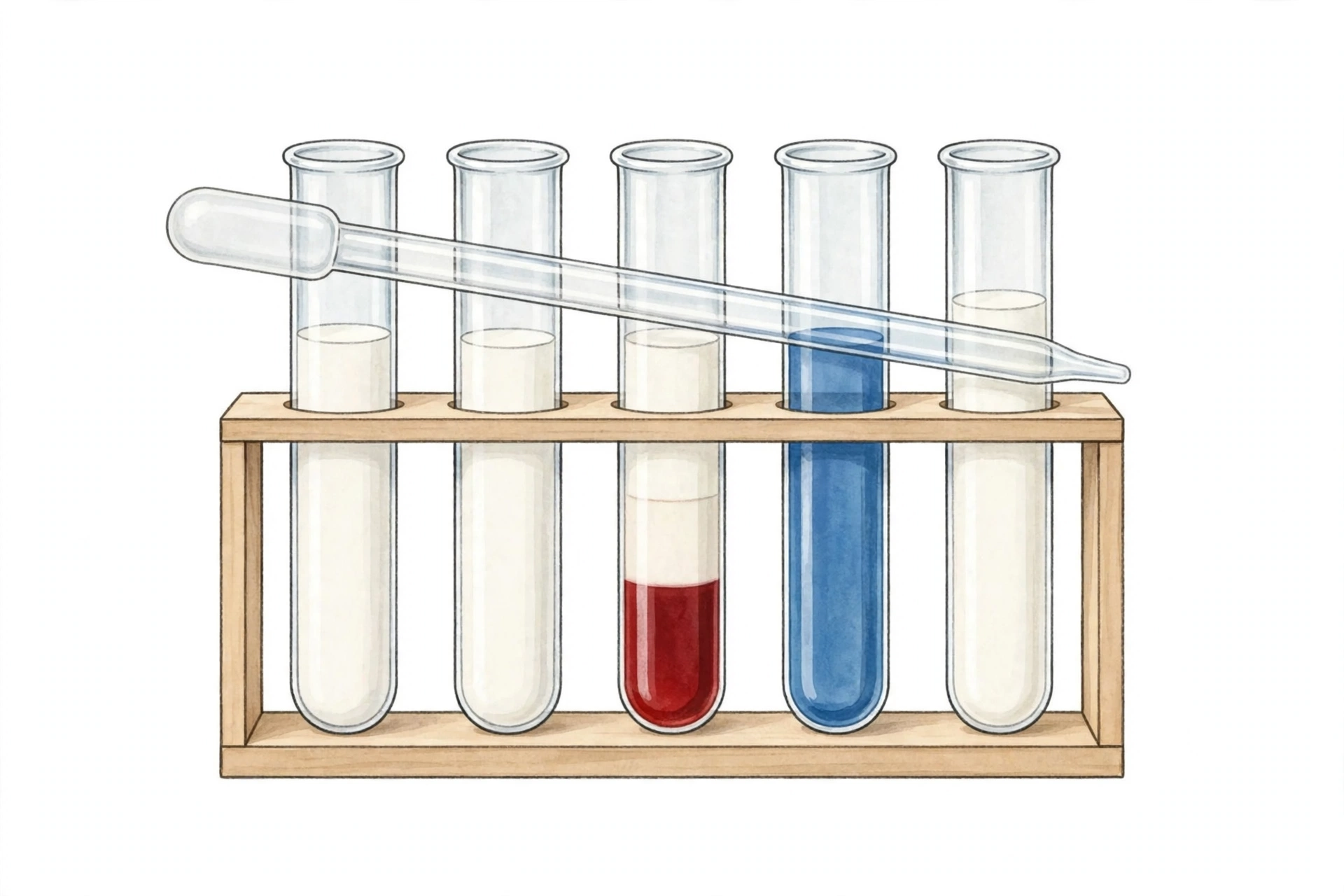
b. Test tubes
c. Pipettes
3. Chemicals
a. Ethyl ether
b. Hydrochloric acid (1:1)
c. 10% sodium hydroxide solution
d. 2% sodium hydroxide
e. Stannous chloride (40%, containing sufficient hydrochloric acid to make the solution acidic, and a small piece of tin to keep it reduced)
f. Filter paper
4. Procedure
Pour 2 g of filtered butter, dissolved in ether, into each of two test tubes
↓
To one tube add 1–2 mL of hydrochloric acid (1:1), and to the other about the same volume of 10% sodium hydroxide solution
↓
Shake the tubes well and allow them to stand. Observe:
– In the presence of some azo dyes, the acid solution shows pink to dark red colour, while the alkaline solution in the other tube shows no colour
– If, on the other hand, annatto or other vegetable colour is present, the alkaline solution is yellow, while no colour is apparent in the acid solution
– (Red colour changing to yellow, especially on warming, in the alkaline solution may be due to the presence of gallate antioxidants)
↓
Confirmation of annatto: pour onto moistened filter paper the alkaline solution of colour obtained by shaking clear butter with warm 2% sodium hydroxide solution. If annatto is present, the paper absorbs the colour, so that when washed with a gentle stream of water it remains dyed straw colour
↓
Dry the filter and add one drop of 40% stannous chloride solution. Again dry carefully and observe the colour. If the colour turns purple, the presence of annatto is confirmed
References
Official Methods of Analysis, AOAC, 21st Edition (2019); 920.119.
(This is the method the ice-cream colour-additive test continues into.)