SOP: Determination of Acidity in Milk
GIFSQ — Global Institute for Food Safety & Quality
1. Principle
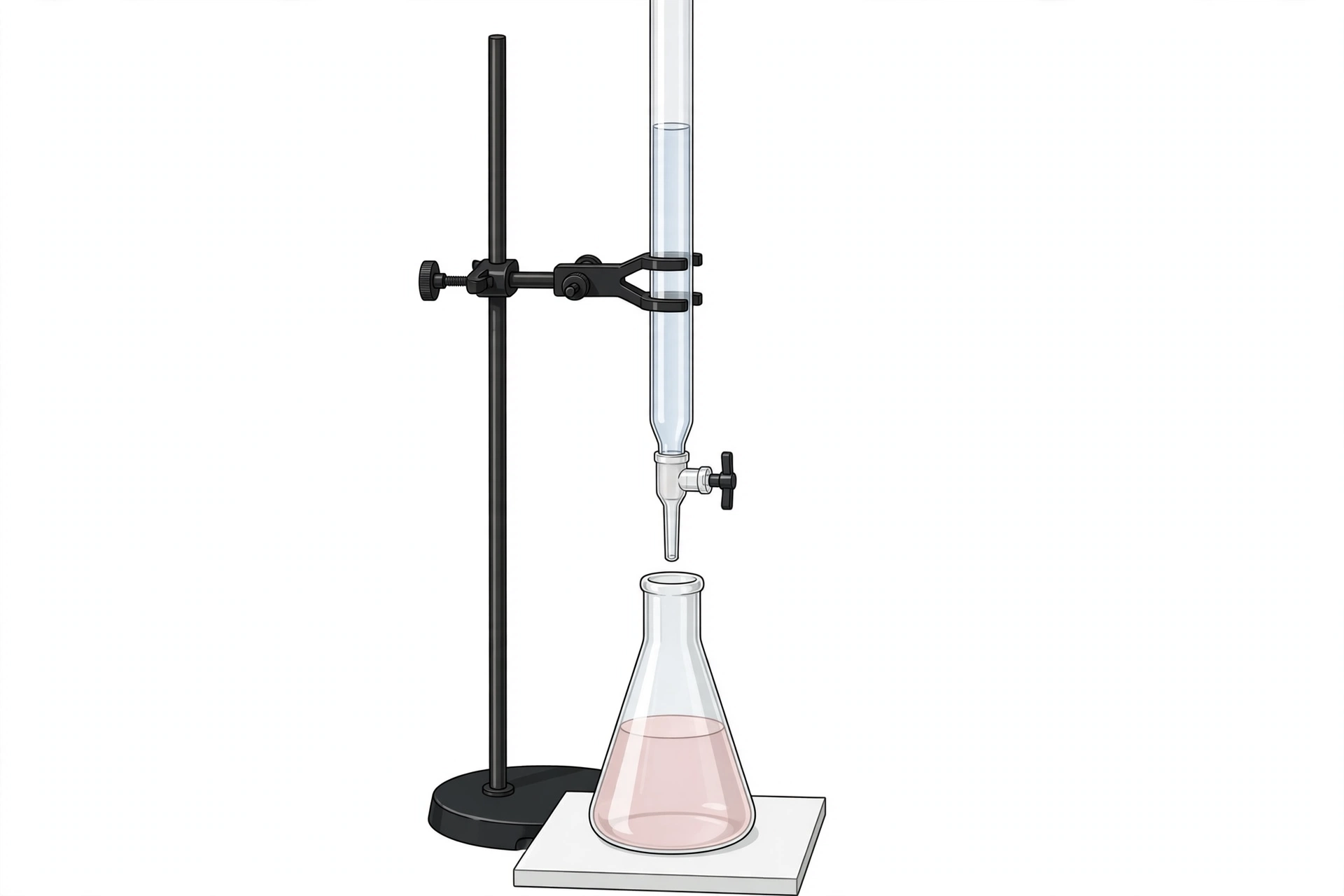
The sample is titrated with sodium hydroxide to a phenolphthalein end point, using milk containing rosaniline as a comparison standard.
2. Apparatus
a. 100 mL porcelain basin
b. Burette
3. Reagents
a. 0.1 N NaOH solution
b. Rosaniline acetate solution: dissolve 0.12 g rosaniline acetate in 95% ethyl alcohol containing 0.5 mL of glacial acetic acid and dilute to 100 mL (store in dark). To prepare the working standard, dilute 1 mL to 500 mL with 95% ethyl alcohol and water in the ratio of 1:1.
c. Phenolphthalein solution: to 1 g of phenolphthalein dissolved in 100 mL of 95% ethyl alcohol, add 0.1 N sodium hydroxide till a faint pink color is obtained, and dilute to 200 mL with distilled water.
4. Procedure
Pipette 10 mL of milk into each of two evaporating dishes (porcelain basins)
↓
To one, add 1 mL of the dilute rosaniline solution and stir with a glass rod — this is the comparison standard
↓
To the other, add 1 mL of phenolphthalein solution
↓
Titrate with 0.1 N sodium hydroxide, stirring the sample, until the color is the same as that of the rosaniline comparison standard
5. Calculation
% m/v lactic acid = [mL NaOH × 0.1 × 90 × 100] ÷ [1000 × (mL of milk taken)]
Where % m/v = percent mass in volume. (Milk taken is 10 mL per the procedure; with that volume the result simplifies to 0.09 × mL NaOH.)
References
FAO 1986, Manual of Food Quality Control; 8. Food Analysis: Quality, Adulteration and Test of Identity. Reprinted 1997, Method 2.1, page 20.