SOP: Determination of Water Extract — Tea and Coffee
GIFSQ — Global Institute for Food Safety & Quality
1. Principle
Water soluble substance in tea can be conveniently determined by extracting the dry sample with distilled water. Tea sample is refluxed for one hour, where the water soluble fraction is extracted quantitatively.
2. Application
This method is applicable for all types of tea and coffee for routine work in food laboratory.
3. Apparatus
- 500 mL volumetric flask, 500 mL conical flask
- Cork, glass tube about 75 cm long
- Filter paper (No. 1)
- Water bath
- Porcelain basin
- Oven
- Pipette
- Hot plate
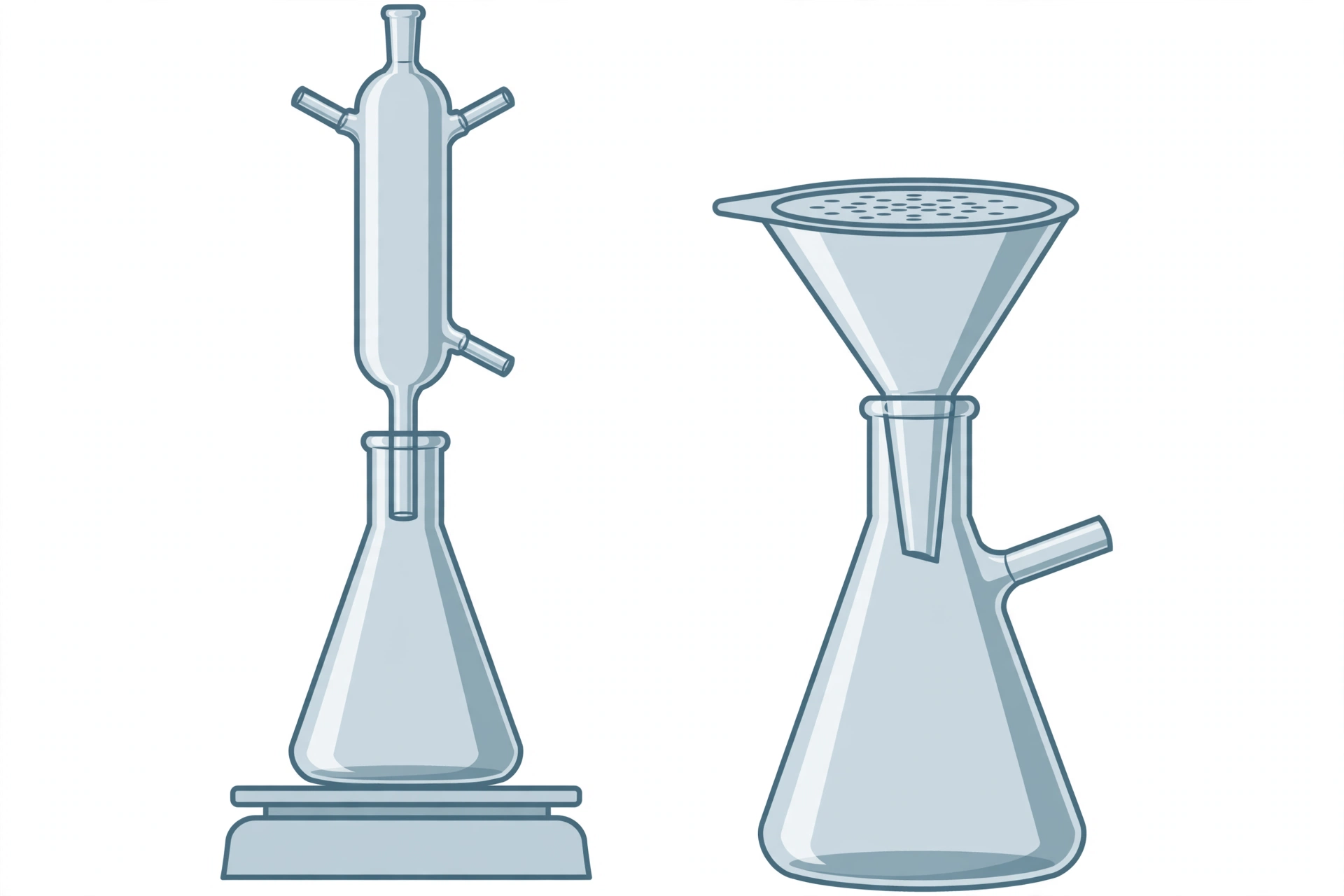
4. Procedure
Weigh 2 g of sample in 500 mL volumetric flask
↓
Add 200 mL distilled water
↓
Reflux for one hour
↓
Cool, dilute to volume (500 mL) and mix thoroughly
↓
Filter through filter (No. 1) and take filtrate
↓
Take 50 mL filtrate in porcelain basin
↓
Evaporate to dryness on steam bath
↓
Heat 1 hour at 100°C
↓
Cool in desiccators and weigh
5. Calculation
Water Extract (% DWB) = [(B − A) × Volume made up ÷ (W × Volume of filtrate taken)] × 100 × [100 ÷ (100 − M)]
Where,
– W = Weight of sample taken
– A = Weight of empty porcelain basin
– B = Weight of porcelain basin + Water Extract
– Volume made up = 500 mL
– Volume of filtrate taken = 50 mL
– M = % moisture
– 100/(100 − M) = Factor for dry basis
6. Precautions
- Sample should be boiled with occasional stirring.
- Temperature of oven should not exceed 100°C.
- Porcelain dish should be cooled in desiccators containing effective desiccant.
- Evaporate filtrate in water bath.
7. Limit of detection
Refluxing for 1–2 hours is sufficient for the appreciable value of the parameter.
References
AOAC 2019, 21st Edition; 920.104.