SOP: Stressing Microorganisms in Artificially Contaminated Samples
GIFSQ — Global Institute for Food Safety & Quality
1. Principle
In method validation, method verification and recovery studies, artificially contaminated samples should contain the target organism in the same injured state that the food’s manufacturing process or natural conditions would produce. Injured target reference organisms are therefore prepared by exposing the culture to sub-lethal treatments — drying, heating, chilling or freezing — that simulate the process as far as possible. A stressing treatment is accepted when plating in triplicate on selective and non-selective agars gives selective-agar counts of 20% of the non-selective-agar counts, meaning 80% of the cells are stressed.
2. Apparatus required
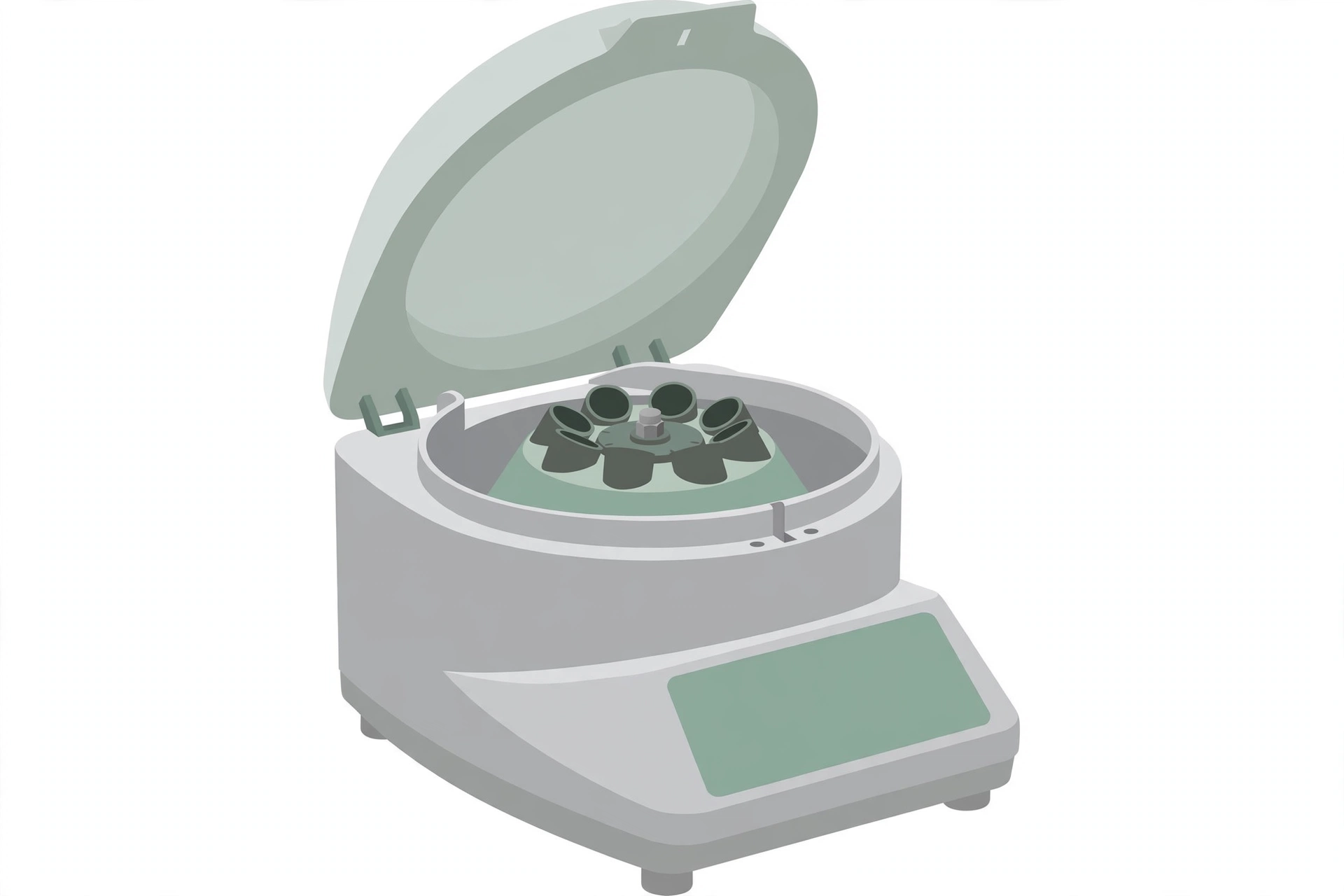
- Centrifuge
- Fluid bed spray granulator (STREA-1, Niro-Aeromatic), for the drying example
- Orbital rotary shaking water bath, for the heating example
- 250 ml Wheaton bottle, for the heating example
3. Reagents
- Milk
- Saccharose (sucrose) — preparation: add 68.42 g saccharose to 100 ml milk to make a 2 M suspension medium
- Sterile milk powder, for drying the suspension
- Beef infusion
- Tryptic Soy Broth (TSB) with 13.5% NaCl and 1% lactic acid, pH 4.9, for the chemical-stress example
- Selective agar
- Non-selective agar
4. Procedure
↓
Decide the spiking state: if the manufacturing process or the natural product conditions would injure the target organism if present, spike the sample with injured target reference organisms — raw, unprocessed foods may be inoculated with unstressed organisms
↓
If the organism comes from the food’s raw components or the early stages of processing (for example E. coli O157:H7 in fermented sausage), obtain the sub-lethal damage by mixing the inoculum directly in the food and running the sample through the entire manufacturing process (mixing, heat treatment, acidification, smoking, etc.), or develop a stressing procedure that simulates the process
↓
Stressing by drying: centrifuge the culture and suspend the pellet in 100 ml milk supplemented with 68.42 g saccharose (2 M); dry about 10 ml of this suspension onto sterile milk powder by fluid bed spray granulation (STREA-1, Niro-Aeromatic)
↓
Stressing by heating (heat-injury procedure for E. coli O157:H7): pre-warm the beef infusion at 53°C for at least 45 min in an orbital rotary shaking water bath with the water level above the infusion level in a 250 ml Wheaton bottle; add 1–5 ml of washed cells to 36 ml of pre-warmed beef infusion, giving 10 cfu/ml, and incubate under constant agitation (125 rpm) for 40 and 50 min at 53°C; use chilled, washed cells in beef infusion as controls
↓
Stressing by chemicals: expose the cells to Tryptic Soy Broth (TSB) with 13.5% NaCl and 1% lactic acid, pH 4.9, for long enough to show a negative effect on the limit of detection (cells were used for spiking after two weeks to two months in this broth); use these stressed cells to spike the product before proceeding with the method
↓
Check the stressing treatment: plate aliquots of the spiked organism in triplicate on selective and non-selective agars; the stress procedure is appropriate when the counts on the selective plates are 20% of the counts on the non-selective plates — that is, 80% stressed cells
5. Calculation
Percent injured cells = 100 − ([S/NS] × 100)
Where,
- S = colony count on selective agar
- NS = colony count on non-selective agar
6. Precautions
- Where the manufacturing process or natural conditions are likely to injure the target organism, injured organisms must be used for spiking — unstressed organisms are acceptable only for raw, unprocessed foods
- The effect of every stressing treatment on the spiked organism must be measured by direct plating in triplicate on selective and non-selective agars before the treatment is accepted
References
Health Canada, Compendium of Analytical Methods, Volume 1 — Annex 4.2, March 2011: “Procedure for Stressing Microorganisms in Artificially Contaminated Samples” (supplement to the Procedure for the Development and Management of Food Microbiological Methods, Health Products and Food Branch, Ottawa).
References cited in the source document:
- ISO International Standard ISO 16140, first edition 2003-05-01: Microbiology of Food and Animal Feeding Stuffs.
- Exigences relatives aux études préliminaire et collaborative menées par un laboratoire expert: Validation des méthodes alternatives d’analyse. Bureau technique microbiologie, AFNOR certification. Révision 7, validée le 15.02.2002. AFNOR, 11 Avenue Francis de Pressensé, 93571 Saint-Denis la plaine Cedex.
- AOAC International Methods Committee Guidelines for Validation of Qualitative and Quantitative Food Microbiological Official Methods of Analysis. Approved 4/2/2002, revised 5/2002. AOAC International.
- Method Validation of Microbiological Methods, Guidance Notice: C&B and ENV 2002. Singapore Accreditation Council — Singapore Laboratory Accreditation Scheme (SAC-SINGLAS), July 2002. 9 pages.
- Jasson, V., Uyttendaele, M., Rajkovic, A. and J. Debevere. 2007. Establishment of procedures provoking sub-lethal injury of Listeria monocytogenes, Campylobacter jejuni and Escherichia coli O157 to serve method performance testing. Int. J. of Food Microbiol., Vol. 118: 241–249.
- De Buyser, M. L., B. Lombard, S. M. Schulten, P. H. In’t Veld, S. L. Scotter, P. Rollier and C. Lahellec. 2003. Validation of EN ISO standard methods 6888 Part 1 and Part 2: 1999 — Enumeration of coagulase-positive staphylococci in foods. Int. J. of Food Microbiol., Vol. 83: 185–194.
- Scotter, S. L., S. Langton, B. Lombard, C. Lahellec, S. Schulten, N. Nagelkerke, P. H. In’t Veld and P. Rollier. 2001. Validation of ISO method 11290: Part 2 — Enumeration of Listeria monocytogenes in foods. Int. J. of Food Microbiol., Vol. 70: 121–129.
- Scotter, S. L., S. Langton, B. Lombard, S. Schulten, N. Nagelkerke, P. H. In’t Veld, P. Rollier and C. Lahellec. 2001. Validation of ISO method 11290 Part 1 — Detection of Listeria monocytogenes in foods. Int. J. of Food Microbiol., Vol. 64: 295–306.
- Restaino, L., E. W. Frampton and H. Spitz. Repair and growth of heat- and freeze-injured Escherichia coli O157:H7 in selective enrichment broths. Food Microbiology, Vol. 18: 617–629.
- McCarthy, J., R. Holbrook and P. J. Stephens. 1998. An improved direct plate method for the enumeration of stressed Escherichia coli O157:H7 from food. J. of Food Prot., Vol. 64: 1093–1097.