SOP: Determination of Starch by the Colorimetric (Anthrone) Method
GIFSQ — Global Institute for Food Safety & Quality
Principle
After the free sugars are extracted with hot alcohol, the starch is solubilized with 52% perchloric acid and determined colorimetrically with anthrone reagent at 630 nm against a dextrose standard curve.
Apparatus required
- 50-ml centrifuge cups and centrifuge
- Ice water bath
- 100-ml volumetric flasks
- Boiling water bath
- Test tubes
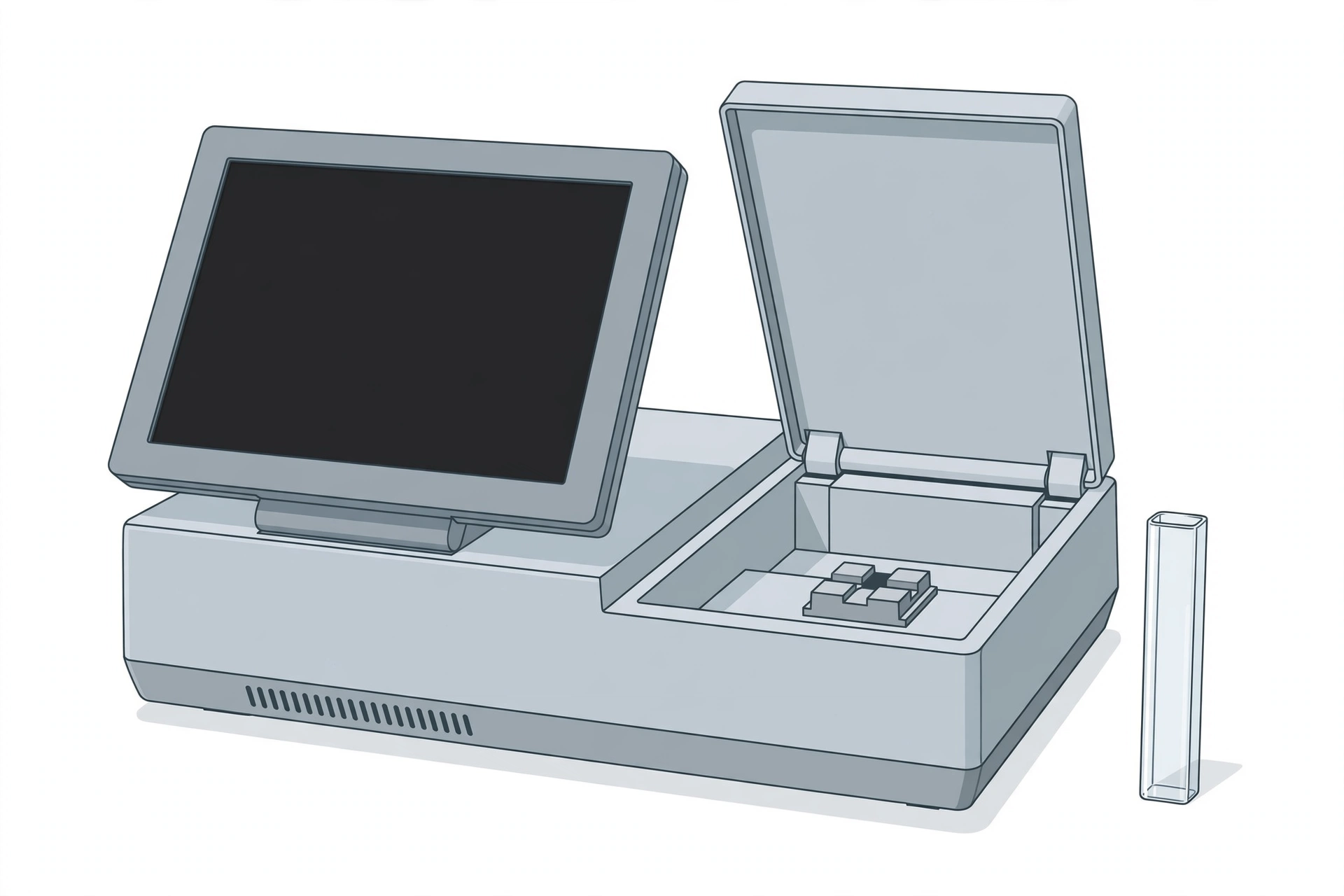
- Spectrophotometer (absorbance at 630 nm)
- Waring blender (for fresh and canned vegetables)
Reagents
a. Anthrone-H₂SO₄ reagent: dissolve 0.5 g of anthrone in 250 ml of 95% H₂SO₄ — the solution is stable for 3–4 days at 5°C.
b. 52% perchloric acid: add 270 ml of 71% HClO₄ to 100 ml of water; store in a glass-stoppered bottle.
c. Dextrose standard solution: dissolve 0.1 g of anhydrous dextrose in 100 ml of water — this can be stored by addition of 0.1 g of sodium benzoate.
Sample preparation
- Fresh vegetable: take a known weight of the representative sample and blend with an equal weight of water in a Waring blender.
- Canned vegetable: weigh 100–200 g of the drained sample and blend as in the case of fresh vegetables.
- Dried vegetable: grind the sample to pass through a 60–80 mesh sieve.
Procedure
Weigh 5 g of the sample (equivalent to 2.5 g of the original material in the case of fresh or canned vegetables) into a 50-ml centrifuge cup; in the case of dried vegetables, weigh 0.2 g of the ground material, wet with a few drops of alcohol, and add 5 ml of water with stirring
↓
Add 25–30 ml of hot 80% ethyl alcohol, stir vigorously, and centrifuge at about 2500 rpm; decant and discard the supernatant
↓
Repeat the washing, centrifuging and decanting three times, or until a qualitative test with the anthrone solution gives no green colour
↓
After the final extraction, make up the residue to 10 ml and stir; cool in an ice water bath
↓
Add with stirring 13 ml of 52% perchloric acid; stir for 5 min and occasionally thereafter for 15 min, keeping the solution in the cold bath during this period
↓
Add 26 ml of water, centrifuge, and pour off the supernatant soluble-starch solution into a 100-ml volumetric flask
↓
Add 5 ml of water to the residue in the centrifuge tube; cool in an ice water bath; add slowly with stirring 6.5 ml of 52% perchloric acid; solubilize as before for 30 min in the ice water bath; wash the contents into the 100-ml volumetric flask
↓
Make up the volume to 100 ml with water and filter; discard the first few ml of the filtrate
↓
Dilute 5–10 ml of the filtered solution to 500 ml, to contain 5–20 µg of starch per ml
↓
Pipette 5 ml of the diluted solution into a test tube; cool in a water bath; add 10 ml of anthrone reagent; mix thoroughly
↓
Heat for 7½ min in a boiling water bath; cool rapidly to room temperature in the water bath; read the colour at 630 nm
↓
Calculate the µg of dextrose from the standard curve
Preparation of the standard curve
Take 0.5, 1.0 and 1.5 ml of the dextrose standard solution into 100-ml volumetric flasks and make up the volume with water
↓
Take 5 ml of each solution (equivalent to 25, 50 and 75 µg of dextrose) and develop the colour as in the case of the samples
↓
Measure the colour and plot concentration against absorbance to get the standard curve
Calculation
Find the µg of dextrose corresponding to the sample absorbance from the standard curve. The colour is stable for 30 min.
Precautions
- Extract the sugars completely — repeat the alcohol washing, centrifuging and decanting until the anthrone test gives no green colour.
- Keep the solution in the cold bath during the perchloric acid solubilization.
- Old anthrone-H₂SO₄ solutions give high blanks — use a solution stored for not more than 3–4 days at 5°C.
- The developed colour is stable for 30 min — read at 630 nm within that time.
- Discard the first few ml of the filtrate.
References
Ranganna, S., Handbook of Analysis and Quality Control for Fruit and Vegetable Products, 2nd edition.