SOP: Determination of Starch by the Acid Hydrolysis Method
GIFSQ — Global Institute for Food Safety & Quality
Principle
After the sugars present in the sample are leached out with alcohol, the starch is hydrolysed with acid and estimated as invert (reducing) sugars.
Apparatus required
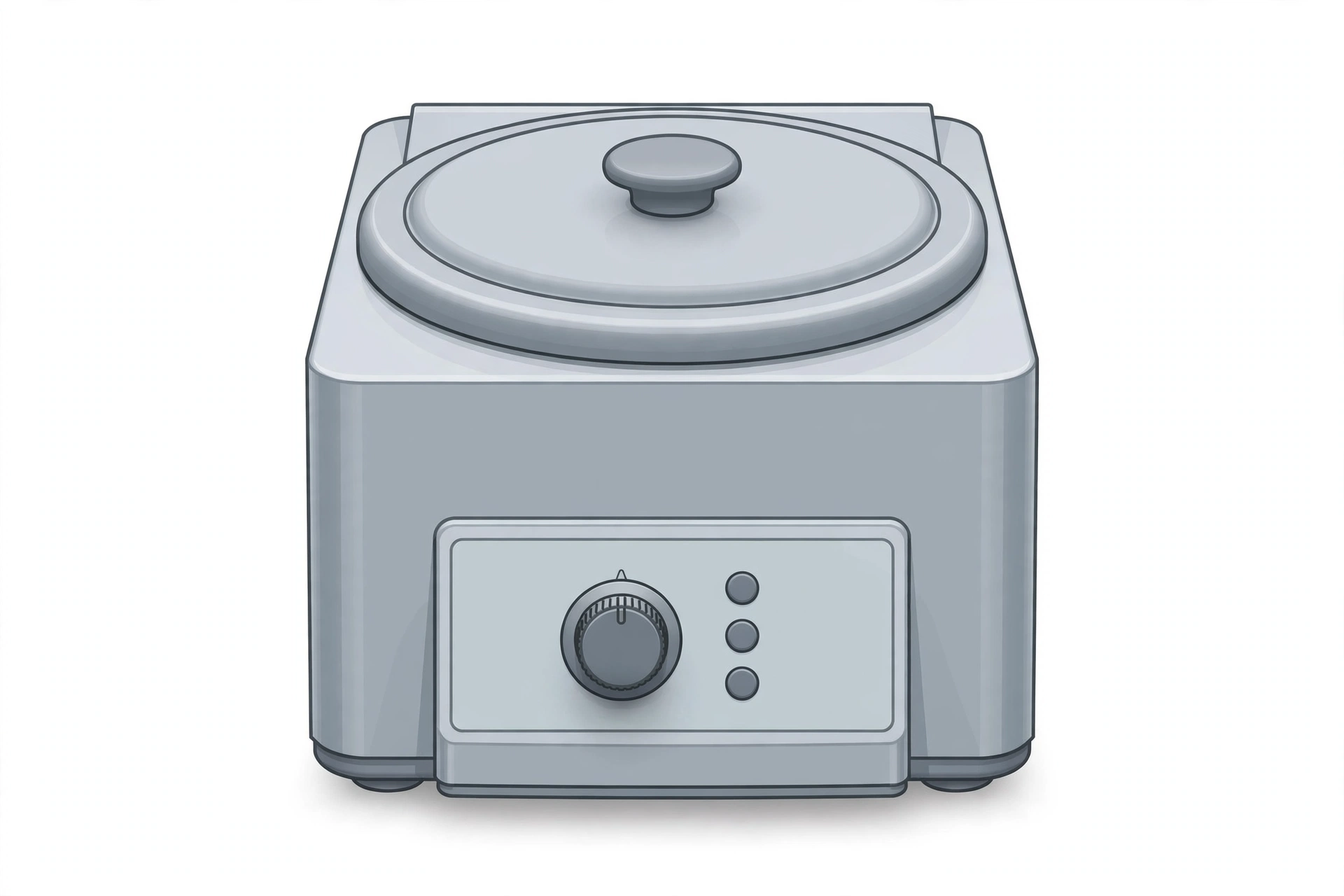
- Centrifuge
- 500-ml conical flask
- Boiling water bath
- Test tubes (for the sugar test)
Reagents
a. 95% alcohol.
b. About 50% alcohol.
c. 10% alcoholic solution of alpha-naphthol.
d. Concentrated sulphuric acid (H₂SO₄).
e. Concentrated hydrochloric acid (HCl).
f. Sodium hydroxide (NaOH).
g. Phenolphthalein indicator.
Procedure
To the weighed sample (100 g in the case of barley waters) add a little water and heat to 60°C; allow to stand for some time to obtain a solution of the starch
↓
Add about 100 ml of 95% alcohol and centrifuge till the precipitate settles at the bottom
↓
Filter and wash the residue with about 50% alcohol until the filtrate gives no test for sugars
↓
Transfer the residue to a 500-ml conical flask with about 100 ml of water
↓
Add 20 ml of conc. HCl, place a funnel in the neck of the flask to prevent evaporation, and heat in a boiling water bath for 2½ hr
↓
Cool, nearly neutralize with sodium hydroxide using phenolphthalein as indicator, and make up to a definite volume with water
↓
Determine the reducing sugars as in the Lane and Eynon method for sugars
Test for sugars
To the filtrate add 2 drops of 10% alcoholic alpha-naphthol; allow 1 ml of pure conc. H₂SO₄ to flow slowly down the side of the test tube so as to form a layer beneath the aqueous solution — if sugars are present, a violet ring appears within a few seconds at the junction of the two layers.
Calculation
% Starch = % Reducing sugars found × 0.90
Where,
- % Reducing sugars found = reducing sugars determined after the acid hydrolysis, as invert sugars (%)
Precautions
- Wash the residue with 50% alcohol until the filtrate gives no test for sugars, so that free sugars are not counted as starch.
- Keep a funnel in the neck of the flask during the 2½-hr heating to prevent evaporation.
References
Ranganna, S., Handbook of Analysis and Quality Control for Fruit and Vegetable Products, 2nd edition.