SOP: Sampling and Sample Preparation — Tea and Coffee
GIFSQ — Global Institute for Food Safety & Quality
1. Principle
The way in which a sample is taken for analysis is an operation in order to make representation of all the basic attributes of the commodity. Correct sampling requires most careful attention to reduce the genesis of error during analysis. It shall be the basis for reliable results representing properties of the whole.
The validity of conclusions drawn from the analysis of any food mainly depends on sampling. Sampling and any subsequent separations are the greatest sources of error in food analysis. For solid samples, variation with position and the size of individual particles are important concerns; the sampling error is inversely proportional to the number of particles taken.
2. Sampling from bulk
Take a fixed amount of sample from different positions of the bulk (altogether 1600 grams) of the single lot
↓
Mix it homogeneously as far as possible and go to reduction
↓
Quarter the total sample
↓
Take opposite quarters and remix homogeneously
↓
Again repeat quartering until the required size of sample needed for laboratory analysis (about 150 grams) is reduced to
The sampling of packed products deliberately depends on the intuition and capacity to identify quality of sample of the sampler from eye observation.
3. Sample preparation technique
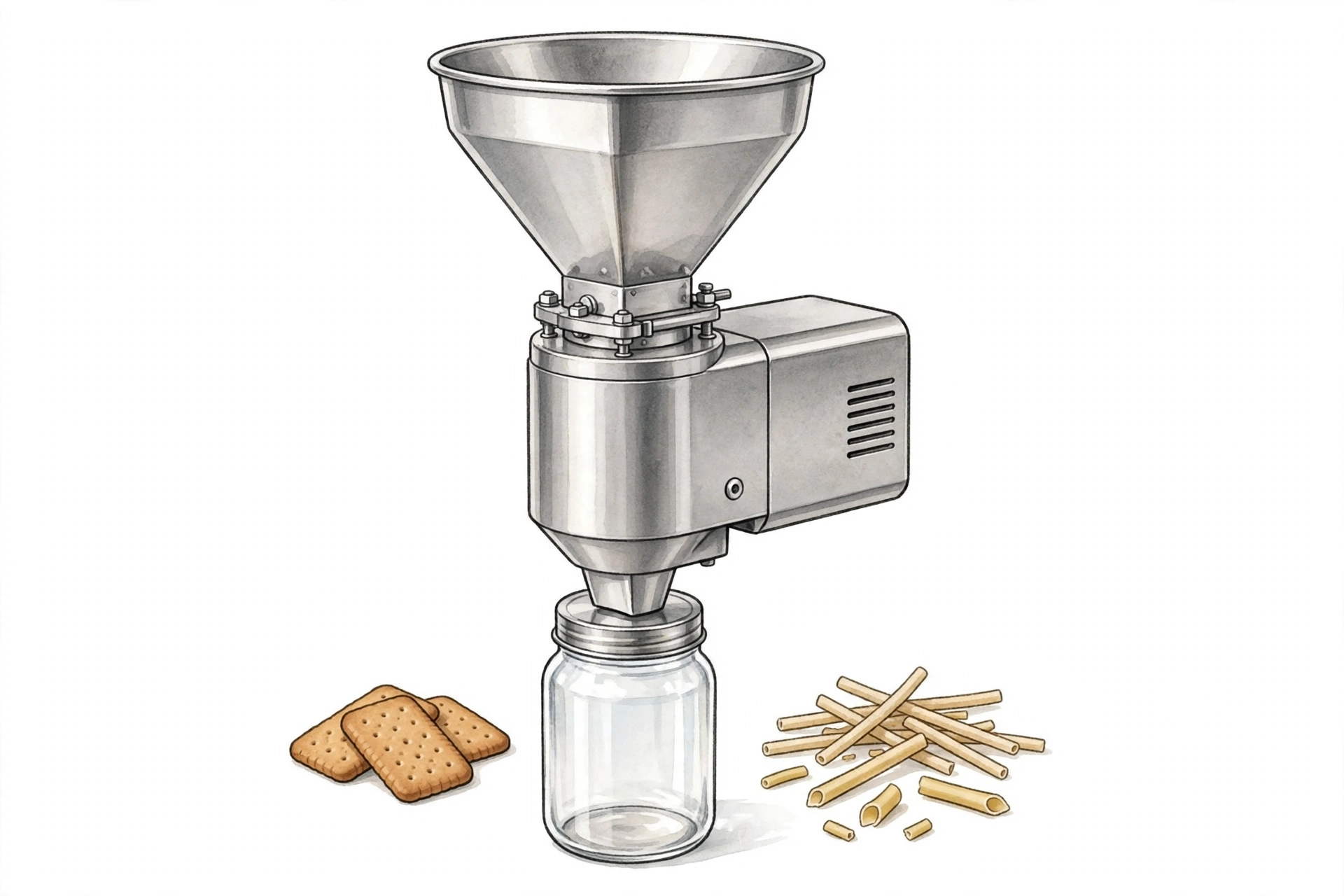
Grind the sample in a grinder to pass through a No. 30 Mesh sieve. Mix well to get a homogeneous sample. Store the sample in a tightly stoppered bottle; withdraw portions for analytical determination.