SOP: Determination of Moisture by Rapid Physical and Chemical Methods (Overview)
GIFSQ — Global Institute for Food Safety & Quality
Principle
Besides oven drying and immiscible solvent distillation, moisture may be determined by rapid physical methods, which measure a physical property of the water in the food, and by rapid chemical methods, which measure water through a chemical reaction. This procedure summarizes the rapid methods described for fruit and vegetable products.
Apparatus required
- Infrared moisture balance: an instrument that dries the sample under infrared radiation while weighing it; a graduated scale gives a continuous percentage reading of the loss of weight of the sample due to the loss of moisture
- Nuclear magnetic resonance instrument: measures the absorption of hydrogen nuclei of water (suggested for the water content of potato and apple tissue)
- Electronic moisture devices such as the Brown-Duvel and the Steinlite instruments
- Photoelectric colorimeter (for the photoelectric colorimetric method)
Reagents
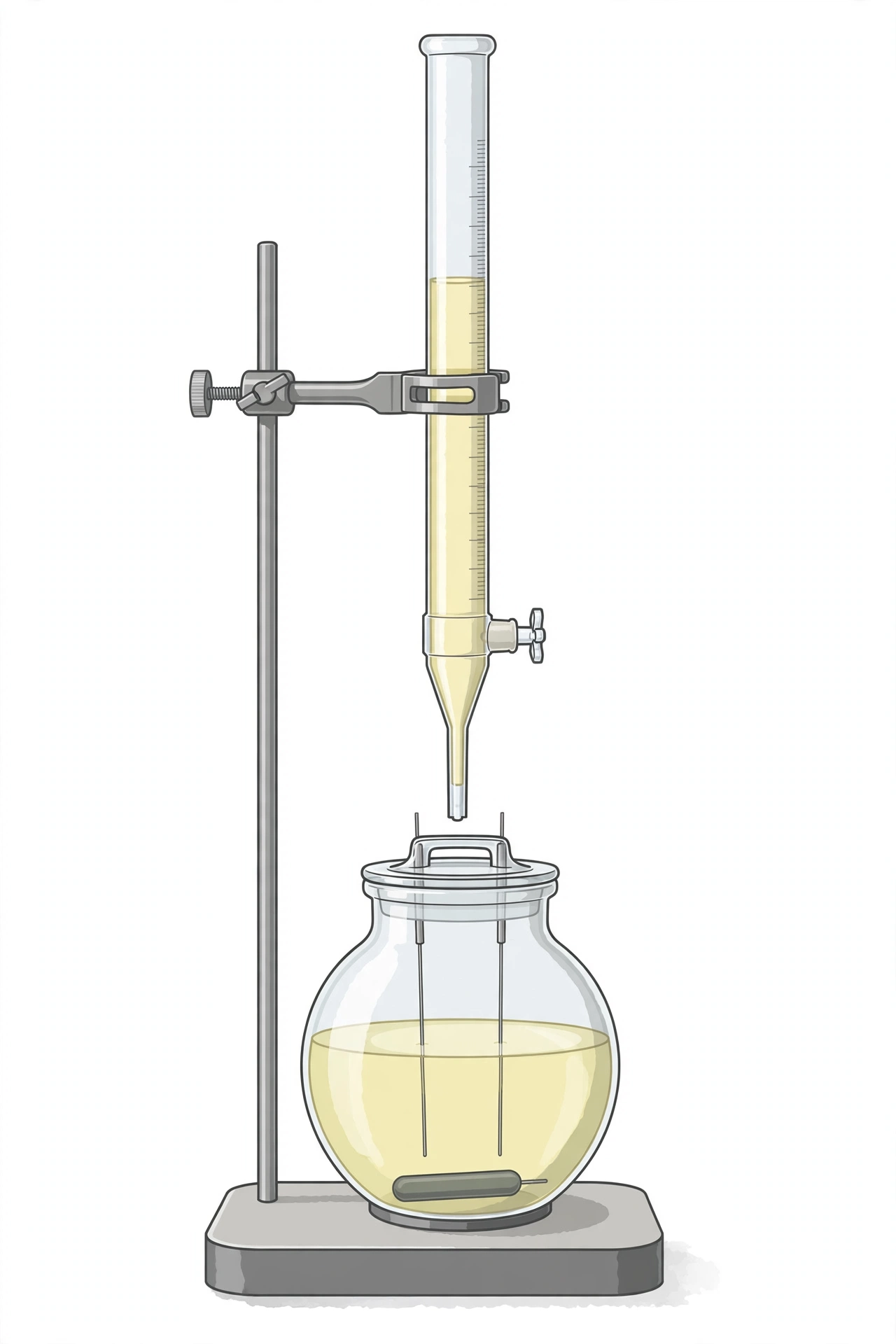
a. Karl Fischer reagent: iodine and sulphur dioxide in pyridine-methanol solution; the method is based on the nonstoichiometric reaction of water with iodine and sulphur dioxide, and has been recommended by the British Standards Institute. It is applied to the determination of moisture in dehydrated vegetables.
b. Calcium carbide (CaC₂): water reacts with calcium carbide to produce acetylene (C₂H₂); the method is applied to the quick determination of moisture in fresh and frozen sweet corn.
c. Potassium dichromate solution (for oxidation) and ferrous sulphate solution (for electrometric titration): applied to the determination of moisture in fresh and frozen fruits and vegetables.
Procedure
For materials that do not change their chemical structure while losing water under exposure to infrared radiation: determine moisture with the infrared moisture balance
↓
Read the continuous percentage loss of weight from the graduated scale; drying and weighing are simultaneous
↓
Use this instrument for substances that quickly reabsorb moisture, and for control purposes
↓
For the water content of potato and apple tissue: use the nuclear magnetic resonance method based on the absorption of hydrogen nuclei in water
↓
For rapid instrumental estimation: use the Brown-Duvel or Steinlite electronic devices, or the photoelectric colorimetric method
↓
For moisture in dehydrated vegetables: use the Karl Fischer method, based on the nonstoichiometric reaction of water with iodine and sulphur dioxide in pyridine-methanol solution
↓
For quick determination of moisture in fresh and frozen sweet corn: use the calcium carbide method, and calculate the moisture content either from the loss in weight or from the increase in pressure produced by the acetylene evolved
↓
For moisture in fresh and frozen fruits and vegetables: use the dichromate oxidation method, titrating electrometrically with ferrous sulphate
Calculation
As applicable to the method chosen: read the percentage directly (infrared moisture balance), or calculate from the measured quantity (titre, weight loss or pressure rise) as the method requires.
Precautions
- Use the infrared moisture balance only for materials that do not change their chemical structure while losing water under infrared radiation.
- The infrared moisture balance suits substances that quickly reabsorb moisture and is useful for control work.
- Select the chemical method suited to the product: Karl Fischer for dehydrated vegetables, calcium carbide for fresh and frozen sweet corn, dichromate oxidation with electrometric ferrous sulphate titration for fresh and frozen fruits and vegetables.
References
Ranganna, S., Handbook of Analysis and Quality Control for Fruit and Vegetable Products, 2nd edition.