SOP: Method for the ImmunoMagnetic Separation of Salmonella Species by Dynabeads anti-Salmonella
GIFSQ — Global Institute for Food Safety & Quality
Principle
This method concentrates Salmonella spp. by immunomagnetic separation (IMS). It is applicable to the concentration of Salmonella spp. and has been validated for animal feed. This edition replaces MFLP-84, dated October 2001.
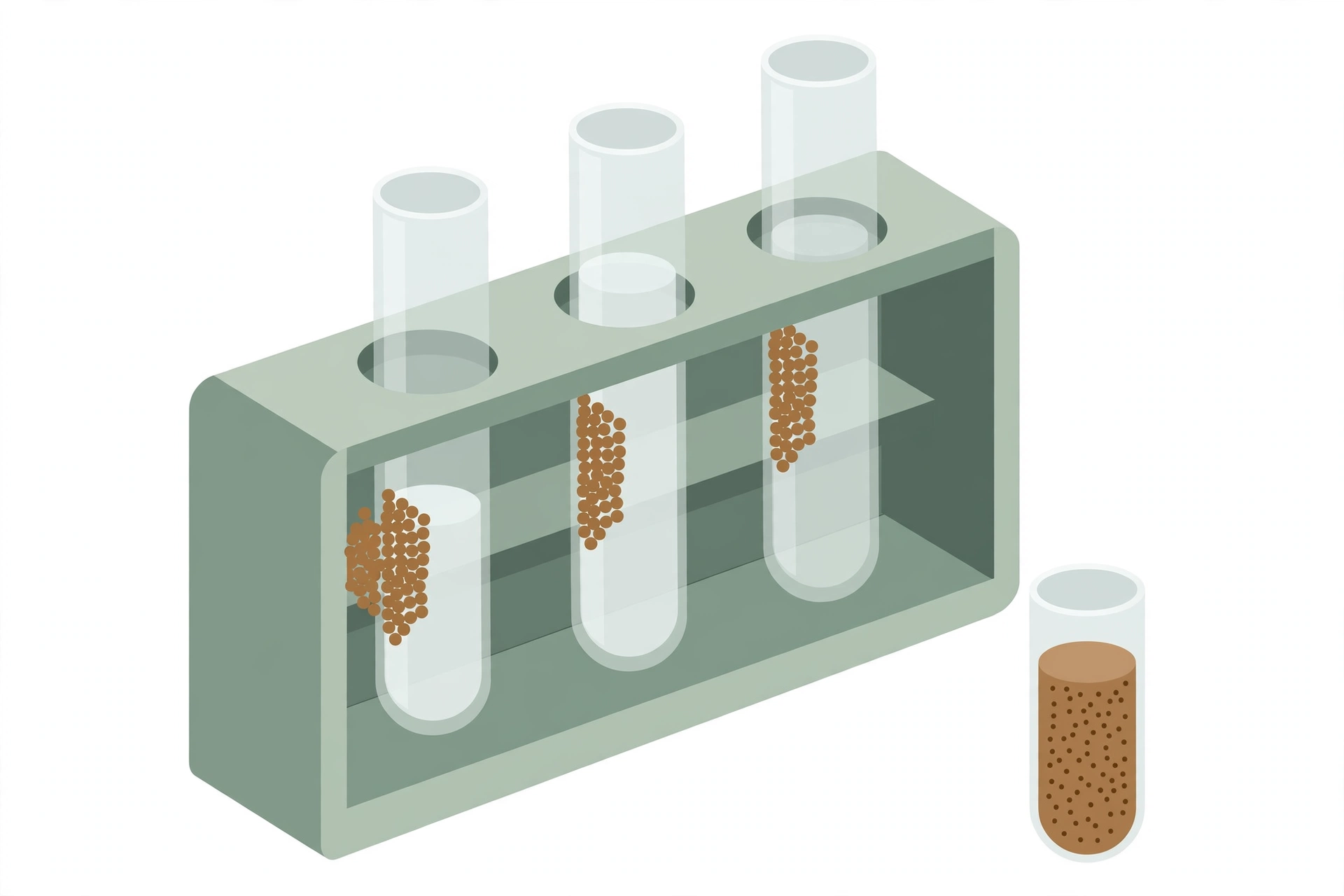
The Dynabeads ImmunoMagenetic Separation technology uses magnetically charged polystyrene beads with Salmonella-specific polyclonal and monoclonal antibodies immobilized on their surfaces. When these beads are incubated with suspensions such as enrichment cultures, Salmonella cells bind to the beads through the immobilized antibodies. The Salmonella-bead complex is then pulled from the sample with a magnet placed externally. After washing to remove unbound sample components, the beads can be plated selectively on indicator media for identification of the Salmonella.
The source notes that Dynabeads, Dynal MPC and BeadRetriever are trademarks of Thermo Fisher Scientific Inc and its subsidiaries.
Apparatus
- Dynabeads anti-Salmonella, cat. no. 710.02 (or equivalent immunomagnetic beads or concentration steps)
- Dynal MPC-S (Magnetic Particle Concentrator) unit (or equivalent)
- Sample mixer capable of tilt, swirl or rotational mixing (e.g. a Dynal Sample Mixer)
- BeadRetriever sample tube strips and sample racks (for the automated procedure)
- Sterile protective sample tip combs (for the automated procedure)
- 1.5 mL Eppendorf tubes and a tube opener (for the manual procedure)
- Pipettes
- Vortex mixer
Reagents
- Wash buffer (named in the procedure; the method does not formulate it)
Sample preparation
- Handle sample units following MFLP-75 (Handling of Sample Units).
- Prepare for analysis following MFLP-75.
- Carry out the primary enrichment following MFLP-75.
Procedure
Automated immunomagnetic separation
- Load one BeadRetriever sample tube strip for each sample into a sample rack
↓ - Vortex-mix Dynabeads anti-Salmonella until the pellet in the bottom of the tube disappears; aseptically add 10 μL of the properly mixed beads to sample tubes 1 and 2
↓ - Aseptically add 500 μL of wash buffer to sample tubes 1 and 2
↓ - Aseptically add 1 mL of wash buffer to tubes 3 and 4 within the strip
↓ - Aseptically add 100 μL of wash buffer to tube 5
↓ - For each sample, move the labelled sample tube strip to a second sample rack one metre away, add 500 μL of the test sample to tubes 1 and 2, and return the inoculated strip to the first sample rack. Repeat for the remaining samples
↓ - Aseptically insert the sterile protective sample tip combs into the instrument
↓ - Insert the rack with the filled tubes into the instrument and lock it in place
↓ - Check that everything is properly aligned and close the instrument door
↓ - Select the SALMONELLA program sequence by scrolling with the arrow key and press the START button
↓ - Keep the instrument door closed while it operates; follow each processing step and the total time remaining on the LC display
↓ - At the end of the program run, remove the sample rack from the instrument and, for each sample, process the bead-bacteria complexes either using the RAPID method described below
↓ - Remove the sample tip combs and discard them into a biohazard waste container together with the tube strips; proceed to the resuspension step below
Manual immunomagnetic separation
To avoid cross-contamination and for safety reasons, it is strongly recommended that IMS should be performed using the BeadRetriever. Without the BeadRetriever, strict adherence to good laboratory practice and the following instructions is a prerequisite to obtaining valid results.
- Remove the magnetic plate and load one 1.5 mL Eppendorf tube for each sample into the Dynal MPC-S
↓ - Vortex-mix Dynabeads anti-Salmonella until the pellet in the bottom of the tube disappears; dispense 20 μL into each tube with a pipette
↓ - Add 1 mL of the pre-enriched filtered sample aliquot and close the tube; change to a new pipette for each new sample
↓ - Invert the Dynal MPC-S rack five times to mix sample and beads; incubate at room temperature for 10 minutes with gentle continuous agitation to prevent the beads from settling (e.g. in a Dynal MX4 sample mixer)
↓ - Insert the magnetic plate into the Dynal MPC-S and allow 3 minutes for proper recovery of the beads; during this period, invert the rack several times to concentrate the beads into a pellet on the side of the tube
↓ - Open the tube cap using the tube opener provided and carefully aspirate and discard the sample supernatant as well as the remaining liquid in the tube’s cap, taking care not to disturb the pellet of IMS beads on the side wall of the tube
↓ - Remove the magnetic plate from the Dynal MPC-S
↓ - Add 1 mL of wash buffer. Change to a new pipette for each sample to and do not touch the tube with the pipette since this can. Cross-contaminate the samples as well as the wash buffer. Close the cap and invert the Dynal MPC-S a few times to resuspend the beads
↓ - Repeat the magnetic separation and wash cycle once more
↓ - Repeat the bead-recovery cycle without adding wash buffer once more; proceed to the resuspension step below
Resuspension of the Dynabeads–bacteria complex
- Resuspend the Dynabeads-bacteria complex in 100 μL of wash buffer and mix briefly by using a vortex mixer
Secondary enrichment and confirmation
- Follow the secondary enrichment steps of MFLP-75.
- For presumptive positive Salmonella spp., proceed to the biochemical screening and serological confirmation steps of MFHPB-20.
References
- Health Canada. 2016. MFLP-84: Method for the ImmunoMagnetic Separation of Salmonella species by Dynabeads anti-Salmonella. Volume 3. Compendium of Analytical Methods. This edition replaces MFLP-84, dated October 2001. Health Products and Food Branch.
- Health Canada. 2016. MFLP-75: Procedure for the Isolation of Salmonella Species by the Modified Semi-Solid Rappaport Vassiliadis (MSRV) Method. Volume 3. Compendium of Analytical Methods.
- Health Canada. 2009. MFHPB-20: Isolation and identification of Salmonella from foods and environmental samples. Volume 2. Compendium of Analytical Methods.