SOP: Enumeration of Listeria monocytogenes in Foods
GIFSQ — Global Institute for Food Safety & Quality
Principle
This method is Health Canada’s reference method for the enumeration of viable Listeria monocytogenes, applicable to all foods, for determining compliance with the requirements of Sections 4 and 7 of the Food and Drugs Act and other relevant federal regulations. A portion of the product is blended in peptone water, surface-plated onto two selective agars and incubated under specified conditions of time and temperature so that identifiable colonies of L. monocytogenes can form. The selective media used are based on studies done by other investigators. The method adds a thin agar layer (TAL) of non-selective medium on the surface of the selective agars for frozen foods, which improves the recovery of stressed cells and is mandatory for the enumeration of L. monocytogenes from frozen foods. This method replaces MFLP-74, dated February 2011.
Apparatus
- Peptone water, 0.1% (w/v) — diluent
- Plating media for frozen foods — Oxford-Tryptone Soya Agar (OXA-TSA), mandatory for all frozen foods, plus one of the following to be included with OXA-TSA:
- Agar Listeria according to Ottaviani & Agosti (ALOA)
- CHROMagar Listeria
- Brilliance Listeria Agar
- Modified Oxford agar (MOX)
- Palcam agar (PAL)
- Rapid L’Mono (RLM)-TSA
- Plating media for all other foods — Oxford Agar (OXA), mandatory for all non-frozen foods, plus one of the following to be included with OXA:
- Agar Listeria according to Ottaviani & Agosti (ALOA)
- CHROMagar Listeria
- Brilliance Listeria Agar
- Modified Oxford agar (MOX)
- Palcam agar (PAL)
- Rapid L’Mono (RLM)
- Positive and negative control cultures, ATCC or equivalent
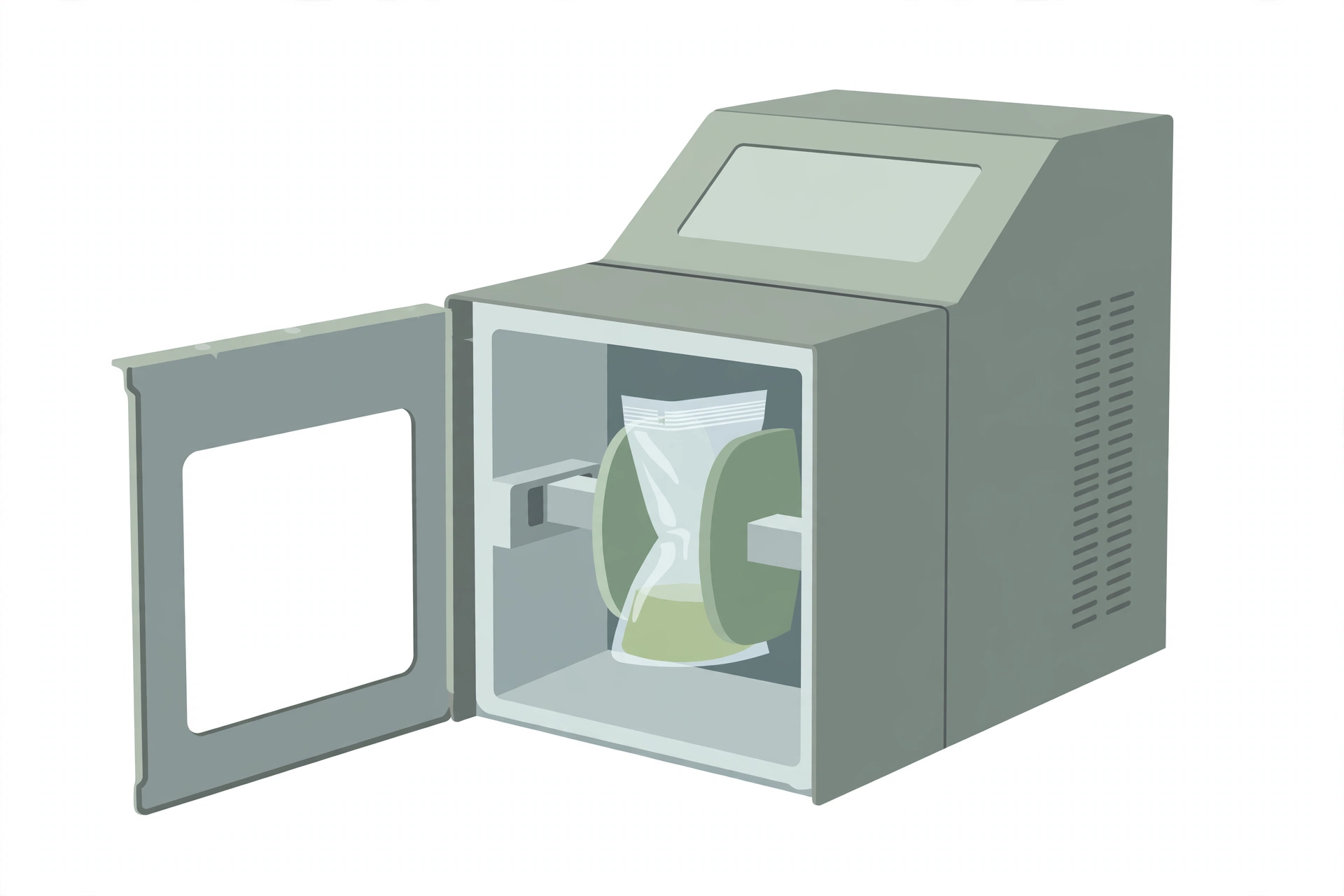
- Stomacher, blender or equivalent, vortex mixer
- Incubators capable of maintaining 30 °C, 35 °C and 37 °C
Reagents
The media below are commercially available and are prepared and sterilized according to the manufacturer’s instructions; the formulations given here are those printed in this method.
Peptone water, 0.1% (w/v)
- Peptone — 1.0 g
- Distilled water — 1.0 L
- Final pH 7.0 ± 0.2 at ambient temperature
Suspend 1.0 g of peptone in 1.0 L of distilled water. Mix thoroughly and dispense into dilution bottles or tubes in amounts that will allow for volume lost due to autoclaving. Autoclave at 121 °C for 15 min.
Agar Listeria according to Ottaviani & Agosti (ALOA)
Basal medium:
- Animal tissue enzyme digest — 18.0 g
- Casein enzymic hydrolysate — 6.0 g
- Yeast extract — 10.0 g
- Sodium pyruvate — 2.0 g
- Glucose — 2.0 g
- Magnesium glycerophosphate — 1.0 g
- Magnesium sulphate — 0.5 g
- Sodium chloride — 5.0 g
- Lithium chloride — 10.0 g
- Disodium hydrogen phosphate anhydrous — 2.5 g
- X-glucoside — 0.05 g
- Nalidixic acid — 0.02 g
- Ceftazidime — 0.02 g
- Polymyxin B — 76700 U
- Amphotericin B — 0.01 g
- Phosphatidylinositol — 2.0 g
- Agar — 13.5 g
- Distilled water — 460 mL
- Final pH 7.2 ± 0.2 at ambient temperature
Complete medium: suspend ingredients in distilled water. Boil gently with constant stirring to dissolve the medium completely. Sterilize by autoclaving at 121 °C for 15 min. Cool to 45–50 °C. Store prepared media under refrigeration, protected from direct light.
Brilliance Listeria Agar
Basal medium:
- Enzymatic digest of animal tissues — 18.0 g/L
- Enzymatic digest of casein — 6.0 g/L
- Sodium pyruvate — 2.0 g/L
- Glucose — 2.0 g/L
- Magnesium glycerophosphate — 1.0 g/L
- Magnesium sulphate (anhydrous) — 0.5 g/L
- Sodium chloride — 5.0 g/L
- Yeast extract — 10.0 g/L
- Lithium chloride — 10.0 g/L
- Disodium hydrogen phosphate (anhydrous) — 2.5 g/L
- X-glucoside chromogenic mix — 0.05 g/L
- Agar — 12.0 g/L
- Distilled water — 480 mL
- Final pH 7.2 ± 0.2 at ambient temperature
Brilliance Listeria Selective Supplement — per 500 mL of medium:
- Nalidixic acid — 10.0 mg per vial
- Polymyxin B — 38,350 IU per vial
- Ceftazidime — 10.0 mg per vial
- Amphotericin — 5.0 mg per vial
Brilliance Listeria Differential Supplement:
- Lecithin solution (1 vial per 500 mL of medium) — 20.0 mL per vial
Complete medium (modified ISO formulation): suspend 33.6 g of Brilliance Listeria Agar Base in 480 mL of distilled water. Mix well and sterilize by autoclaving at 121 °C for 15 minutes. Cool the medium to 45–50 °C and add one vial of Brilliance Listeria Selective Supplement, reconstituted as directed, and one vial of Brilliance Listeria Differential Supplement. Mix well and pour into sterile Petri dishes. Store prepared medium up to 2 weeks under refrigeration and in the dark.
Note: the supplements are commercially available from Thermo Fisher Scientific Inc. The formulation above is based on the manufacturer’s production instructions, which should be reviewed, as they are subject to change.
Modified Oxford agar (MOX)
Basal medium:
- Columbia blood agar base (depending on the brand) — 39.0–44.0 g
- Agar — 2.0 g
- Esculin — 1.0 g
- Ferric ammonium citrate — 0.5 g
- Lithium chloride — 15.0 g
- Distilled water — 1.0 L
- Final pH 7.2 ± 0.2 at ambient temperature
Supplements:
- Moxalactam — 0.015 g
- Colistin sulfate — 0.01 g
- Distilled water — 10.0 mL
Complete medium: MOX agar is a slight modification of the Listeria selective agar (Oxford Formulation). Add ingredients, except supplement, to distilled water. Boil gently with constant stirring to dissolve all ingredients. Autoclave at 121 °C for 15 min. Cool rapidly to 45–50 °C in a water bath. Add filter-sterilized supplement to the basal medium, mix well and dispense.
Oxford Agar (OXA)
Basal medium:
- Columbia blood agar base — 39.0 g
- Esculin — 1.0 g
- Ferric ammonium citrate — 0.5 g
- Lithium chloride (LiCl) — 15.0 g
- Agar — 2.0 g
- Distilled water — 1.0 L
- Final pH 7.2 ± 0.2 at ambient temperature
Supplement per 10 mL (commercially available):
- Cycloheximide — 400 mg
- Colistin sulphate — 20.0 mg
- Acriflavine — 5.0 mg
- Cefotetan — 2.0 mg
- Fosfomycin — 10.0 mg
Complete medium: suspend basal medium ingredients in 1.0 L of distilled water. Heat to boiling with constant stirring to dissolve all ingredients. Autoclave at 121 °C for 15 min and cool to 45–50 °C. Aseptically add 10 mL of supplement, mix well and dispense. Store under refrigeration in the dark (acriflavine can photo-oxidize to form compounds inhibitory to Listeria spp.).
Supplement preparation: dissolve supplement ingredients in 10 mL of a 1:1 mixture of 70% ethanol and distilled water. Filter sterilize.
Palcam agar (PAL)
Basal medium:
- Peptone — 23.0 g
- Starch — 1.0 g
- Sodium chloride (NaCl) — 5.0 g
- Yeast — 3.0 g
- Agar — 13.0 g
- Mannitol — 10.0 g
- Ferric ammonium citrate — 0.5 g
- Esculin — 0.8 g
- Dextrose — 0.5 g
- Lithium chloride (LiCl) — 15.0 g
- Phenol red — 0.08 g
- Distilled water — 1.0 L
- Final pH 7.2 ± 0.2 at ambient temperature
Supplements (per 500 mL basal media):
- Polymyxin-B-sulphate — 5.0 mg
- Ceftazidime — 10.0 mg
- Acriflavine — 2.5 mg
- Distilled water — 5.0 mL
Complete medium: suspend the basal medium ingredients in 1.0 L of distilled water. Heat to boiling to dissolve completely. Autoclave at 121 °C for 15 min. Cool to 45–50 °C. Aseptically add supplement solution to 500 mL of cooled agar base (double the amount for 1.0 L). Mix thoroughly and dispense. Store under refrigeration in the dark (acriflavine can photo-oxidize to form compounds inhibitory to Listeria spp.).
Supplement solution: suspend supplement components in 5.0 mL of distilled water. Filter sterilize.
Tryptic Soy Agar (TSA), also referred to as Tryptone Soya Agar
Basal medium:
- Tryptone — 15.0 g
- Soya peptone — 5.0 g
- Sodium chloride (NaCl) — 5.0 g
- Agar — 15.0 g
- Distilled water — 1.0 L
- Final pH 7.3 ± 0.2 at ambient temperature
Complete medium: suspend ingredients in 1.0 L of distilled water. Heat to boiling with constant stirring to dissolve all ingredients. Do not overheat. Autoclave at 121 °C for 15 min.
Sample preparation
- In the laboratory prior to analysis, except for shelf-stable foods, keep sample units refrigerated or frozen depending on the nature of the product. Thaw frozen samples in the refrigerator, or under time and temperature conditions which prevent microbial growth or death.
- Analyses should be started as soon as possible after receipt of samples in the laboratory.
- To ensure a representative analytical unit, agitate liquids or free flowing materials until the contents are homogeneous. If the sample unit is a solid, obtain the analytical unit by taking a portion from several locations within the sample unit. The analytical unit is 10 g or mL.
Procedure
Each analytical unit must be analyzed individually.
Direct plating procedure
- Weigh the sample and prepare a 1 in 5 dilution, as required, in 0.1% (w/v) peptone water in a blender jar or stomacher bag (e.g., 10 g or mL of food to 40 mL of diluent)
↓ - For food matrices that require a higher dilution to improve spreading the food/diluent slurry on the selective plates, a 1 in 10 dilution may be used (e.g., 10 g or mL of food to 90 mL of diluent)
↓ - Blend or stomach for 2 minutes to ensure thorough mixing
↓ - Immediately, directly plate 1 mL of the diluted sample over three well-dried agar plates — a total of 2 mL is direct plated onto two agar types, with 1 mL evenly divided across 3 plates per agar type. Avoid spreading the liquid right to the edge of the plate, since this causes confluent growth at the plate-agar interface which is difficult to count
↓ - Keep the plates in an upright position until the inoculum has been absorbed by the medium (approximately 10 minutes on properly dried plates). If the inoculum is not readily absorbed, the plates may be placed upright in an incubator for up to one hour prior to inversion
↓ - Incubate the selective agars at 35 °C, unless otherwise directed by the manufacturer, for up to 48 h
↓ - Examine plates for typical colonies at both 24 h and 48 h
Note: at 24 h, if colonies are large enough and well-isolated, count the number of presumptive colonies and proceed with confirmation. Re-incubate and re-examine plates at 48 h to add any additional presumptive colonies to the count and proceed with confirmation on these additional colonies as required. If colonies are too small at 24 h (but well isolated), proceed with incubation and re-examine at 48 h.
Presumptive identification of colonies
- OXA, OXA-TSA and MOX agars: after 24 h incubation at 35 °C, typical Listeria species colonies are approximately 1 mm in diameter, gray to black colonies surrounded by a black halo. After 48 h incubation, typical Listeria spp. colonies are approximately 2–3 mm in diameter, black with a black halo and sunken center. OXA-TSA shows a slightly muted color reaction compared to OXA agar.
- PAL: incubation conditions and appearance of Listeria spp. colonies are the same as for OXA agar, except that the background plate color is red.
- ALOA, CHROMagar Listeria and Brilliance Listeria Agar: L. monocytogenes and L. ivanovii form blue-green colonies surrounded by an opaque halo. Other Listeria spp. produce blue-green colonies without a halo. For a more detailed description of appearance on each of these agars, consult the manufacturer inserts.
- RLM and RLM-TSA: L. monocytogenes forms blue (pale blue, grey-blue, or dark blue) colonies. L. ivanovii forms blue-green colonies with a yellow halo. All other Listeria spp. produce white colonies with or without a yellow halo. RLM-TSA shows a slightly muted color reaction compared to RLM agar.
Enumeration and confirmation of colonies from the direct plating procedure
- Examine each set of triplicate plates for typical colonies
↓ - Count the total number of presumptive colonies and record totals separately for each agar type. If more than one typical morphology is present on an agar type, count and confirm each morphology separately
↓ - Confirm at minimum all presumptive colonies, up to 15 per typical morphology, on each agar type. If there are more than 15 presumptive colonies per agar type, confirm 5 typical colonies per plate (up to 15 in total per morphology) as a representative population of presumptive colonies
↓ - If there are more than 200 typical colonies per plate of an agar type, retest the food sample using a higher dilution (e.g., 1 in 50 or 1 in 100 ) to enable a more accurate enumeration
↓ - Confirm presumptive colonies as L. monocytogenes by following the procedures described in MFHPB-30 (Isolation of Listeria monocytogenes and other Listeria spp. from foods and environmental samples, Volume 2): https://gifsq.com/food-analysis/sop-isolation-of-listeria-monocytogenes-and-other-listeria-spp-from-foods-and-environmental-samples/
↓ - Calculate the final result for each set of presumptive colonies screened (see Calculation) and report the result (see below)
Thin agar layer (TAL) media for frozen foods
The thin agar layer is mandatory for the enumeration of L. monocytogenes from frozen foods. Prepare the TAL media as follows.
OXA-TSA:
- Prepare Oxford media according to the OXA formulation above
↓ - Dispense 14 mL per plate, let solidify and dry at room temperature. Alternatively, pre-prepared Oxford agar plates can be used as the base layer
↓ - Prepare TSA media as directed, cool to 45 to 50 °C and aseptically dispense 14 mL per plate onto the layer of solidified Oxford, let solidify and dry at room temperature
↓ - Apply the TSA layer with an automatic media dispenser or, for smaller batches, pipette it by hand
↓ - Store the OXA-TSA agar at refrigeration temperature for up to 7 days
RLM-TSA:
- Prepare RLM agar according to the manufacturer’s instructions
↓ - Dispense 14 mL per plate, let solidify and dry at room temperature. Alternatively, pre-prepared Rapid L’Mono agar plates can be used as the base layer
↓ - Prepare TSA media as directed, cool to 45 to 50 °C and aseptically dispense 14 mL per plate onto the layer of solidified RLM, let solidify and dry at room temperature
↓ - Apply the TSA layer with an automatic media dispenser or, for smaller batches, pipette it by hand
↓ - Store the RLM-TSA agar at refrigeration temperature, protected from light, for up to 7 days
Calculation
Following confirmation steps, for each set of presumptive colonies screened, calculate the final result using the printed formula:
 (colonies confirmed / colonies tested) × presumptive colonies
Count per g (or mL) = ------------------------------------------------------------
 volume plated (mL) × dilution factor
In symbols: Count per g (or mL) = [(C₁ ÷ C₂) × P] ÷ (V × D)
Where,
– C₁ = colonies confirmed
– C₂ = colonies tested
– P = presumptive colonies
– V = volume plated (mL)
– D = dilution factor (e.g., 0.2 for the 1 in 5 dilution)
Worked examples from the source: a 1 in 5 dilution is made from 10 g of food matrix; 1 mL is spread onto three OXA plates and 1 mL onto three PAL plates. The total typical colonies counted are 6 on OXA and 25 on PAL.
- Scenario 1 — all presumptive colonies screened are confirmed as L. monocytogenes:
- OXA: [(6 ÷ 6) × 6] ÷ (1 × 0.2) = 30 CFU/g
- PAL: [(15 ÷ 15) × 25] ÷ (1 × 0.2) = 125 CFU/g
- Final report = 125 CFU/g (only the highest confirmed count is reported)
- Scenario 2 — all 6 OXA colonies confirmed, but only 3 of the 15 screened PAL colonies confirmed:
- PAL: [(3 ÷ 15) × 25] ÷ (1 × 0.2) = 25 CFU/g
- Final report = 30 CFU/g from OXA agar, because only the highest confirmed count is reported
Reporting results:
- Record results separately for each typical morphology, on each of the two selective agars.
- Always report results from the selective agar with the highest confirmed count. Do not average results across the two agar types.
- Report the final result as the number of colony forming units (CFU) of L. monocytogenes per g (or mL) of product.
- If there are no colonies observed from the 1 in 5 dilution, record as < 5 CFU/g (or mL). If there are no colonies observed from the 1 in 10 dilution, report as < 10 CFU/g (or mL).
Precautions
- The laboratory supervisor must ensure that completion of the analysis described in this method is done in accordance with the International Standards reference ISO/IEC 17025 (latest version): “General Requirements for the Competence of Testing and Calibration Laboratories”.
- It is the responsibility of the laboratory to ensure equivalency if any variations of the media formulations listed here are used (either product that is commercially available or made from scratch).
- Ensure that the temperatures of the incubators or water baths are maintained at the recommended temperatures. This applies to steps of the method which apply to growth only. Where a temperature of ≤ 37 °C is recommended in the text of the method, the temperature may be ± 1.0 °C, e.g., 35 ± 1.0 °C. However, where higher temperatures are recommended, it is imperative that the incubators or water baths be maintained within 0.5 °C due to potential lethality of the higher temperatures on the microorganism(s) being isolated.
- For flexibility of incubation times, the following guidelines can be used: incubation times of 24 h ± 2 h or 48 h ± 4 h.
References
- Health Canada. Compendium of Analytical Methods, Volume 3 — Laboratory Procedure MFLP-74: Enumeration of Listeria monocytogenes in Foods, Health Products and Food Branch, September 2023 (replaces MFLP-74, dated February 2011).
- Poysky, F.T., Paranjpye, R.N., Lashbrook, L.C., Peterson, M.E., Pelroy, G.A., and Eklund, M.W. 1993. Selective and differential medium for isolation of Listeria monocytogenes from foods. Journal of Food Protection 56:326-332.
- Warburton, D.W., Farber, J.M., Armstrong, A., Caldeira, R., Hunt, T., Messier, S., Plante, R., Tiwari, N.P., and Vinet, J.1991. A comparative study of the “FDA” and “USDA” methods for the detection of Listeria monocytogenes in foods. International Journal of Food Microbiology 13:105-118.
- Warburton, D.W., Farber, J.M., Armstrong, A., Caldeira, R., Tiwari, N.P., Babiuk, T., LaCasse, P., and Read, S. 1991. A Canadian comparative study of modified versions of the “FDA” and “USDA” methods for the detection of Listeria monocytogenes. Journal of Food Protection 54:669-676.
- McLennon, J., Borza, A., Eisebraun, M. Garduño, R. 2018. Improved Recovery of Stressed Listeria monocytogenes from Frozen Foods. Food Analytical Methods 11, 403–414.
- Pagotto, F., Hébert, K., J. Farber. 2011. Isolation of Listeria monocytogenes and other Listeria spp. from foods and environmental samples (MFHPB-30). Volume 2. The Compendium of Analytical Methods.