SOP: Detection of Salmonella spp. in Food Products and Environmental Surfaces by the VIDAS UP Salmonella (SPT) Method
GIFSQ — Global Institute for Food Safety & Quality
Principle
This method is applicable to the rapid detection of Salmonella spp. in food products to determine compliance with the requirements of Sections 4 and 7 of the Food and Drugs Act and/or other relevant federal regulations. Positive results must be confirmed with a cultural method. This method has been validated for use in all foods and a variety of environmental surfaces. This revised method replaces MFLP-49, dated August 2014.
Based on a novel recombinant phage protein-based technology, VIDAS UP Salmonella is an automated qualitative test for use on the instruments of the VIDAS family for the detection of Salmonella spp.
The VIDAS UP Salmonella method, also known as the Salmonella Phage Technology (SPT) method, is an automated enzyme immunoassay based on the ELFA technique (Enzyme Linked Fluorescent Assay) for use on the VIDAS family of instruments. The Solid Phase Receptacle (SPR) serves as the solid phase as well as the pipetting device. The interior of the SPR is coated with specific proteins for Salmonella receptors. Reagents for the assay are ready-to-use and pre-dispensed in the sealed reagent strips. All of the assay steps are performed automatically by the VIDAS instrument. The reaction medium is cycled in and out of the SPR several times. Part of the enrichment broth is dispensed into the reagent strip. The Salmonella receptors present will bind to the interior of the SPR. Unbound components are eliminated during the washing steps. The proteins conjugated to the alkaline phosphatase are cycled in and out of the SPR and will bind to any Salmonella receptors, which are bound to the SPR wall. A final wash step removes unbound conjugate. During the final detection step, the substrate (4-methyl-umbelliferyl phosphate) is cycled in and out of the SPR. The conjugate enzyme catalyzes the hydrolysis of this substrate into a fluorescent product (4-methyl-umbelliferone), the fluorescence of which is measured at 450 nm. At the end of the assay, results are automatically analyzed by the instrument, which calculates a test value for each sample. This value is then compared to internal references (thresholds) and each result is interpreted (positive, negative).
Apparatus
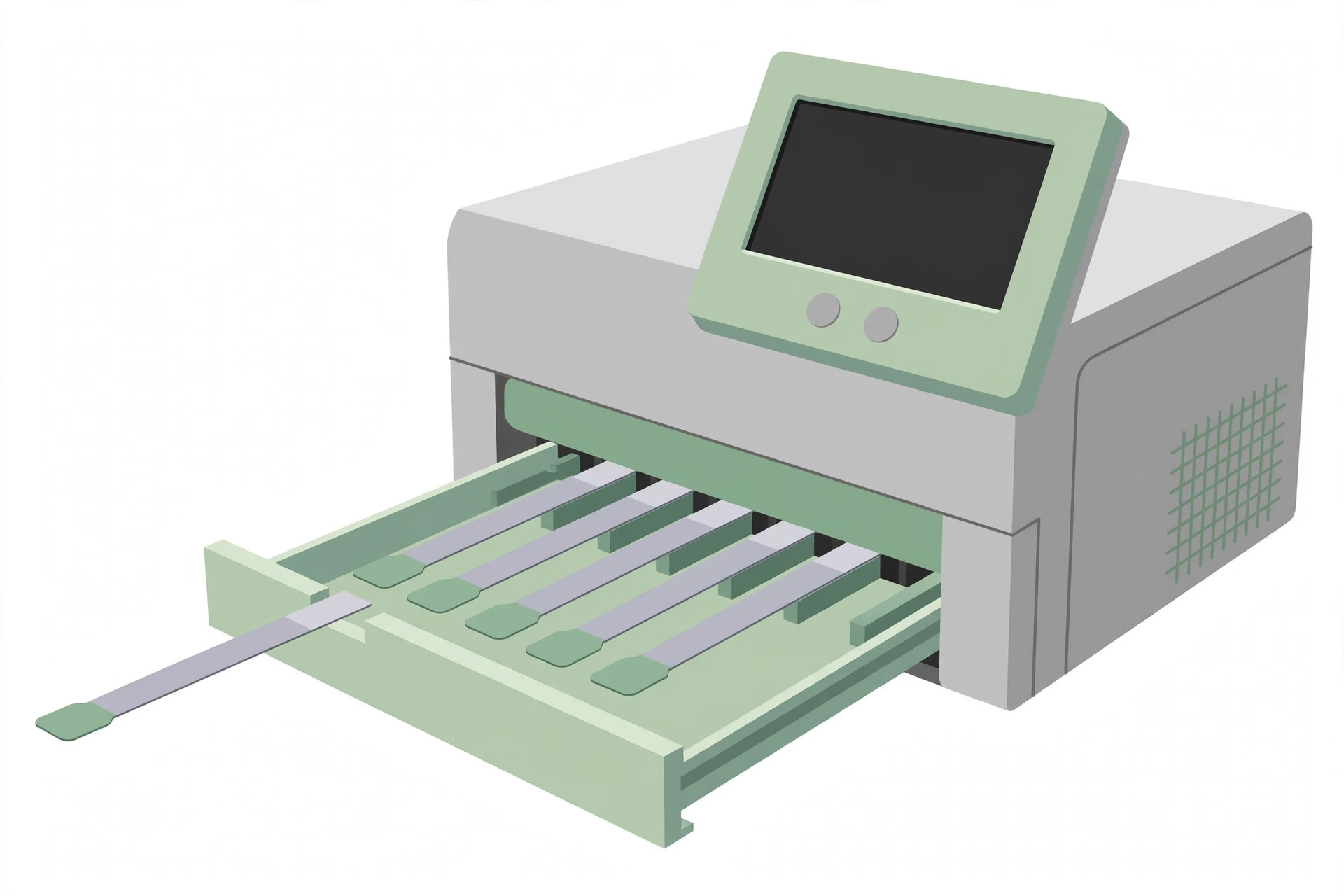
- VIDAS family instrument (mini-VIDAS or VIDAS 30)
- VIDAS Heat and Go (ref. 93554), or water bath (95–100 °C) or equivalent system
- Stomacher and stomacher bags, blender or equivalent
- Pipette calibrated to dispense 500 µL, and disposable tips
- Incubators capable of maintaining 42 °C
Reagents
- VIDAS UP Salmonella (SPT) kit (ref. 30707, bioMérieux Canada, Inc) — contains the necessary reagents including standards and controls for the analysis of 60 test samples
- Salmonella Supplement (ref. 42650, 421202, 421203)
- SX2 Broth (ref. 42121, 20 tubes of 10 mL)
- Buffered Peptone Water (BPW) — commercially available; prepare and sterilize according to the manufacturer’s instructions
Media formulations
- Buffered Peptone Water (BPW)
- Basal Medium
- Peptone — 10.0 g
- Sodium chloride (NaCl) — 5.0 g
- Disodium phosphate — 3.5 g
- Potassium dihydrogen phosphate — 1.5 g
- Distilled water — 1.0 L
- Final pH 7.2 ± 0.2
- Complete Medium: dissolve the ingredients in 1.0 L of distilled water; dispense into appropriate glassware; autoclave at 121°C for 15 min
Sample preparation
Handling of sample units
- In the laboratory prior to analysis, except for shelf-stable foods, keep sample units refrigerated or frozen, depending on the nature of the product; thaw frozen samples in a refrigerator, or under time and temperature conditions which prevent microbial growth or death
- Analyze the sample units as soon as possible after receipt at the laboratory
Preparation for analysis
- Have sterile Buffered Peptone Water available at room temperature
- Clean the surface of the working area with a suitable disinfectant
Preparation of sample
- To ensure a representative analytical unit, agitate liquids or free flowing materials until the contents are homogeneous; if the sample unit is a solid, obtain the analytical unit by taking a portion from several locations within the sample unit
- Follow MFLP-41 (Environmental Sampling for the Detection of Microorganisms) for the collection and transportation of environmental surface samples; the environmental collection device (cellulose sponge or swab) should be moistened with 10 mL of Neutralizing buffer or D/E neutralizing broth
Procedure
Non-selective enrichment — liquid supplement
For food samples of 25–65 g:
↓
Aseptically place the food sample (25–65 g) in a Stomacher-type bag; add the appropriate volume of Buffered Peptone Water, maintaining a ratio of 1 in 10 (1:9) dilution of food to broth
↓
Blend, stomach (the source uses “stomach” as a verb), or vortex as required for thorough mixing
For environmental samples:
↓
For environmental sponges: add to 90 mL of BPW, or composite up to 10 sponges with 90 mL of BPW per sponge, and mix well
↓
For environmental swabs: place the swab into a tube with 10 mL of BPW, or composite up to 10 swabs with 10 mL of BPW per swab, and mix well
For all samples, continue as follows:
↓
Mix the supplement using a vortex-type mixer, before adding to each sample
↓
Add the appropriate volume of the liquid version of the Salmonella Supplement — Y mL, calculated from the volume of Buffered Peptone Water used (see Calculation) — and mix the contents of the Stomacher-type bag manually
↓
Incubate for 18–24 hours at 42 ± 0.5 °C
Note: The liquid version of the Salmonella Supplement can be added directly to the Buffered Peptone Water if other testing will not be performed using the same sample. The final concentration of supplement is 4.4 µg/mL in BPW; this concentration is based on the pre-sample volume. For 1 L of solution, use 4.4 mL of supplement.
For 375 g food samples (fruit and vegetable-based products, raw meats and raw poultry products):
↓
Aseptically place 375 g of sample in a Stomacher-type bag; add 1125 mL of Buffered Peptone Water, pre-heated to 40 ± 2 °C
↓
Mix for 2 minutes using a blender with paddles; for nuts, mix manually for 1 minute
↓
Mix the Salmonella Supplement using a vortex-type mixer before adding it to each sample; add 5 mL of the Salmonella Supplement to each 375 g sample
↓
Mix the contents of the Stomacher-type bag manually
↓
Incubate for 22–26 hours at 42 ± 0.5 °C
Non-selective enrichment — supplement in tablet form
If using the tablet version of the Salmonella Supplement, it must be added to Buffered Peptone Water prior to the addition of the food sample
↓
Allow approximately 1 minute for the tablet to dissolve prior to addition of the food sample; the tablet comes in two sizes — one for a 25 g sample, one for a 375 g sample; for sample sizes other than 25 g or 375 g, the liquid supplement must be used
↓
For a 25 g sample: add the tablet for a 25 g sample to 225 mL of BPW; after the tablet has dissolved completely, aseptically add 25 g of food sample
↓
Blend, stomach (the source uses “stomach” as a verb), or vortex as required for thorough mixing
↓
Incubate for 18–24 hours at 42 ± 0.5 °C
↓
For a 375 g sample (fruit and vegetable-based products, raw meats and raw poultry products): add the tablet for a 375 g sample to 1125 mL of pre-warmed (40 ± 2 °C) Buffered Peptone Water prior to the addition of the food sample; after the tablet has dissolved completely, aseptically add 375 g of food sample
↓
Mix for 2 minutes using a blender with paddles; for nuts, mix manually for 1 minute
↓
Incubate for 22–26 hours at 42 ± 0.5 °C
Selective enrichment (for raw milk cheese only)
This step is required for raw milk cheese following non-selective enrichment, if using either the liquid or tablet form of the supplement:
↓
After incubation, mix manually and transfer 1 mL of suspension into 10 mL of SX2 broth, pre-warmed to 40 ± 2 °C
↓
Blend, stomach (the source uses “stomach” as a verb), or vortex as required for thorough mixing
↓
Incubate for 6–8 hours at 42 ± 0.5 °C
Analysis
Remove from the refrigerator only the required reagents from the VIDAS UP Salmonella kit; use one strip and one SPR for each sample, control or standard to be tested; make sure the storage pouch has been carefully resealed after the required SPRs have been removed
↓
Note: Components of different lots cannot be mixed and cannot be used past the expiry date
↓
When a new kit lot is being used, specifications (the factory master calibration curve data) must first be entered into the system using the master lot entry card included with each kit; calibration, using the standard provided in the kit, must be performed for each new lot of reagents upon opening, and every 28 days thereafter
↓
After incubation of the non-selective or selective enrichment, as appropriate, mix the contents of the Stomacher-type bag manually
↓
Prepare the sample for the VIDAS assay by either using a water bath or the VIDAS Heat and Go Device
↓
If the VIDAS Heat and Go is used: transfer 0.5 mL of the enrichment broth into the sample well on the strip; heat for 5 ± 1 minutes; remove the strip and leave to cool for 10 minutes — do not use the VIDAS Heat and Go for egg products, poultry samples, chocolate, cocoa and cocoa-derived products
↓
If a water-bath or equivalent system is used: transfer 2 to 3 mL of the enrichment broth into a tube; seal the tube; heat for 5 ± 1 minutes at 95–100 °C; cool the tube; mix the boiled broth using a vortex-type mixer and transfer 0.5 mL into the sample well on the VIDAS strip
↓
Note: Do not heat the standard and controls supplied with the kit
↓
Store the remaining non-boiled enrichment broth in the refrigerator (for up to 72 hours) for use in the confirmation of presumptive positive results; mix thoroughly after refrigeration before proceeding with confirmation
↓
Insert the SPR and the strip into the instrument; check to make sure the colour labels with the assay code on the SPR and the reagent strips match
↓
Initiate the assay as directed in the Operator’s manual
↓
After the assay is completed, remove the SPR and the strips from the instrument; dispose the used SPRs and strips into an appropriate biohazard receptacle in accordance with applicable local regulations
Interpretation
- Once the assay is completed, the computer analyzes results automatically; a result with a Test Value ≥ 0.25 indicates the presumptive presence of Salmonella in the test sample
Confirmation of presumptive positive results
- Using the non-boiled enrichment broth, proceed with the plating and confirmation steps as described in the “selective plating” section of the cultural method MFHPB-20: Isolation and Identification of Salmonella from Food and Environmental Surface Samples; in addition, transfer an aliquot of the enrichment broth to selective enrichment and continue as described in the “selective enrichment” section of MFHPB-20
- If the direct plating results confirm the presumptive positive result, the selective enrichment can be discontinued; if the direct plating results are negative, continue with plating and confirmation from the secondary enrichment broth as described in MFHPB-20
Calculation
The volume of liquid Salmonella Supplement to add is calculated as:
volume of Buffered Peptone Water (mL)
Y (mL) = ─────────────────────────────────────────────
225 (mL)
Where,
– Y = volume of the liquid Salmonella Supplement to add, in mL
– volume of Buffered Peptone Water = the volume of BPW used, in mL
Examples from the source (all verified against the formula):
– 225 mL of BPW → 1 mL of supplement
– 90 mL of BPW → 0.4 mL of supplement = 400 µL
– 585 mL of BPW → 2.6 mL of supplement
Precautions
- The Laboratory Supervisor must ensure that the analysis described in this method is carried out in accordance with the International Standard referred to as “ISO/IEC 17025:2005 or latest version: General requirements for the Competence of testing and Calibration Laboratories”
- It is the responsibility of the laboratory to ensure equivalency if any variations of the media formulations listed here are used (either product that is commercially available or made from scratch)
- It is the responsibility of each laboratory to ensure that the temperatures of the incubators or water baths are maintained at the recommended temperatures; where 35 °C is recommended in the text of the method, the incubator may be at 35 ± 1.0 °C; similarly, lower temperatures of 30 or 25 may be ± 1.0 °C; however, where higher temperatures are recommended, such as 43 or 45.5 °C, it is imperative that the incubators or water baths be maintained within 0.5 °C due to potential lethality of the higher temperatures on the microorganism(s) being isolated
References
- Health Canada, Health Products and Food Branch. Detection of Salmonella spp. in Food Products and Environmental Surfaces by the VIDAS UP Salmonella (SPT) Method. Compendium of Analytical Methods, Volume 3, Laboratory Procedure MFLP-49, July 2018.
- ISO/IEC 17025:2005. General requirements for the competence of testing and calibration laboratories.
- Reid, A. 2009. MFHPB-20: Isolation and identification of Salmonella from foods and environmental samples. Volume 2. Compendium of Analytical Methods.