SOP: Detection of Listeria species in foods and environmental surfaces using the Assurance GDS Listeria spp. Tq genetic detection system
GIFSQ — Global Institute for Food Safety & Quality
Principle
This method gives a rapid genetic (gene-based) detection of Listeria species in selected foods and on environmental surfaces, to determine compliance with the requirements of Sections 4 and 7 of the Food and Drugs Act and other relevant federal regulations. It applies to heat-processed and frozen dairy products, ready-to-eat meat and poultry, leafy greens, and to environmental surfaces such as stainless steel, rubber and plastic. The method is designed to be highly selective and does not detect microorganisms that are potential cross-reactors in antibody-based assays. This method replaces MFLP-08 dated June 2012.
Note: While this method is approved only for the food products and environmental surfaces listed above, the source states it could be used with other foods and other environmental surfaces; for commodities outside the application, other commodities must be properly validated following the criteria in the Compendium of Analytical Methods, and these validation data are requested to be forwarded to the Microbiological Methods Committee (MMC) so the application can be expanded if the data comply with MMC requirements.
The work proceeds through a single enrichment, a short sample preparation, and an automated amplification and detection step. After enrichment, target microorganism populations are concentrated using a proprietary concentration device and reagents or an automated sample concentration instrument; this both concentrates cell populations and physically segregates target microorganisms from competitive microflora and the food matrix, which also makes suspect colonies easier to identify on agar plates. Each concentrated sample is transferred to a reaction tube containing amplification reagents. The reagent system uses specific primers and proprietary probes directed against a highly conserved DNA sequence in the target organism. The reaction tube is sealed and placed in a proprietary multi-channel instrument that allows simultaneous amplification and detection by on-line optical analysis. If the target sequence is present, a specific fluorescence is generated and read automatically. A procedural control is contained in every reaction tube, and a different distinctive fluorescence is read simultaneously and separately by the instrument. All sample determinations, positive and negative, are indicated at the end of analysis.
Apparatus required
- Assurance GDS Rotor-Gene system, computer and software
- Assurance GDS Sample Concentration Device (PickPen or equivalent)
- Assurance GDS Vortex Mixer
- Various pipettors
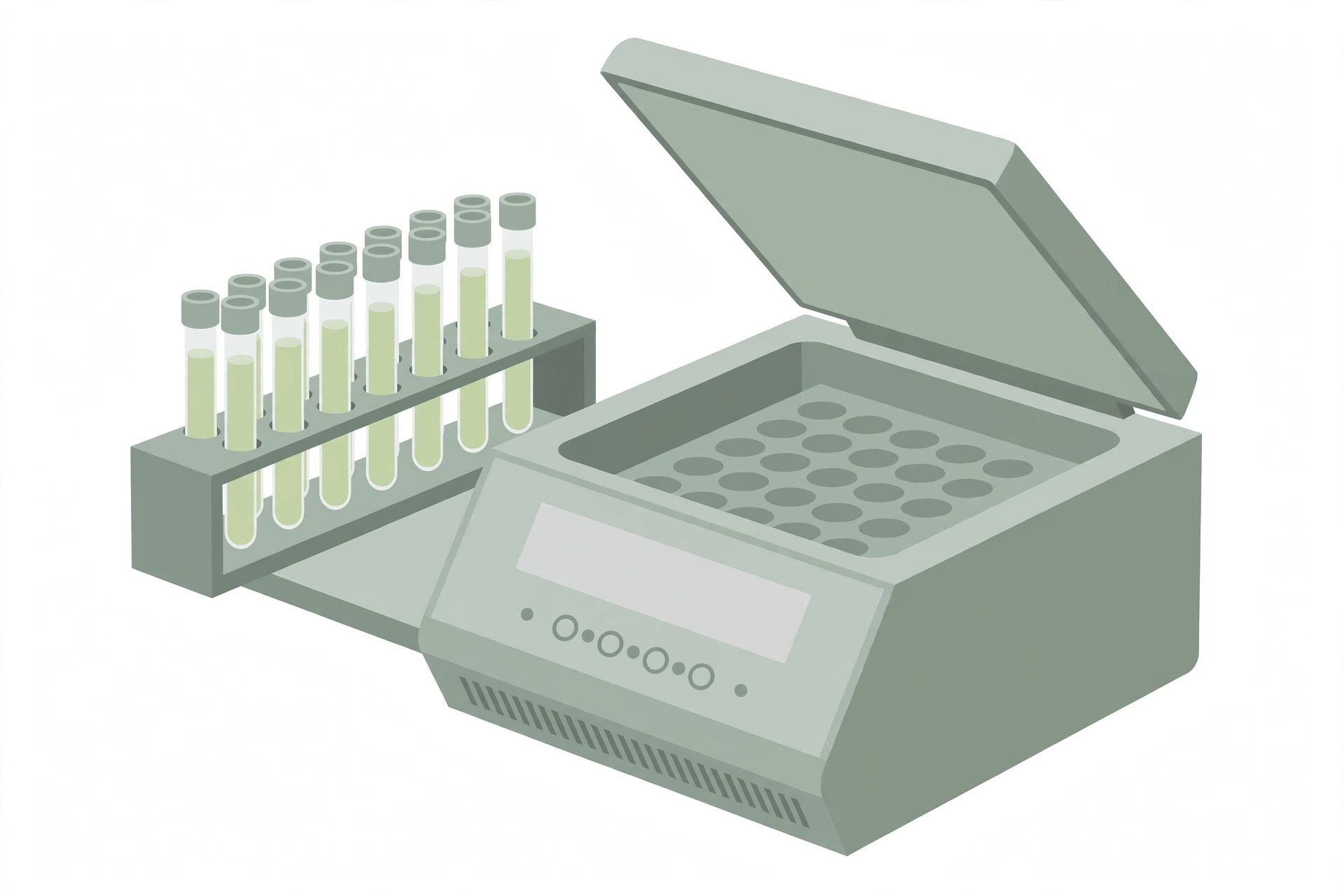
- Cooling block (aluminum or gel)
- Stomacher, blender or equivalent
- Incubators capable of maintaining 30 ± 1°C, 36 ± 1°C and 60 ± 2°C
Reagents
Assurance GDS Listeria spp. Tq kit (Catalogue no. 71009-100; BioControl Systems, Inc.; sufficient for 100 tests):
- Assurance GDS Amplification Tubes Tq containing lyophilized reagents needed for Listeria species detection and an internal positive control, 25 strips of 4 reaction tubes
- Assurance GDS Resuspension Buffer Tq, 1 vial
- Assurance GDS Sample Concentration Reagent, 1 vial
- Assurance GDS Wash Solution, 1 vial
Enrichment broths (primary enrichment varies by food type; the broths are listed by name — their formulations are given in the media glossary SOPs):
- Demi-Fraser broth
- Basal medium: Demi-Fraser is the half-strength form of Fraser broth: tryptose — 10.0 g; beef extract — 5.0 g; yeast extract — 5.0 g; sodium chloride (NaCl) — 20.0 g; mono-potassium phosphate (KH2PO4) — 1.35 g; Na2HPO4 — 9.6 g; esculin — 1.0 g; lithium chloride — 3.0 g; nalidixic acid — 0.02 g; acriflavine HCl — 0.024 g; distilled water — 1.0 L. pH 7.2 ± 0.2. Supplement: ferric ammonium citrate (FAC) — 0.5 g in 10.0 mL of distilled water (filter-sterilized).
- To prepare: suspend the basal medium ingredients in 1.0 L of distilled water ↓ mix thoroughly ↓ heat to boiling to dissolve completely ↓ autoclave at 121 °C for 15 min ↓ cool to room temperature ↓ aseptically add 10.0 mL of the FAC solution to the cooled medium ↓ mix well and dispense ↓ store under refrigeration in the dark (acriflavine can photo-oxidize to form compounds inhibitory to Listeria sp.).
- Buffered Listeria Enrichment Broth with Lithium Chloride and PALCAM Antimicrobic Supplement (BLEB+LiCl+Palcam) broth
- Basal medium: proteose peptone — 5.0 g; tryptone — 5.0 g; beef extract — 5.0 g; yeast extract — 5.0 g; sodium chloride (NaCl) — 20.0 g; monopotassium phosphate (KH2PO4) — 1.35 g; dibasic sodium phosphate (Na2HPO4) — 12.0 g; esculin — 1.0 g; distilled water — 1.0 L. Final pH 7.4 ± 0.2. Supplements (commercially available): UVM 1 (for 500 mL broth) — nalidixic acid 10.0 mg + acriflavine 6.0 mg in 2.0 mL of sterile distilled water; UVM 2 (for 500 mL broth) — nalidixic acid 10.0 mg + acriflavine 12.5 mg in 2.0 mL of sterile distilled water.
- To prepare: suspend the basal ingredients in 1.0 L of distilled water ↓ autoclave at 121 °C for 15 min ↓ cool to 50 °C ↓ aseptically add the filter-sterilized UVM 1 or UVM 2 supplement to 500 mL of cooled basal medium (double the amount for 1.0 L) ↓ mix well and dispense ↓ store under refrigeration (2–7 °C) in the dark for up to 1 month — acriflavine can photo-oxidize to form compounds inhibitory to Listeria spp.
Additional supplies and reagents:
- Assurance GDS Sample Wells and Sample Well Base
- Resuspension plate
- Filter-barrier micropipette tips — 50 µL and 1 mL
- Repeat pipettor tips — 0.5 mL and 10 mL
- PickPen tips in box or equivalent
- Adhesive sealing film
- Sampling sponges, swabs and bags
- D/E (Dey/Engley) or Letheen broth
- Plating and confirmation media and supplies (from MFHPB-30)
- Positive and negative control cultures (e.g., ATCC strains)
Sample handling and preparation
- In the laboratory prior to analysis, except for shelf-stable foods, keep sample units refrigerated or frozen, depending on the nature of the product. Thaw frozen samples in a refrigerator, or under time and temperature conditions which prevent microbial growth or death.
- Analyze the sample units as soon as possible after receipt at the laboratory.
- To ensure a representative analytical unit, agitate liquids or free-flowing materials until the contents are homogeneous. If the sample unit is a solid, obtain the analytical unit by taking a portion from several locations within the sample unit.
- Add 25 g or mL of the food (the analytical unit) to 225 mL of the appropriate enrichment medium in a blender jar or stomacher bag. If alternate analytical units are required, maintain a ratio of 1 in 10 (1:9) dilution of food to broth. Blend, stomach or vortex as required for thorough mixing. For composite samples, analytical units may be combined up to 125 g or mL (e.g., 125 g or mL of food to 1125 mL of broth).
- For environmental monitoring, collect environmental surface samples with a sponge or swab hydrated with D/E (Dey/Engley) broth or Letheen broth. After collecting the sample, add the sponge or swab to 100 mL or 10 mL respectively of the appropriate enrichment medium. Masticate the sponge and medium to mix well. Composite up to 10 swabs with 10 mL of broth per swab, or up to 10 sponges with 100 mL of broth per sponge.
Note: Sponges and swabs hydrated with Neutralizing buffer are not recommended for use with Assurance GDS Listeria spp. Tq.
Procedure
Pre-warm the enrichment broth to 36 ± 2. 0 °C prior to use.
↓
Enrich the sample according to the food type:
- Heat processed and frozen dairy products, except soft cheese — incubate 30–48 h at 30°C in BLEB+LiCl+Palcam
- Soft cheese — incubate 30–48 h at 30°C in Demi-Fraser broth
- Leafy greens — incubate 36–48 h at 30°C in Demi-Fraser broth
- Ready-to-eat meat and poultry — incubate 36–48 h at 30°C in Demi-Fraser broth
- Stainless steel, plastic and rubber environmental surface samples — incubate 18–24 h at 36 ± 1°C in BLEB+LiCl+Palcam; or, alternatively, incubate stainless steel, plastic and rubber samples for 36–48 h at 30°C in Demi-Fraser broth
↓
Vortex the Assurance GDS Sample Concentration Reagent. Insert strips of sample wells into a sample well base. Immediately transfer 20 µL of the reagent to each of the required number of Assurance GDS sample wells (one well per sample), using a repeat pipettor and a 0.5 mL pipette tip. Cover the sample wells with adhesive film strips.
↓
Transfer 1.0 mL of Assurance GDS Wash Solution to additional sample wells (one well per sample) in a sample well base, using a repeat pipettor and a 10 mL pipette tip. Cover the sample wells with adhesive film strips.
↓
Carefully remove the film strips from one strip of sample wells containing Assurance GDS Concentration Reagent. Add 1.0 mL of incubated sample to each sample well, avoiding the transfer of food particles; a new pipette tip must be used for each sample. Cover each strip of sample wells with a new adhesive film strip before adding samples to a new strip of wells. Immediately return the enriched broth samples to the incubator, to use during confirmation procedures if necessary.
↓
For stainless steel, plastic and rubber environmental surface samples enriched in BLEB+LiCl+Palcam — incubate the sealed sample block containing 1.0 mL of sample for 4–8 h at 30 ± 1°C, then continue with the next step. For all other samples (including environmental samples enriched in demi-Fraser broth), proceed directly to the next step.
↓
Place the sealed sample wells containing Assurance GDS Sample Concentration Reagent and sample on the Assurance GDS Vortex Mixer and vortex at 900 rpm for 10–20 min. If necessary, adjust the rpm to be certain that liquid does not contact the adhesive film.
↓
Transfer 45 µL of Assurance GDS Resuspension Buffer to the sample wells in the resuspension plate, using a repeat pipettor and a 0.5 mL pipette tip. Cover the prepared resuspension plate with adhesive film strips.
↓
Carefully remove and discard the film strip from a strip of samples.
↓
Load tips onto the PickPen, ensuring that the tips are firmly in place on the PickPen tool. Extend the PickPen magnets and insert into the first strip of sample wells. Stir gently for 30 seconds while constantly moving up and down from the surface to the bottom of the well. Tap the PickPen tips against the side of the sample wells to remove excess medium droplets.
↓
Remove the adhesive film strip from the corresponding wells containing Wash Solution. Transfer the PickPen to the Wash Solution. With the tips submerged, gently stir the PickPen from side to side for 5–10 seconds. Tap the PickPen tips against the side of the sample wells to remove excess wash solution droplets.
↓
Remove the film strip from the resuspension plate. Transfer the PickPen to the corresponding row of the prepared resuspension plate. With the tips submerged, retract the PickPen magnets and tap gently to release the particles into the Resuspension Buffer Tq.
↓
Repeat the PickPen capture, wash and release steps for all samples, using new tips for each row of samples.
↓
Cover the resuspension plate with adhesive film strips. Place the sealed resuspension plate containing the samples in a 60 ± 2°C incubator for 15 min–1 h.
↓
Before initial use, store the gel cooling block in the freezer (−25 to −15°C) for a minimum of 6 h. When frozen, the gel cooling block changes to the appropriate colour, indicating it is ready for use. When not in use, continue to store the gel cooling block at −25 to −15°C. Between uses, return the gel cooling block to the freezer until it has changed to the appropriate colour, indicating it is ready for use; this may take up to 2 h.
↓
Remove the Amplification Tubes Tq from the foil pouch and place them in the frozen gel cooling block. Reseal the pouch. Open the Amplification Tubes.
↓
Transfer 30 µL from each resuspension plate well into each Amplification Tube. Firmly press down on each tube lid to close.
↓
Place the Amplification Tubes into the Assurance Rotor-Gene in sequential order, beginning with position #1, and run the program. The Assurance GDS Rotor-Gene must be started within 15 min after addition of the samples to the Amplification Tubes.
↓
Upon completion of the run, the Assurance Rotor-Gene software provides a results table. Each sample is identified as Positive, Negative, or No Amp:
- Positive — the sample is positive for Listeria spp.
- Negative — the sample is negative for Listeria spp.
- No Amp — amplification did not occur; repeat the analysis beginning with the sample concentration step.
↓
Cultural confirmation of the presumptive positive results may be performed by immediately proceeding with the plating, secondary enrichment and confirmation steps of a cultural method (MFHPB-30). Commence with direct plating of the presumptive positive enrichment broth to the selective agars as described in MFHPB-30. Concurrently transfer an aliquot of the enrichment to a secondary enrichment in modified Fraser broth (MFB) as per MFHPB-30. Continue incubating the presumptive positive primary enrichment (up to 48 h). The 48 h primary enrichment must also be streaked to selective agars, concurrently transferring an aliquot to a secondary enrichment in MFB. Incubation and plating from the MFB continue as described in MFHPB-30. Continue with isolation and confirmation as described in MFHPB-30.
Precautions
- The laboratory supervisor must ensure that completion of the analysis described in this method is done in accordance with the International Standards reference “ISO/IEC 17025:2005 (or latest version): General Requirements for the Competence of Testing and Calibration Laboratories”.
- It is the responsibility of the laboratory to ensure equivalency if any variations of the media formulations listed here are used (either product that is commercially available or made from scratch). Forward equivalency data to the Editor of Compendium of Analytical Methods for consideration of modification of this method.
- It is the responsibility of each laboratory to ensure that the temperatures of the incubators or water baths are maintained at the recommended temperatures. Where 35°C is recommended in the text of the method the incubator may be at 35 ± 1.0°C. Similarly, lower temperatures of 30 or 25 may be ± 1.0°C. However, where higher temperatures are recommended, such as 43 or 45.5°C, it is imperative that the incubators or water baths be maintained within 0.5°C due to potential lethality of the higher temperatures on the microorganism(s) being isolated, unless otherwise specified in the method.
- Never, under any circumstances, open the amplification tubes after the PCR has started.
- Sponges and swabs hydrated with Neutralizing buffer are not recommended for use with Assurance GDS Listeria spp. Tq.
References
- Health Canada, Compendium of Analytical Methods, Volume 3 — Laboratory Procedure MFLP-08, January 2018: The detection of Listeria species in foods and environmental surfaces using the Assurance GDS Listeria spp. Tq Genetic Detection System. Bureau of Microbial Hazards, Food Directorate, Health Products and Food Branch.
- Pagotto, F., Hébert, K., and J. Farber. 2011. Isolation of Listeria monocytogenes and other Listeria spp. from foods and environmental samples (MFHPB-30). Volume 2. The Compendium of Analytical Methods.
- Warburton, D., Boville, A., Pagotto, F., Daley, E. and Chow, C. 2011. The Isolation of Listeria monocytogenes and other Listeria spp. from foods and environmental samples using Palcam broth (MFHPB-07). Volume 2. The Compendium of Analytical Methods.