SOP: Determination of Alkalinity of Ash
GIFSQ — Global Institute for Food Safety & Quality
Principle
The ash is treated with a measured excess of standard acid, and the excess acid is back-titrated with standard alkali using methyl orange indicator. The alkalinity, expressed as potassium carbonate, is calculated from the acid consumed. The same titration is applied to the ash as a whole and, separately, to its water-soluble and water-insoluble fractions.
Apparatus required
- One of the silica dishes containing the total ash (from the total ash determination)
- Water bath
- Watch glass
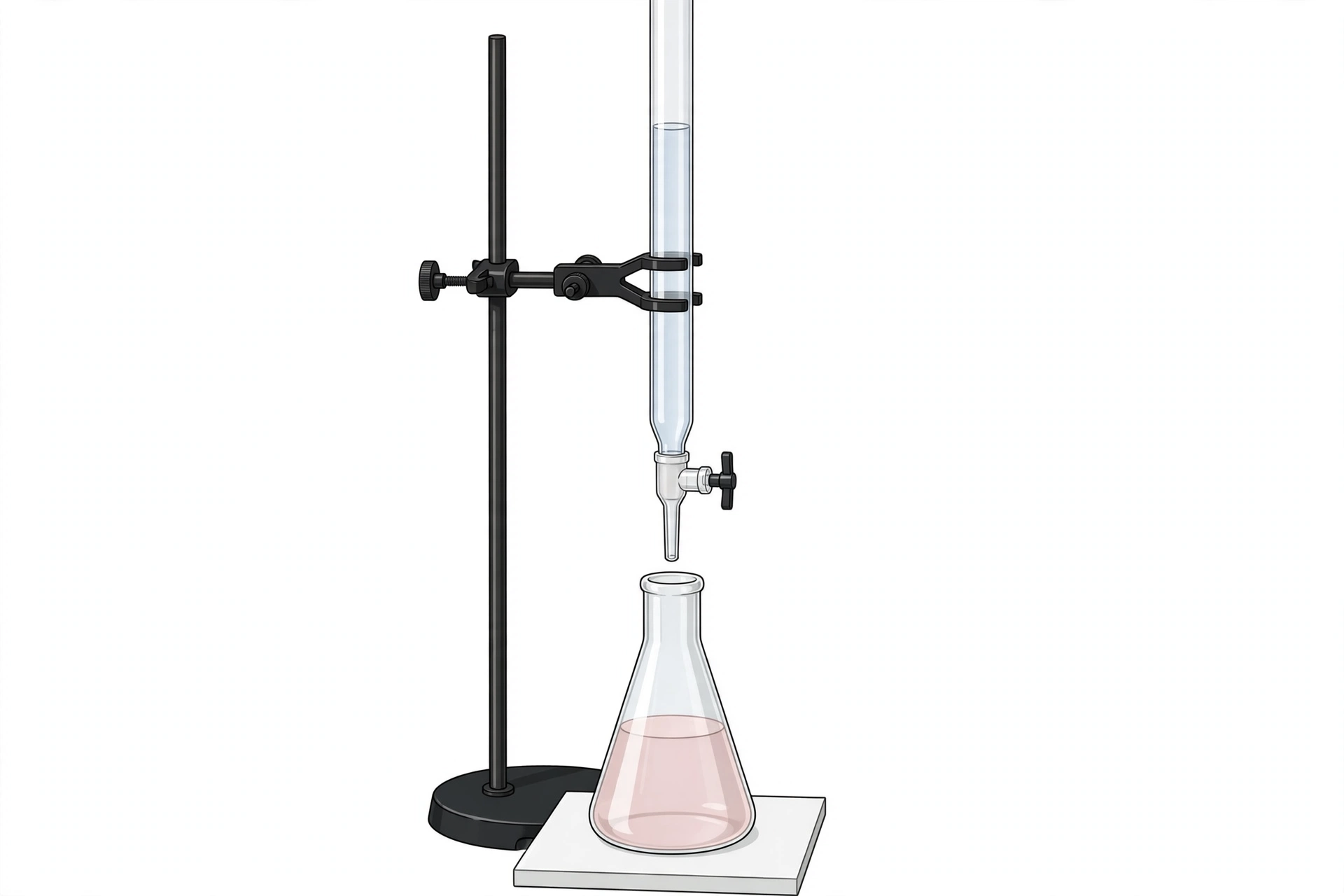
- Burette
Reagents
a. 0.1 N hydrochloric acid (HCl).
b. 0.1 N sulphuric acid (H₂SO₄).
c. 0.1 N sodium hydroxide (NaOH).
d. Methyl orange indicator.
Procedure
Alkalinity of the ash
Add 10 ml of 0.1 N HCl or H₂SO₄ to the ash in the dish
↓
Dissolve the ash by warming on a water bath
↓
Cool and titrate the excess acid with 0.1 N NaOH using methyl orange indicator
↓
Record the volume of alkali consumed as B ml
↓
Carry out a blank titration on 10 ml of 0.1 N HCl and record the blank value as A ml
Alkalinity of water-soluble ash
Take the water-soluble fraction — the combined filtrate and washings from the water-soluble and water-insoluble ash determination
↓
Titrate it with 0.1 N H₂SO₄ or HCl using methyl orange indicator
↓
Calculate the alkalinity as below
Alkalinity of insoluble ash
Add 10 ml of 0.1 N HCl to the insoluble ash in the dish
↓
Cover with a watch glass and heat gently to boiling over a low flame
↓
Cool and titrate with 0.1 N NaOH using methyl orange indicator
↓
Carry out a blank titration and calculate the alkalinity as below
Calculation
1 ml of 0.1 N acid = 0.00691 g of potassium carbonate (K₂CO₃)
g of K₂CO₃ per g of ash = [(A − B) × 0.00691] ÷ Weight of ash taken
The alkalinity may also be expressed as the number of ml of 0.1 N acid required to neutralize the ash from 100 g of the sample.
Where,
- A = blank titration value (ml of 0.1 N acid)
- B = volume of 0.1 N alkali consumed in the sample titration (ml), equivalent to the excess acid
- Weight of ash taken = weight of the ash in the dish (g)
Precautions
- Warm the dish gently on the water bath until the ash dissolves completely.
- Cool the solution before titrating the excess acid.
- Run a blank titration alongside every sample titration.
References
Ranganna, S., Handbook of Analysis and Quality Control for Fruit and Vegetable Products, 2nd edition.