SOP: Determination of Heat Resistance of Milk by Alcohol Test
GIFSQ — Global Institute for Food Safety & Quality
Scope
This method is applicable to raw milk.
1. Principle
This test is like the COB test regarding the suitability of milk for heat treatment, but it is more sensitive than the COB test. As milk gradually sours and acid is formed, proteins become susceptible to alcohol precipitation. This happens shortly before it loses its stability to pasteurization.
2. Apparatus
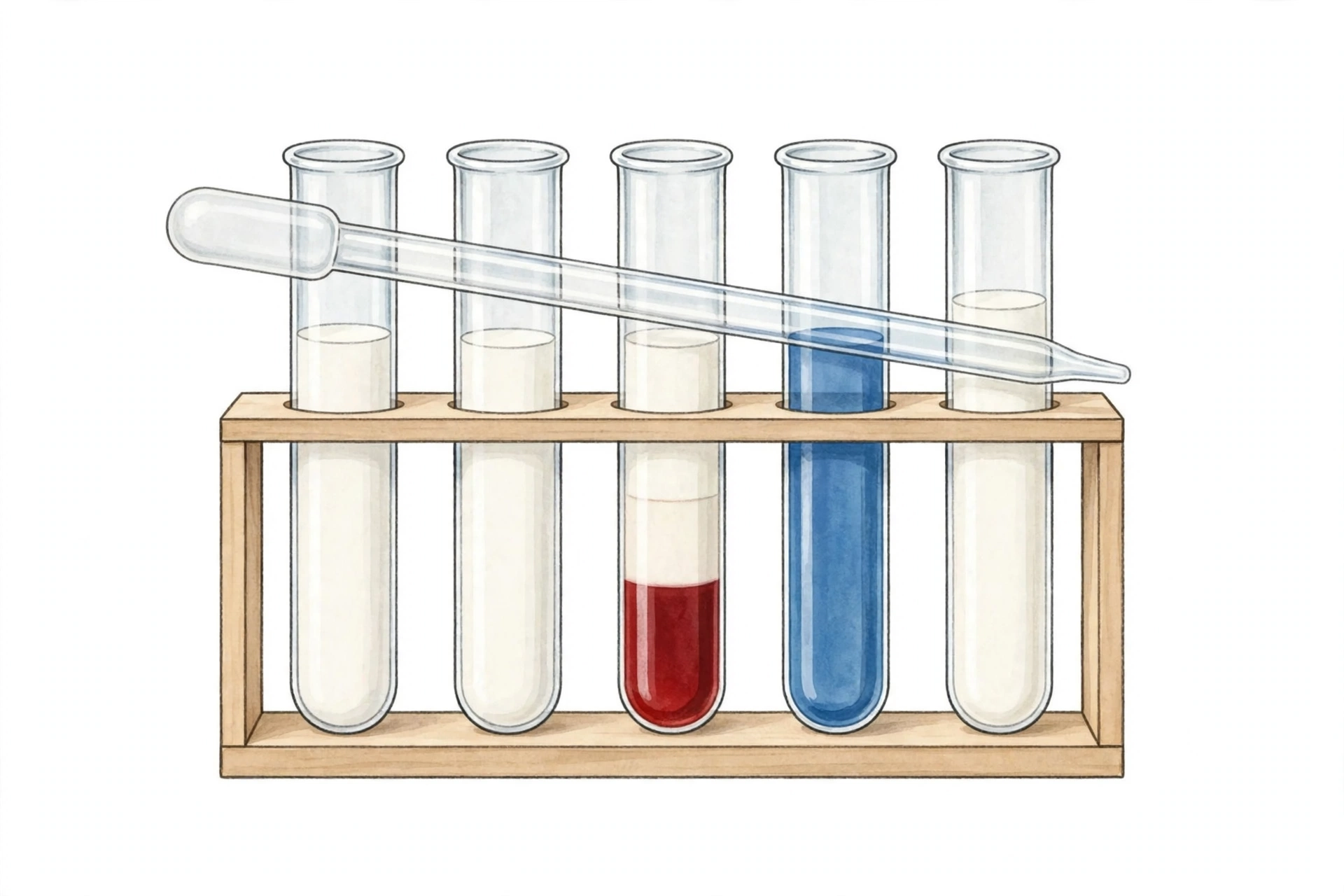
- Test tubes (20 mL capacity)
- Pipette (2 mL capacity)
3. Chemicals
- 68% ethanol
4. Procedure
Pipette 2 mL of milk sample into a test tube
↓
Add 2 mL of ethyl alcohol
↓
Mix the contents by shaking gently
↓
Observe carefully at the inner surface of the test tube. The milk is not suitable for heat treatment, or the milk is alcohol test positive, if there is any trace of coagulation, thickening, lumping, flaking, graining, precipitation or dense curd formation
References
Establishment of Regional Reference Centre for Milk Processing and Marketing; Quality Control Manual (Raw Milk and Milk Products): FAO, 2000.