Watch the lesson video: Why Food Safety Matters: The Real Cost of Getting It Wrong (1:40)
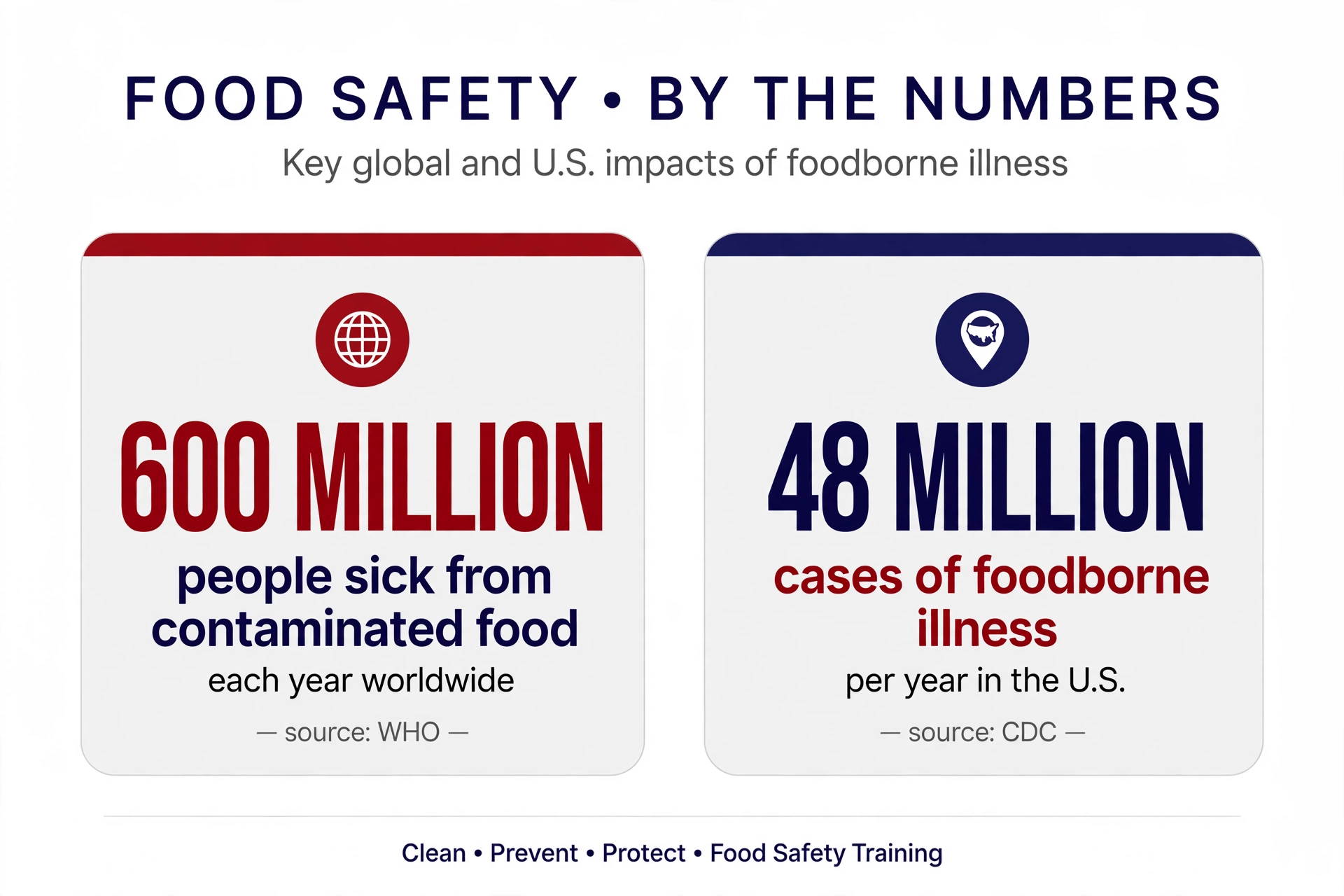
Food that looks and smells fine can still make people seriously ill. The World Health Organization estimates about 600 million people fall ill from contaminated food every year, and around 420,000 die. In the United States, the CDC reports roughly 48 million illnesses, 128,000 hospitalizations, and 3,000 deaths each year. This happens everywhere — restaurants, factories, schools, hospitals, care homes. And when investigators trace an outbreak back to its source, they usually find the same thing: someone skipped a basic step.
For a food business, one serious incident can finish everything. Pulling product back, destroying stock, deep-cleaning the plant, shutting down for days — the direct costs alone can reach hundreds of thousands. Then the lawsuits start, contracts get cancelled, and customers stop coming back. A small business often doesn’t survive its first major recall. A big company might survive, but it comes out smaller and weaker. Trust takes years to earn and days to destroy.
Who is most at risk
Food poisoning can hit anyone, but it hits some people much harder. Pregnant women, young children, older adults, and anyone with a weakened immune system are far more likely to end up in hospital from food that a healthy adult might get over in a day. Listeria is especially dangerous during pregnancy — it can cause miscarriage or stillbirth. The food you handle could end up on anyone’s plate, including theirs. That’s why the rules apply every time, no exceptions.

Why it keeps happening
Look at any outbreak report and you’ll see the same mistakes: food left out at room temperature too long, a sick worker handling ready-to-eat food, sanitizer mixed too weak to kill anything, raw chicken stored above salad. In almost every case, the business had a written procedure covering that exact step — someone just didn’t follow it. The science behind food safety is well understood. What fails is the basics, skipped when things get busy: the lunch rush, a short-staffed shift, a broken thermometer no one replaced, cleaning done in half the time it needs.
The answer is boring — and it works
The fix isn’t complicated: get the basics right, every single time, and most outbreaks never happen. That’s what this course is about — practical steps, not theory. Which temperatures matter and how to check them. How to wash your hands properly. How to keep raw and ready-to-eat food apart. How to clean and then sanitize. And what to do when something goes wrong.
It is also the law
In most countries, food law makes it an offence to sell food that is unsafe or unfit to eat — and the responsibility doesn’t sit only with the owner. Environmental health officers and food inspectors check exactly the things this course teaches: fridge and hot-holding temperatures, handwashing facilities and practice, separation of raw and ready-to-eat foods, cleaning schedules, and the records that prove it all happened. A business that can’t show temperature logs, training records, and working procedures fails the inspection whether or not anyone has been ill yet.
Penalties go from fines and forced closure up to prosecution and prison in serious cases — especially when negligence is clear, like a missing calibration record or an untrained worker handling food.
Whatever your job — handler, packer, cook, driver, supervisor — you’re the one who makes sure the step doesn’t get skipped. This course will show you what to do and why each step matters.